More than 100 rally in wake of Penn State’s decision to cancel Center for Racial Justice
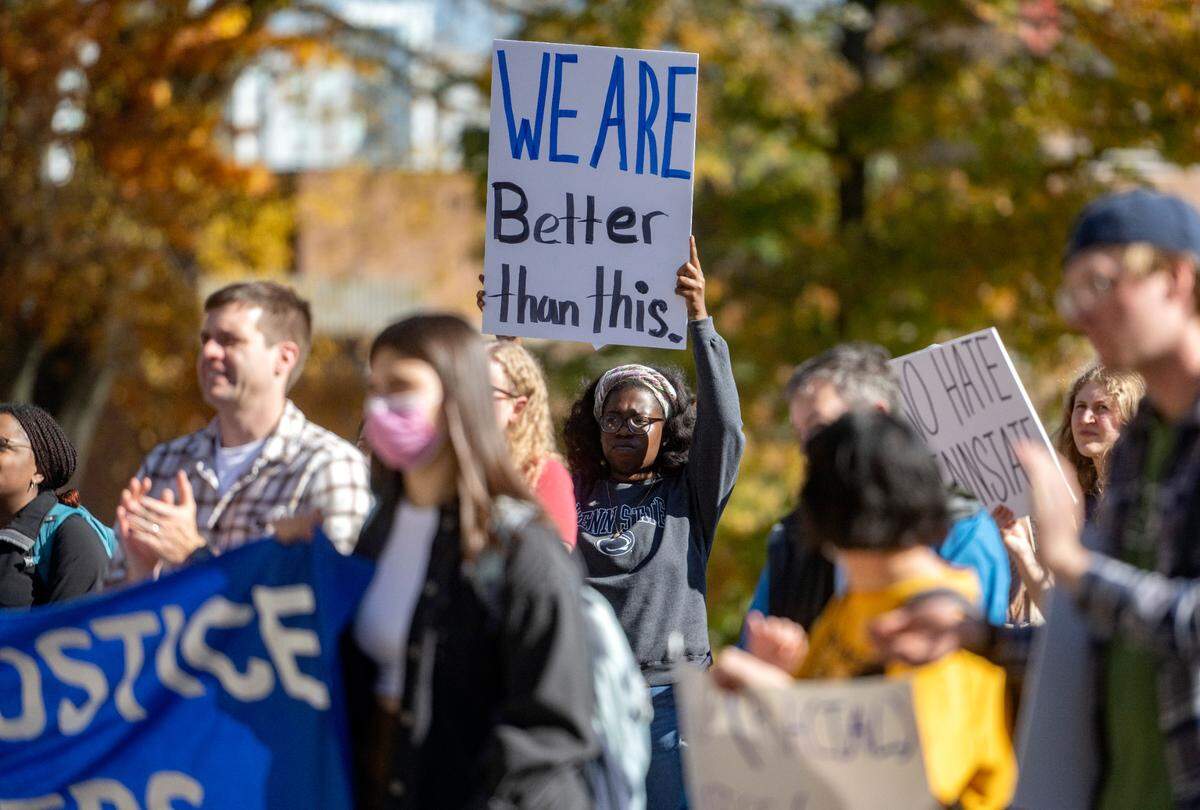
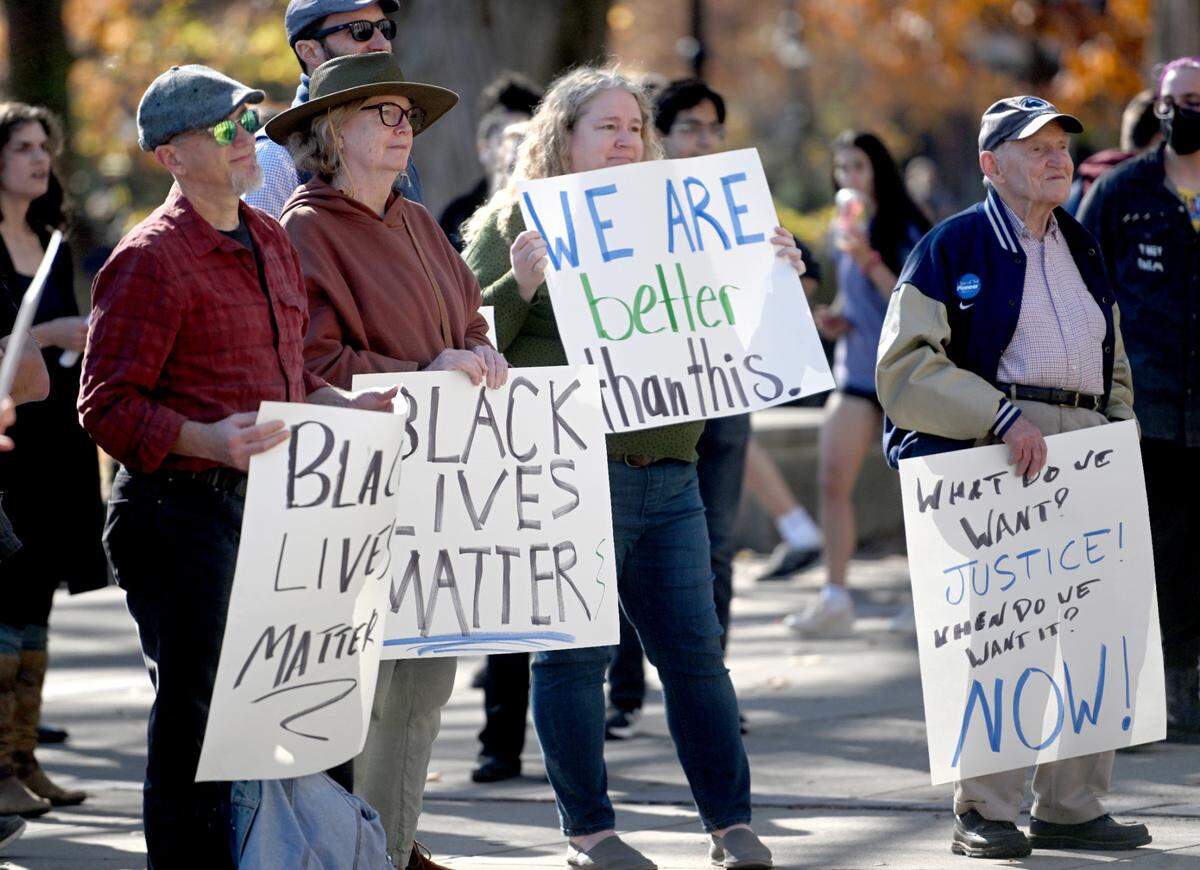
More than 100 Penn State students, faculty and community members — armed with signs like “We Are ... better than this” and “Make racism wrong again” — descended near the steps of Old Main on Thursday afternoon and demanded racial justice, calling for the administration to reverse its decision to cancel plans for its own Center for Racial Justice.
The rally came on the heels of several open letters from faculty, one of which included more than 350 signatures demanding the university reconsider its position on the center. After all, Penn State’s Center for Racial Justice was recommended more than a year ago by an internal committee, and the university elected to move forward with it — until President Neeli Bendapudi, who took over in May, publicly announced last week that it had decided to change course.
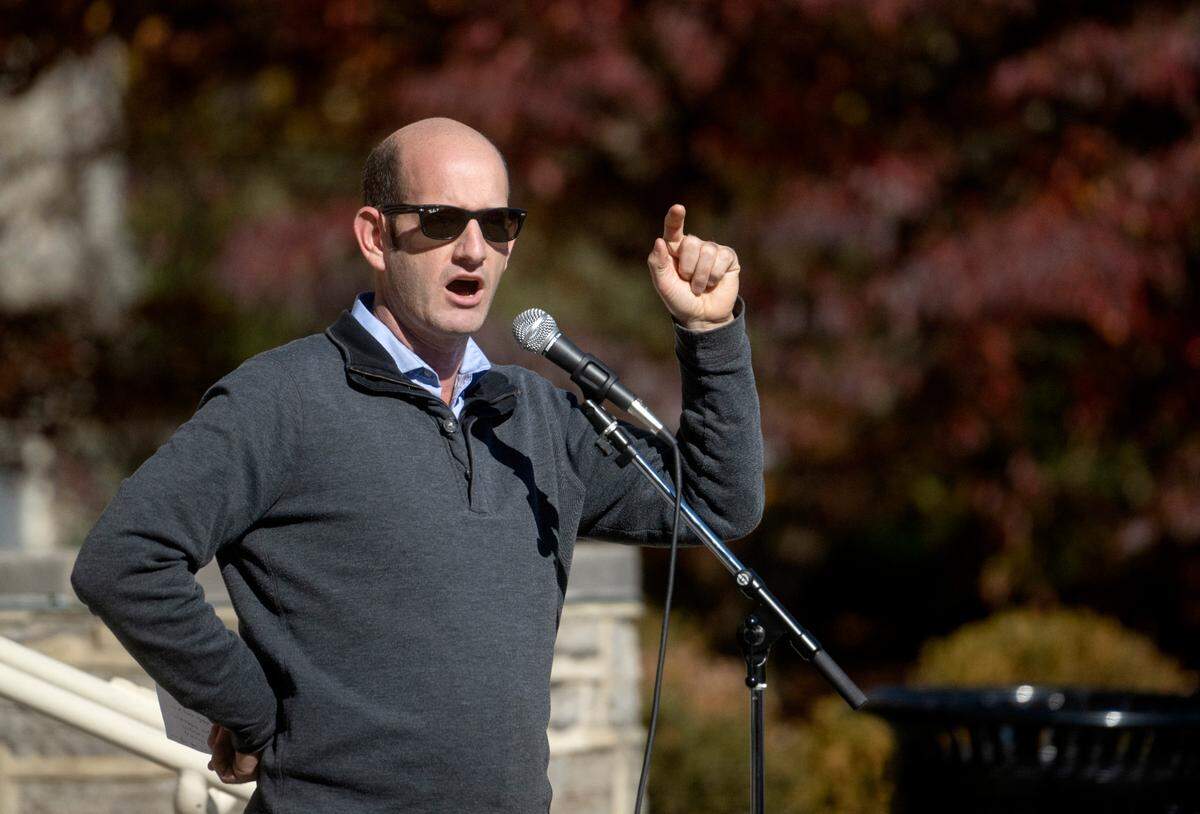
“For too long, this university has turned its back and walked away from the context of racial justice on this campus,” said Joshua Inwood, professor of Geography and African American Studies. “So what we’re asking the administration to do is to not turn its back on racial justice once again. And we’re asking the university to live up to its promises.”
A coalition of Black faculty questioned the university’s commitment to anti-racism and equality two weeks ago, even before the president’s official announcement on the center. Other faculty have since organized a petition of sorts among professors to highlight the distrust and anger simmering among the university’s academics. Faculty-based groups, such as Coalition for a Just University and the local chapter of the American Association of University Professors, have publicly thrown their support behind the movement that is focused on — but not limited to — the Center for Racial Justice.
Even some members of the university’s Advisory Board of the Restorative Justice Institute, which was highlighted in the news release announcing the center’s cancellation, appeared to take exception to the university implying they could help fill the role of the center.
“We wholeheartedly support the creation of the Center for Racial Justice at Penn State,” added a draft of the board’s letter, which was not yet officially released. “We believe that such a center is necessary for Penn State to address its structural inequities and to move forward in embracing diversity, inclusion, equity and belonging.”
On Thursday afternoon, a melting pot of students and faculty gathered near Old Main to help magnify those voices. They chanted, with one speaker yelling, “We are!” with the response coming, “Fighting for racial justice!” Other times a leader would yell, “No justice” with the crowd quickly following, “No peace.”
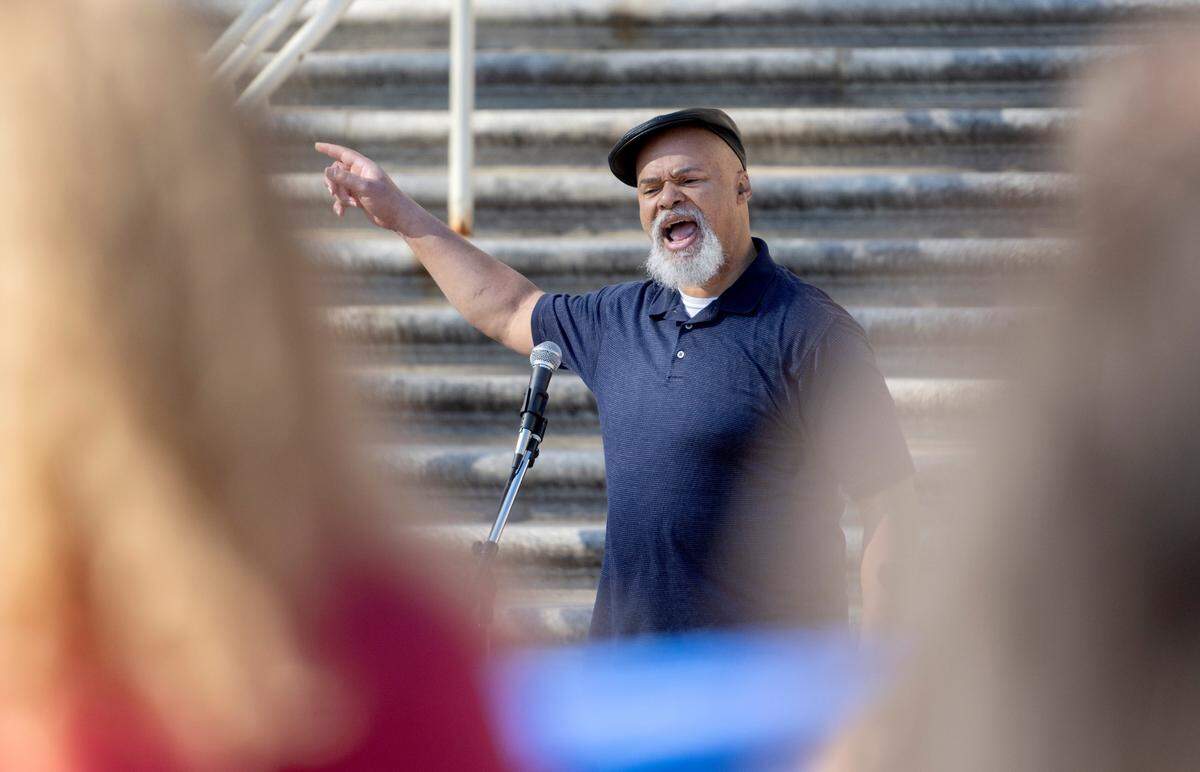
Different students, community leaders and faculty members took turns addressing the crowd through a microphone. No matter their age or skin color, the message mostly stayed the same: Penn State has made promises before, and it’s time it keeps one of them.
“All too often we find people in power use words and narratives to make us docile, to make us complacent when we raise our voices and demand the things that are justly due,” said Divine Lipscomb, a member of the State College Borough Council and a grad student. “And they think we forget. I’m here today to let the people of Old Main know: We ain’t forget.”
In her explanation last week for canceling the center, Bendapudi said that “enhancing” support elsewhere would be more impactful than a center. On Wednesday, the university also announced Jennifer Hamer as its special adviser for institutional equity, with an institutional equity plan set to be shared next year.
Those announcements and explanations largely did not put attendees’ minds or hopes at ease.
“They make promises after promises,” said Rebecca Tarlau, associate professor of education. “They get to the point of actually setting up a committee to hire someone for the Center for Racial Justice. And then suddenly, despite the faculty input and the student input over two years, it’s decided that’s not the way to go. Sorry. ...
“Maybe the Center for Racial Justice wasn’t the end-all, be-all solution. Maybe we ought to rethink systematic solutions. But what trust could we possibly have as students and faculty, that the university is going to let us participate in those decisions?” (“No trust!” one crowd member shouted.)
Inwood, who was on the search committee for the center’s first director, acknowledged mistrust was an issue. Although Bendapudi stunned the committee in September by informing them the center would not move forward, Inwood said she told them a month later the budget crisis was the reason for the cancellation. A few hours after that, however, the university explained in a since-edited news release that the funds to be used for the center — about $3.5 million over five years — would be better used toward existing efforts on racial justice.
“It just felt like there was not complete transparency about the real reason for not moving forward with the Center for Racial Justice,” he told the CDT.
Other speakers didn’t mince words in their criticism of Bendapudi, who’s often joked she’s a “recovering banker.”
“We need an educator,” said Errol Henderson, associate professor of political science. “We don’t need a banker at Penn State. We need to educate.”
When asked late Thursday afternoon if university leaders would reconsider the decision on a Center for Racial Justice, or if it wanted to respond to Thursday’s rally, a spokesperson simply referred the CDT to a statement from Wednesday. That statement did not address any potential change of plans.
Henderson told students to keep fighting, even if that meant going to Bendapudi’s office once a week every week. And, earlier in the rally, Inwood told faculty to take Thursday’s message back to their department chairs, their deans, the provost and the administration.
“Ask the administration to live up to its promise,” he told the crowd. “Ask this administration to do right by the promises that they made to this community, to take racial justice seriously. And that is the mission that we have to go on as we go forward.”
This story was originally published November 3, 2022 at 5:11 PM.
CORRECTION: A previous version of this story included a draft of a letter from the university’s Advisory Board of the Restorative Justice Institute that was not complete.