Penn State president asks for ‘time’ and ‘a little grace’ in achieving racial justice goals
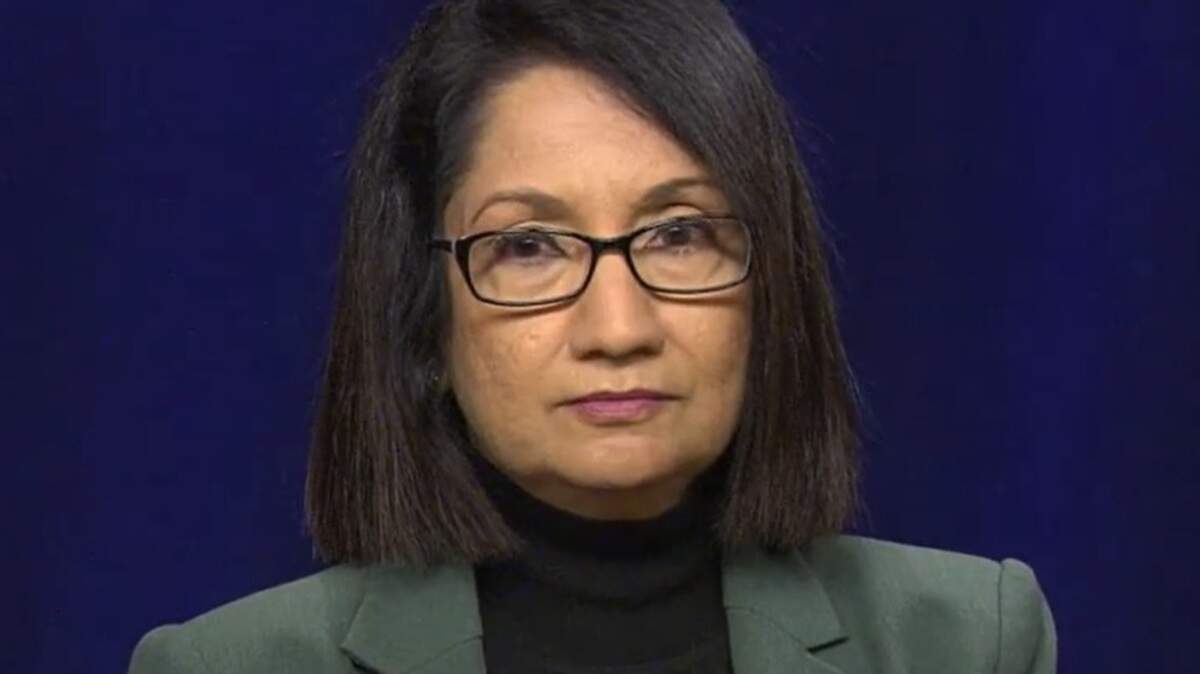
Penn State President Neeli Bendapudi reiterated her commitment to equity and racial justice during a town hall Friday afternoon, asking for patience from the university community while she and others continue to determine the best path forward.
Bendapudi’s request came amid growing backlash from her recent decision to cancel the Center for Racial Justice, which was announced just two days after the scheduled — but eventually canceled — on-campus speech from the founder of the Proud Boys. More than 400 faculty members signed an open letter questioning Bendapudi’s commitment to racial justice and, shortly after, Bendapudi agreed to Friday’s faculty senate-led town hall.
“I’ve made my best judgment,” Bendapudi said, alluding to her Oct. 26 announcement to invest in current university resources as opposed to opening a new center. “And I know that I’m asking you to give me time, to give me a little grace. The timing of the whole thing was terrible and I know how much pain it caused, but my heart is in this work. My commitment is in this work.”
Bendapudi, Penn State’s first president to be either female or a person of color, pointed to several goals that received approval last Friday by the board of trustees — including closing gaps in graduation rates for students across identity groups, and prioritizing recruitment and retention (and prioritizing diversity in hiring) when it comes to faculty and staff. Although she didn’t yet have specifics on how to achieve those outcomes, she pledged to remain accountable and to continue to hold conversations like Friday’s.
She also aimed to have more specifics next year and to develop a dashboard to track key diversity metrics.
“I am making a commitment to having regular conversations like this with faculty, staff and senate, collaboratively, because this work will take more than six months or one year to do,” she said. “And so early 2023, I hope to come back to you with what programs are working. Where will we invest?”
Bendapudi, who took over in May, arrived in Happy Valley at a critical time in the community’s search for racial justice and equity. A group of professors had outlined Penn State’s mounting issues — and institutional racism — in two separate reports, titled “More Rivers to Cross” (Pts. I and II), and showed a number of disturbing trends, such as more than half (53.1%) of Black faculty respondents saying they experienced racism from administrators or supervisors at least “sometimes.”
Within two months of the May 2020 death of George Floyd, killed by Minneapolis police, former Penn State President Eric Barron started an internal committee that solicited recommendations focused on racism and bias, one of which was establishing the Center for Racial Justice. But when Bendapudi decided to nix the center — which had already formed a search committee for a director — numerous faculty worried that it was more of the same from the administration: All talk, no action.
Bendapudi appeared to understand that perception, answering pointedly after being asked by a panelist from the faculty senate about how she’ll build trust.
“Trust can only be built up over time with concrete action,” Bendapudi said. “Trust is something you earn, and I’m well-aware of that. All I can say is I have been committed to this work, committed to racial justice, committed to DEIB (diversity, equity, inclusion, belonging) my entire career.”
Bendapudi was joined at the town hall by fellow officials Jennifer Hamer, special adviser for institutional equity, and Justin Schwartz, interim executive vice president and provost. But Bendapudi did most of the talking, answering questions for an hour from two faculty panelists and a moderator from the faculty senate.
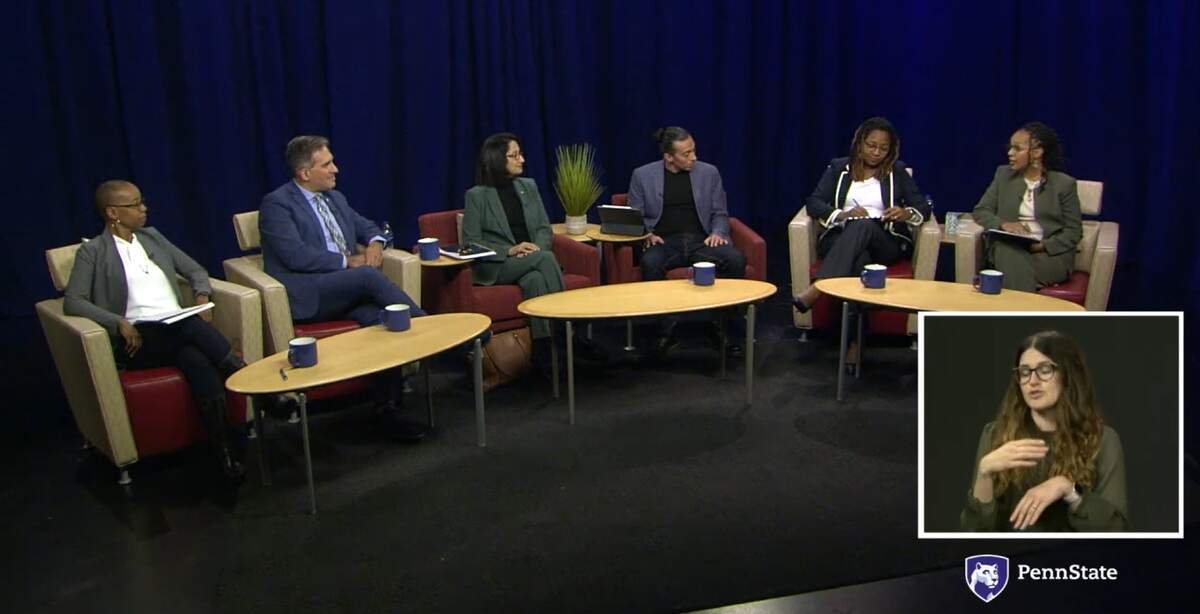
The last question came from panelist Marinda Harrell-Levy, an associate professor of human development and family studies. On the topic of shared governance, she asked whether Bendapudi would consider a faculty oversight committee to review future implementation of her goals.
The Penn State president said that’s something she was “very open” to.
“I want faculty involvement; I want faculty accountability,” she said. “I want it to be staff and students included. ... So I would always want a body where we have all of us looking together. Absolutely, we’ll get input and, absolutely, we’ll look at how we are doing. I love that — because I cannot do this on my own. It’s all of us working together.”
This story was originally published November 18, 2022 at 4:58 PM.