Meet the Penn State deans: Tracy Langkilde talks cats, nature — and Vegemite vs. peanut butter
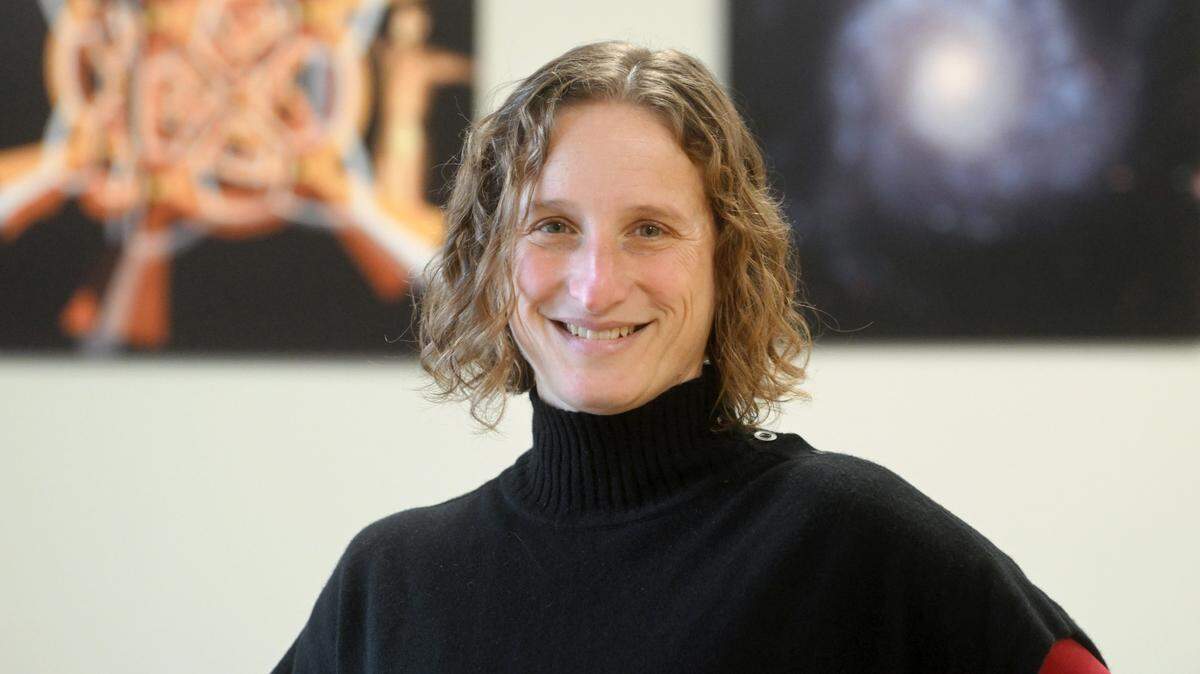
As part of a collaborative effort with Penn State, which is releasing a monthly video on school deans and their perspectives and passions, the Centre Daily Times is continuing a lighthearted Q&A series that highlights a different dean every month in the hopes the local community gets to know them outside of the classroom.
Up next: Tracy Langkilde, Verne M. Willaman Dean of the Eberly College of Science.
Langkilde was named dean in 2020, but she’s called Happy Valley home for more than a decade. She joined Penn State as an assistant professor in 2007, before becoming head of the biology department in 2016.
She was recognized internationally in 2019 as Distinguished Herpetologist by the Herpetologists’ League, an organization devoted to studying the biology of amphibians and reptiles. She has published more than 100 refereed journal articles and book chapters. And she’s also the principal investigator at the lab that now shares her namesake, the Langkilde Lab.
Centre Daily Times: In your video with Penn State, you mentioned your love for nature and trail running. So where in the world is your most favorite trail — and where is your favorite place to experience nature in Centre County?
Tracy Langkilde: Actually, it’s the place where the video was taken — up at Tussey Mountain. I was there on Wednesday. Up at Tussey Mountain, there’s a beautiful route that goes past several lookouts and you can just take in the Centre County views. That’s my favorite in Centre County, where I do most of my running.
My favorite-ever trail, I ran alongside Rogue River — which is a river in Oregon, which is the river that comes out of Crater Lake. It was amazing. We did a four-day running trip where you would run from little cabins to little cabins, and there were boats along the river below and they would stop and set up lunch. And you would run down off the side of this canyon for lunch and go back up again.
CDT: You’re a decorated biologist who earned her Ph.D. from the University of Sydney (Australia), so I feel as if you’re more qualified than most to answer this age-old question: Who’s superior, dogs or cats?
Langkilde: Cats.
I have cats. They’re much more self-maintaining, so I can go off on long running trips for a weekend and we just have an automatic feeder that takes care of them. So they don’t even follow us around meowing for food anymore. They just sit there and stare at the feeder like (cat voice), “Are you going to go off yet?” I admire their independence and sassiness.
I have two cats; 13 years. They’re huge and hairy. We got them from a local cat rescue woman who, whenever PAWS (nonprofit animal shelter) or anything is full, she’s like, fine, I’ll keep them for a little while. So this is 13 years ago, and she said this would be her last batch of cats and once she got rid of those ones, she’d be done.
She still has cats.
CDT: Speaking of animals, Penn State took part in the first national mammal survey in 2019, where more than 1,5000 motion-activated cameras were set up across all 50 states, and the university is now working on the second such survey. What were the most surprising findings from that, both nationally and in Pennsylvania?
Langkilde: So the most surprising, nationally, was the activity. So the highest number of mammal spottings were in urban areas across the U.S. We usually think if you got into a forest, that’s where you’re going to come across a ton of animals, including mammals. And if you go into urban areas — I mean, there’s lots of animals like squirrels on campus that you’re really likely to see in urban areas — but the highest mammal activity was in urban areas.
So this was the the “urban mammal paradox” because that’s not what we would have expected. The suggestion is that could be due to food availability so human scraps — I think that’s why we find a lot of squirrels on campus — and reduced numbers of predators. But it’s an open question.
In Pennsylvania, well, this is also national — but really surprised me that it held true in Pennsylvania. The most ubiquitous mammal was coyotes, so they were found in 90% of sampling locations. They were everywhere. And Pennsylvania specifically ranked in the top 8 for foxes and fishers, which I think I’ve seen a fisher run next to the road once. But I can’t say that I’ve seen them.
CDT: Food is a universal language, and you’ve also lived in South Africa and Australia before making Happy Valley home, so I need you to complete this exercise: Rank these spreads from best to worst: Marmite, Vegemite, marshmallow fluff and peanut butter.
Langkilde: OK — Vegemite, clearly No. 1. In fact, I had some yesterday in honor of this interview just so I could remember how amazing it is. Thin schmear on warm, buttered toast? Mine was sliced baguette; that’s not traditional, but that’s all right. We can do that. It’s just like the umami, a little bit savory. So that’s the Australian peanut butter and jelly equivalent. The thing people do wrong with it is that it looks like Nutella and they spread it like Nutella. You do not want to do that.
That’s followed by Marmite because that’s almost the same thing. And then there’s a lot of daylight. And then peanut butter but only on sandwiches when I’m in the field. No other time. And I never had marshmallow fluff. It sort of sounds amazing and terrifying at the same time. What do you have it on? Sandwiches? ... So that’s now on my list of things to try. So next time we chat, the order might change.
CDT: We usually like to finish with a more off-the-wall question. So, if you could spend the week as any animal — and we’re not talking long-term here; just a week — what one would you choose, and why?
Langkilde: For a week — and I think it ties into the whole viewing nature thing — it’s Andean Condor.
That is the bird that can soar the greatest distance without any effort, without any wing flaps. So 100 miles, low wing flaps; pretty great. You could get this broad landscape-level view, amazing scenery, get everything on context, without having to flap a wing. So, yeah, I would be an Andean Condor. They’re large, so you don’t have to worry about getting eaten by other things too easily. But they soar on these thermal vents and these updrafts for 100 miles.
So partly it’s the view, so I wouldn’t have to run up a mountain to get the view. I could just, like, cruise. And partly it’s being able to put things in this big context. Oftentimes, even when I’m running through the forest, it’s fun because I’ll see a little fern grove and detail and I feel like, often as dean, I spend a lot of time looking at the details and the specifics. But it’s really important to take this kind of broader, landscape view and look at the context and see how things fit together in a puzzle. And so being a condor for a week would let me get this amazing landscape-level view.
They also interact socially. So they’ll learn from each other and pick up cues from each other about which thermal event to take and when to hop in and out so that you can stay up and soaring. So they cooperate and collaborate.