US House passes anti-hazing bill shaped by Penn State, Tim Piazza’s parents
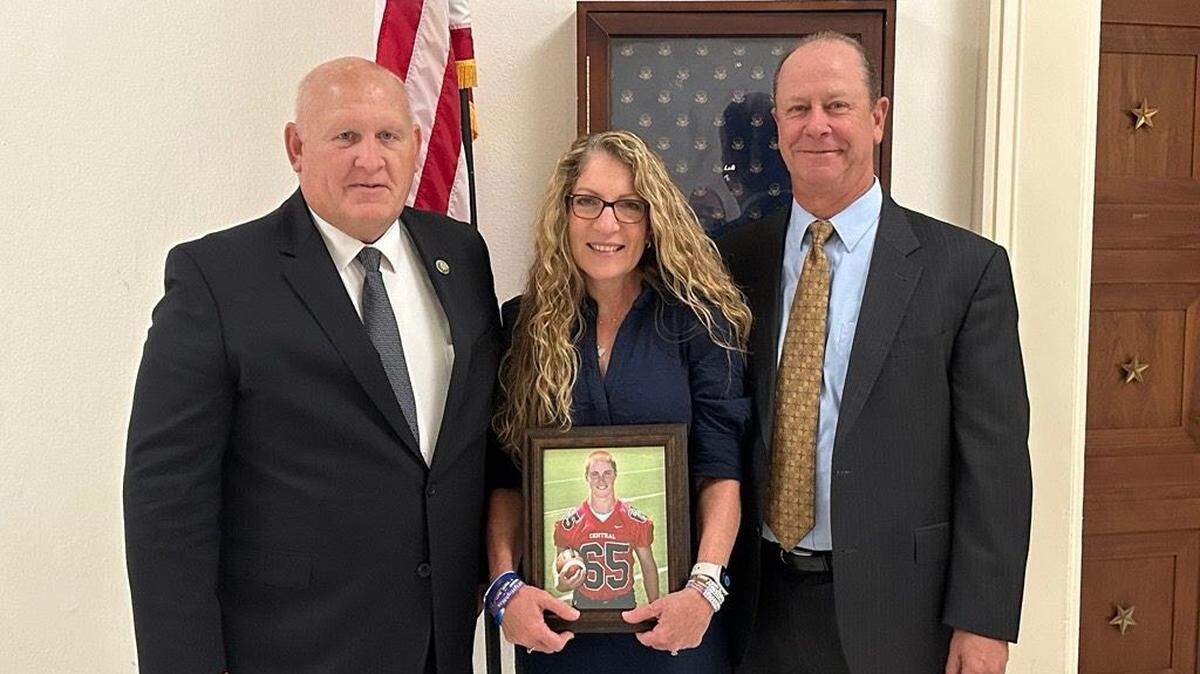
Sept. 25, 2024 update: The U.S. House of Representatives passed the “Stop Campus Hazing Act” on Tuesday. The bill now awaits action in the Senate.
An anti-hazing bill shaped partly by the tragic death of Penn State student Timothy J. Piazza moved forward Wednesday by advancing past the relevant committee in the U.S. House of Representatives, an important step on the path to potentially becoming law.
H.R. 5646, known as the “Stop Campus Hazing Act,” seeks to increase transparency by requiring colleges and universities to report hazing incidents in their annual Clery Report, which serves as a sort of yearly security report. The bill also calls for all participating institutions to develop “a comprehensive program to prevent hazing.”
The bipartisan bill advanced past the U.S. House’s Committee on Education & the Workforce by a vote of 28-2, and the next step would see the full House vote on the measure. Some 53 representatives have already co-sponsored the bill — including local U.S. Rep. Glenn “GT” Thompson, R-Howard, who’s on the committee and has consistently supported the bill and similar legislation.
“Hazing is simply not an acceptable behavior and one that can lead to great bodily harm, even death, leaving families struggling with the loss of their loved one, changing the trajectory of their lives forever,” Thompson said Wednesday in a written statement. “The legislation I offered today will bring about much-needed transparency and accountability, but most importantly, it will help protect students nationwide in an effort to ensure that no one will have to experience what the Piazza family has over these past seven years.”
According to Thompson’s office, some provisions in the bill were borrowed from the “End All Hazing Act” that Thompson introduced in 2019. However, the current bill was co-introduced in the House last September by U.S. Reps. Jeff Duncan, R-S.C. and Lucy McBath, D-Ga. And it was co-introduced in the Senate by U.S. Sens. Bill Cassidy, R-La., and Amy Klobuchar, D-Minn.
The advancement of the bill comes seven years after the death of Penn State student Timothy J. Piazza, a 19-year-old pledge at Beta Theta Pi fraternity who was knocked unconscious after falling down basement stairs as a result of being given 18 drinks over 82 minutes. The frat was supposed to be alcohol-free, due to a previous suspension, and numerous frat brothers discouraged anyone calling for help after finding Piazza. He died a day later.
What followed was one of the largest hazing prosecutions in U.S. history. At least 28 frat members eventually faced charges, with some cases still ongoing.
Piazza’s parents, Evelyn and Jim, have continued to advocate nationally for more anti-hazing efforts. In a written statement Wednesday, in a press release provided by Thompson’s office, Piazza’s parents thanked Thompson and praised the legislation the committee advanced.
“We have worked tirelessly for several years with other families from the Anti-Hazing Coalition to bring this legislation forward,” the parents said in a joint statement. “No parent should have to experience what our family experienced after the death of our son Tim due to fraternity hazing at Penn State.
“This important legislation would help end hazing for good by providing much-needed transparency by universities, similar to what is already in place in Pennsylvania and some other states, for future generations of parents and students seeking to join student organizations on campus.”
In response to Timothy Piazza’s death, Penn State established the Timothy J. Piazza Center for Fraternity and Sorority Research and Reform in 2019. Thompson’s office also credited the center’s research for helping shape the act and strengthening anti-hazing laws in Pennsylvania.
The “Stop Campus Hazing Act” still has a few more steps to go before it finds its way to the president’s desk. But the bill boasts broad bipartisan support. Some 15 Republicans and 38 Democrats co-sponsored the bill in the U.S. House, with Thompson doing so last November.
The bill is also supported by the the Anti-Hazing Coalition, Clery Center, National Panhellenic Conference and North American Interfraternity Conference.
This story was originally published September 12, 2024 at 1:54 PM.