Three Penn State fraternities launch independent, student-led council. What to know
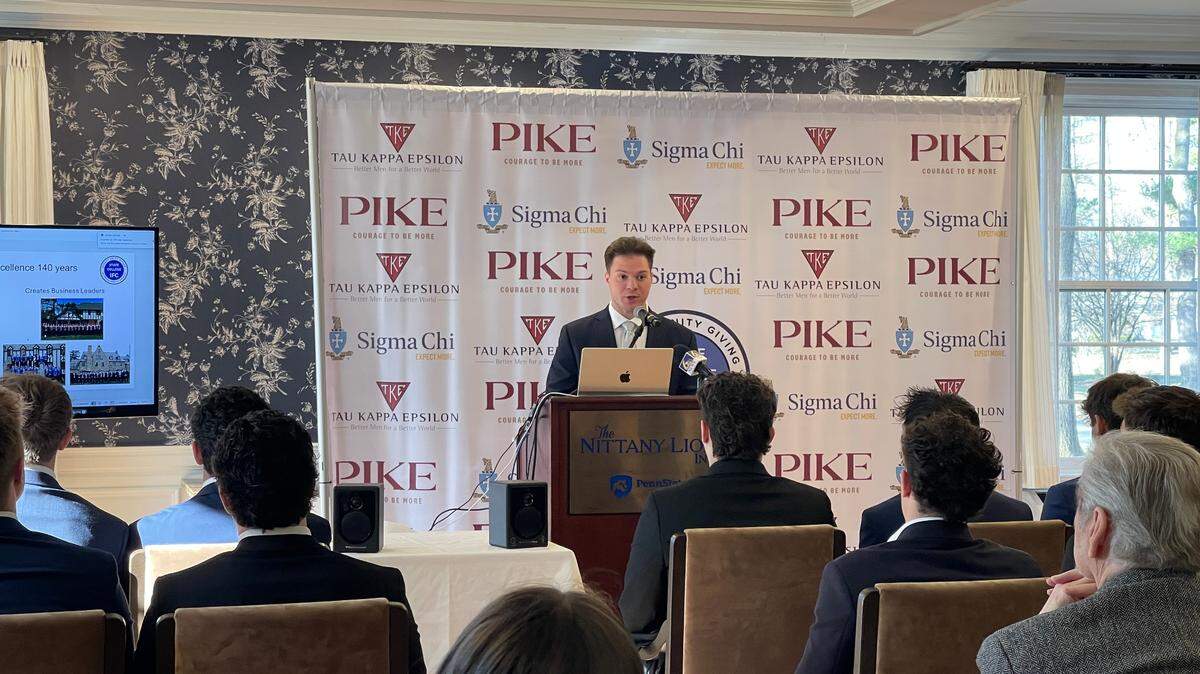
Three fraternities at Penn State will band together to form an independent State College Interfraternity Council, the organizations announced Friday.
Fraternities Pi Kappa Alpha, Sigma Chi and Tau Kappa Epsilon — two of which were previously suspended from Penn State — are the founding members of the SCIFC and appeared during a press conference at the Nittany Lion Inn Friday morning.
Sam Lanza, founding president of the SCIFC and former president of the Sigma Chi chapter, said it is the beginning of a “transformative journey” for Greek life at Penn State that aims to redefine the experience for fraternities and create a more inclusive and engaging environment. The SCIFC will have an independent and student-run governance model supported by their international fraternities, and will follow the North American Interfraternity Council guidelines as well as the guidelines of each member organization.
A main reason they formed the SCIFC is to free themselves of reforms that came out of a 2019 agreement Penn State made with the family of Tim Piazza, a fraternity pledge who fell and later died after a night of excessive drinking in 2017 at the now-defunct chapter of Beta Theta Pi. Part of the reforms included requiring students to complete at least 14 credit hours before participating in fraternity or sorority recruitment.
“We recognize the need for a compliance focused environment that empowers chapters to lead themselves. This student-led approach is particularly important for freshmen recruitment as it fosters a welcoming atmosphere centered on positive activities and community involvement,” Lanza said. “We also want to stress that as an independent IFC, we are self governing and we’re able to rush freshmen, who then benefit from a longer and more fulfilling Greek life experience. The bottom line is that we want our chapter to be free from the compliance environment that has existed since the Piazza agreement went into place.”
A Penn State spokesperson said they just learned of the State College Interfraternity Council forming on Friday.
“...It is deeply concerning, particularly given that two of these organizations have been suspended for violations and high-risk activities. We are in the process of gathering more information about this development and will have more to share soon,” the spokesperson said.
In October, the university issued a warning to parents about an increase of hazing reports and noted that it received many reports of hazing and high-risk drinking behaviors that were related to unrecognized fraternities, including Sigma Chi.
Safety and risk management will be taken seriously, Rocco Mendoza, vice president of risk at SCIFC, said. They are proposing a “Greek ID card” for the fall 2025 semester, a “significant step” in improving their risk management efforts. The Greek ID card will track attendance at events.
Ethan Horst, vice president of communications at SCIFC, said all three of the chapters have 24/7 security cameras in and outside of the house, and work closely with Standing Stone Consulting, an event security and risk management service provider.
“Our three chapters have a strong sense of accountability. We will hold each other accountable for each action. Not that we’re expecting anything to come up, however, if issues do arise … then we’ll handle those issues internally. The most important part of it is that it is a student-led judicial process, and we have bylaws, and we have a judicial due process as of right now that we will plan to follow, and we have different levels of punishment,” Horst said.
Tau Kappa Epsilon began operating as an independent chapter in August 2024. The two other fraternities were previously suspended for violating university policy.
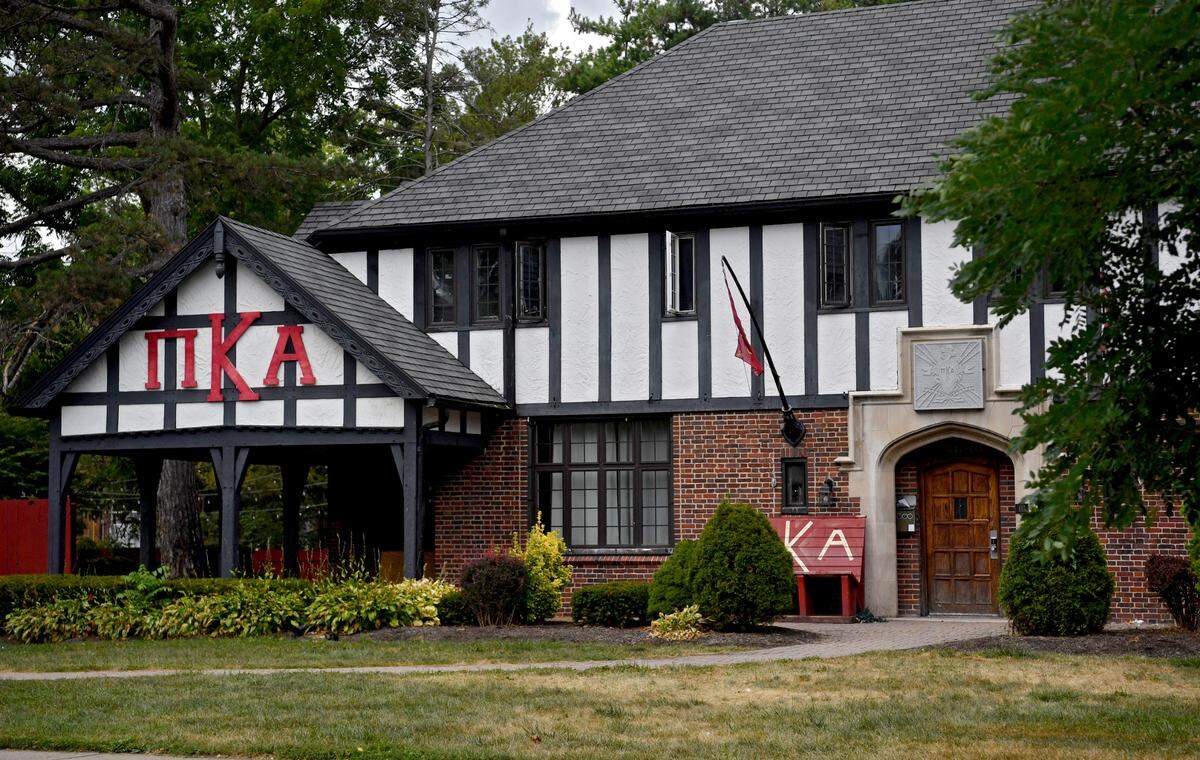
Pi Kappa Alpha (PIKE) was suspended through fall 2025 for failure to comply with a directive or condition, alcohol and/or drug violations and other university policy violations, Penn State’s student affairs site states. They have continued to operate with the support of their inter/national organization, according to the site.
Sigma Chi was previously suspended through Aug. 1, 2024 for failure to comply with a directive or condition and other university policy violations, the site states, and chose not to return and instead operate independently.
Independent chapters, according to the student affairs site, has no oversight from an established fraternity and sorority system. They can’t participate in any activities through the Office of Fraternity and Sorority Life or in any university function as a group, like Thon or homecoming.
The Penn State Interfraternity Council did not respond to a request for comment.
“Oversight and the ability to respond to concerns with these groups is incredibly limited. While individual students can be held accountable under the Student Code of Conduct, the student group is not held to the same standards, limiting the effectiveness and impact of potential sanctions or disciplinary actions,” the student affairs site states.
This story was originally published March 21, 2025 at 5:21 PM.