Penn State’s Matson Museum of Anthropology now open in new space. Take a look
AI-generated summary reviewed by our newsroom.
- Matson Museum reopens in a high-traffic space with increased public visibility.
- New storage facilities offer climate control and enhanced student research use.
- Students gain hands-on training through exhibit curation and object conservation.
The Matson Museum of Anthropology has reopened in a new space in the recently built Susan Welch Liberal Arts Building, and offers a place for people to learn about the study of humanity.
The museum was previously tucked away on the second floor of the Carpenter Building on Penn State’s University Park campus and wasn’t overly accessible. Now, the museum is located directly inside an entrance into the liberal arts building at 137 Fischer Road, and visitors can get a glimpse of it as they walk inside along the all-glass walls.
James Doyle, director of the museum, said they worked with the architect of the project to have the glass walls so artifacts can be on view even if the museum is closed. That’s in addition to a rotating exhibit facing outward that people can see walking into, or by, the museum entrance.
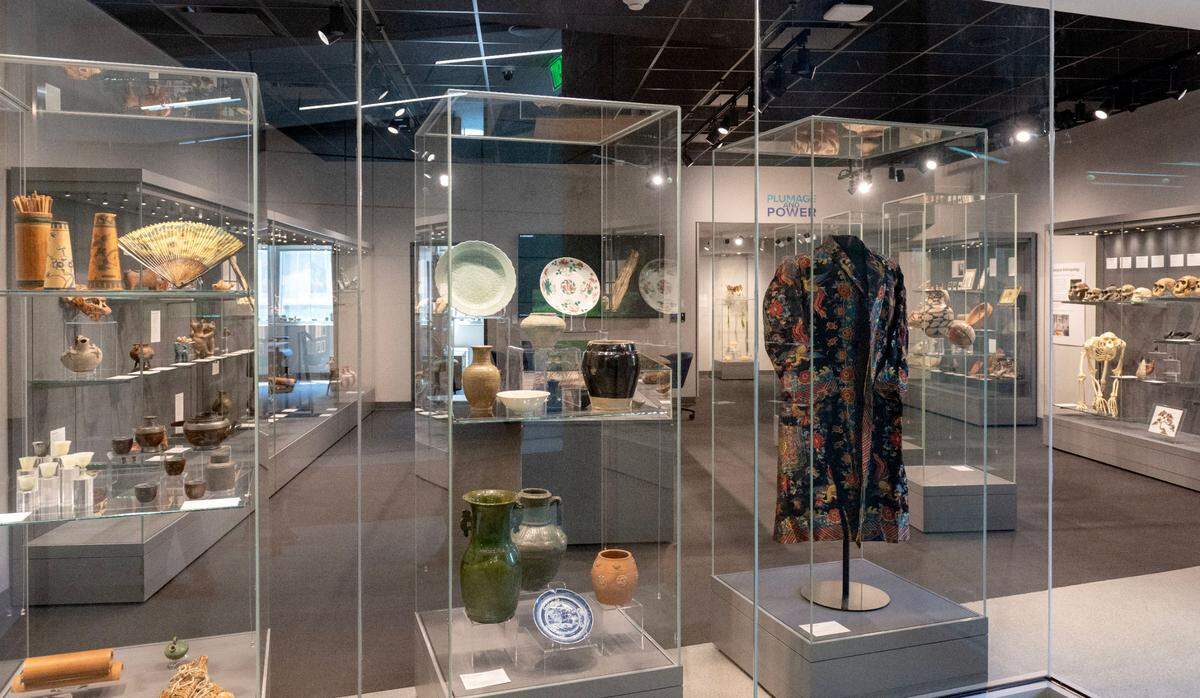
The museum’s total collection has more than 13,700 objects, Doyle said, but they can only show about 5-10% of that in the gallery at a time. Another way they’re able to showcase more of it, as well as promote research being conducted in the building, is through three display cases and a digital display in the lobby of the building.
In the future, he said they’re excited to collaborate with other departments in the building, like political science or criminology, that are often looking at similar topics but through different methods or angles.
The new space also presents more opportunities for hosting events and groups. For example, there could be an event on a home football game day that people who don’t want to tailgate can attend, he said.
“In contrast to the old space as well, we’re in a much higher traffic area, so we actually have much more visibility and we actually have accessibility for like a bus drop-off, or school groups, things like that,” Doyle said. “So this will allow us to reach a wider audience I think, and just capitalize on people coming to the building for class, or also now being near the Nittany Lion Inn and next to Cafe Laura.”
Overall, Doyle hopes people from the Penn State community and beyond visit the museum. It builds on Penn State’s “We Are,” he said, as people can learn who we are — human culture and history.
“This is really a place where you can come and learn about the human story more broadly and think about: Who are we? Where did we come from? What have we done? And where can we go in the future?” he said. “And so anthropology’s core is really about, who are we as humans?”
The Centre Daily Times toured the new museum in early May. Take a look at some of what the museum has to offer below.
Better Storage
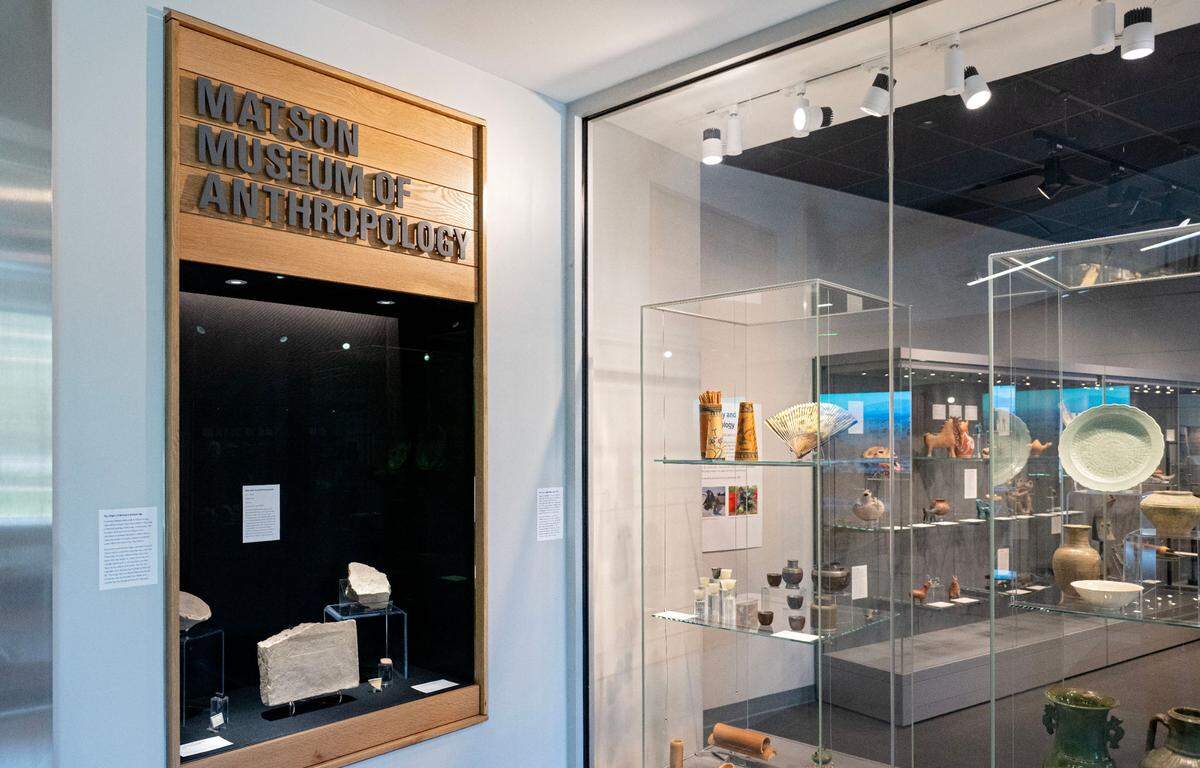
The main storage room is about the same square footage as the previous storage space but is taller. It has high-quality museum shelving, which is important for both maximizing space and safely storing items. The space itself allows for easy access for students if they wanted to do research projects.
The room is environmentally controlled, another big upgrade from the old space. Ideally, museum collections are stored in a space with stable temperatures and humidity, Doyle said. Some cabinets allow for less air flow, which is better for organic objects, such as sculptures made from wood or animal skins.
Custom boxes were also created to store oversized objects, like spears, for example, which are stored in a long box.
“We have quite a large collection of throwing weapons, ... there’s a very wide variety of spears. So we have those now safely stored away in these more efficient boxes, so that they’ll be safer from dust or light,” Doyle said.
All of the items have been transferred from the previous space to the new one, but Doyle is still working through unpacking — a seemingly never-ending project. He hopes in the future they’ll be able to add to their collection to enhance teaching and research abilities.
Many students helped with the move to the new space over the course of about a year and a half, Doyle said, which gave them real, hands-on training in collections management and conservation.
Doyle had a student who graduated in 2023 who was interested in object conservation. The museum had an initial list of objects that had breaks or broken repairs, and the student was interested in making custom boxes for those items. He did a project with about 10 of the most fragile vessels and went on to become a conservation technician at the Penn Museum in Philadelphia.
“That was really exactly what I wanted to happen,” Doyle said, explaining the museum was able to get the move and projects completed in a way that was beneficial to students.
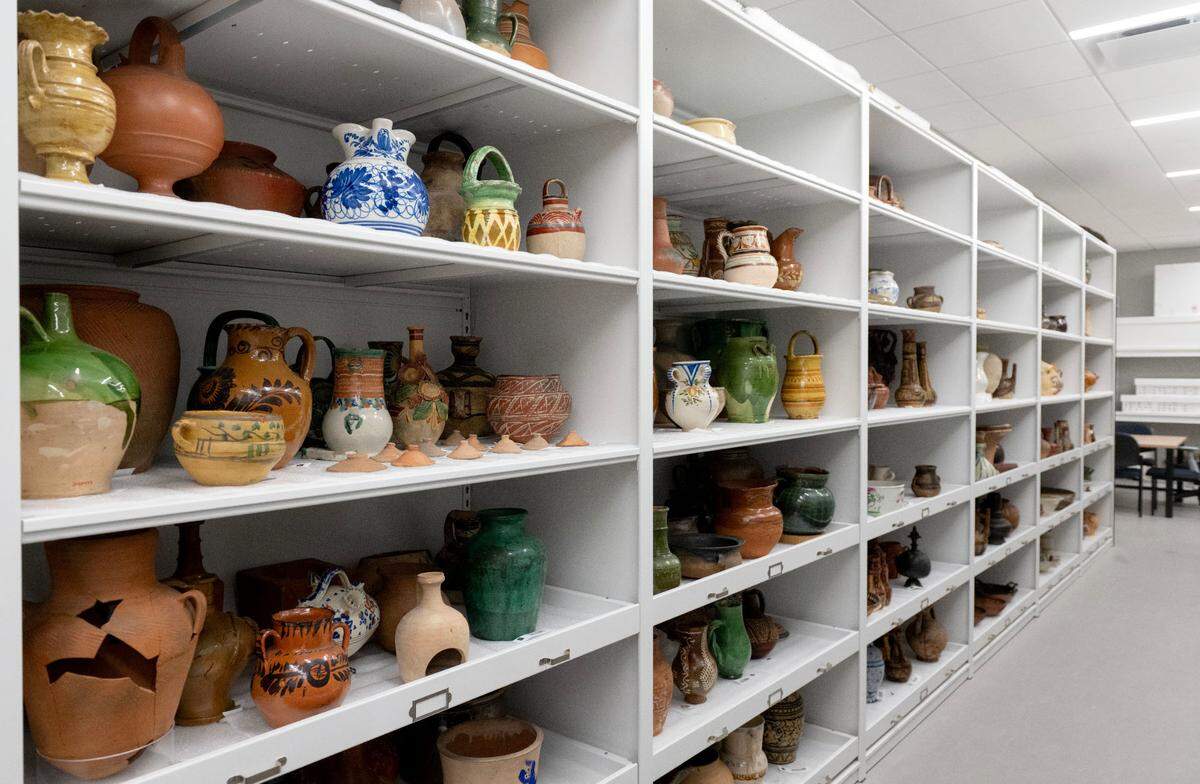
Additionally, attached to an anthropology classroom is teaching collection storage, out of view of the public. The space stores many items often used for teaching, Doyle said, like casts of archaeological objects. It also holds mounts and extra shelves for the museum gallery.
“In the future what we hope to do is, as we sort of unpack and get the inventory completed, essentially we’d be able to get these drawers programmed so that they can be linked with specific collections for specific teaching activities,” he said. “Over the next two years, we’ll really be focusing on really getting the inventory done and kind of recording the new locations of all the objects that came from the old building, and then working with the faculty to see, OK, what’s the best way we can get everything accessible for the (teaching assistants) so that it’s not a heavy lift every semester?”
Displays
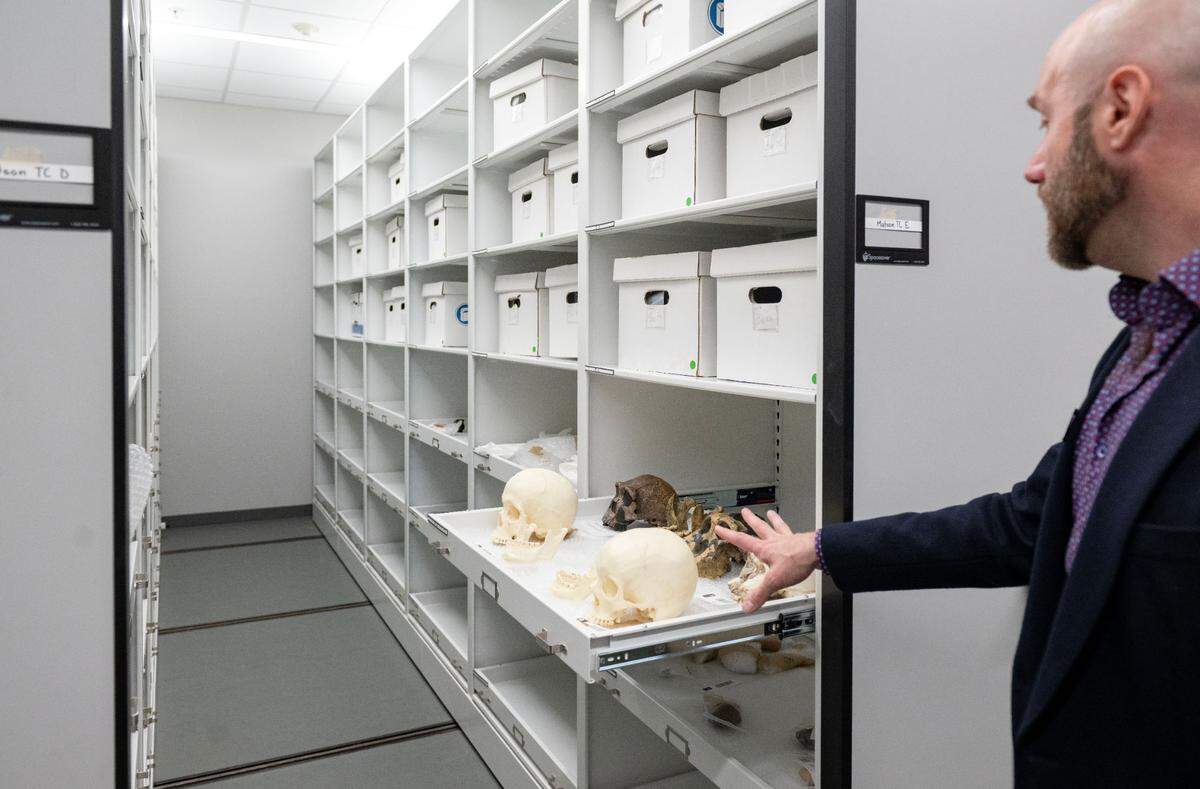
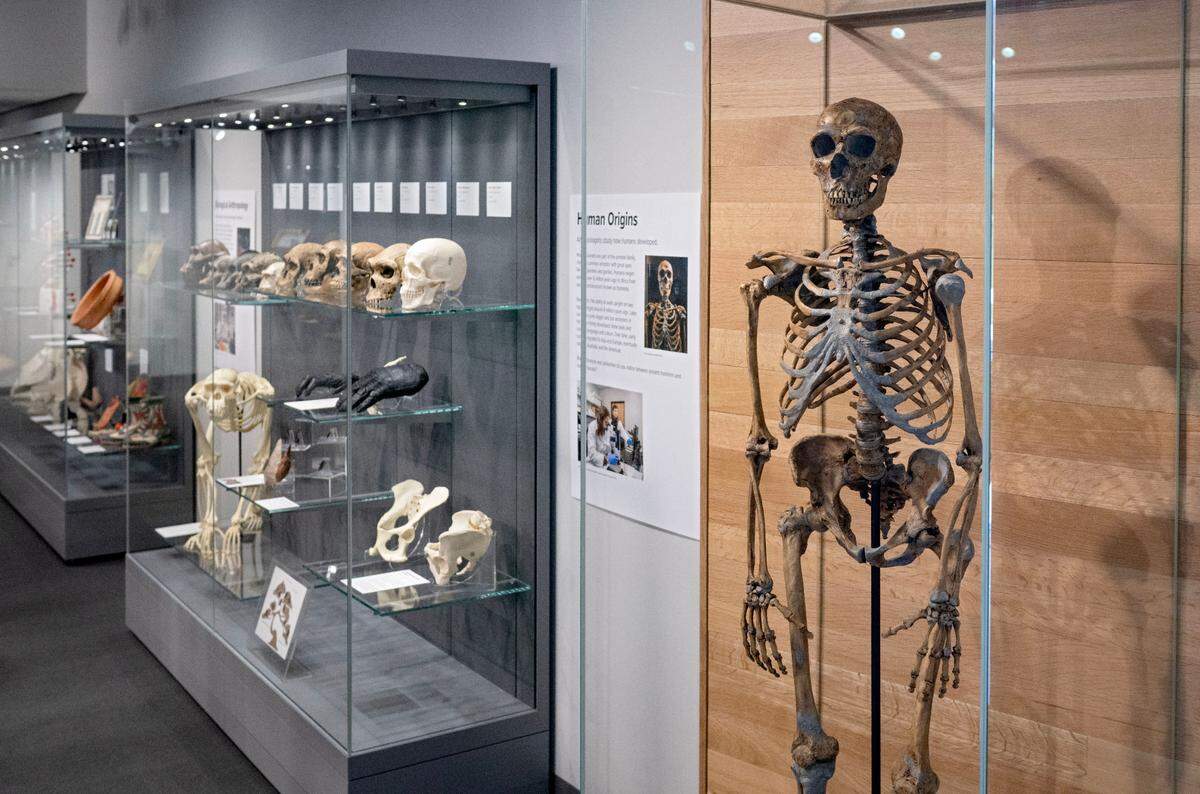
Looking at human origins and biological anthropology more broadly has been a strength of Penn State’s, Doyle said, and he wanted to highlight that in the first installation. The human origin biological anthropology cases were created by students in a museum studies class, he said. They chose the topic, the objects and wrote description labels themselves as a final project — another case of getting real-world experience.
He plans to have more student-driven exhibits each semester.
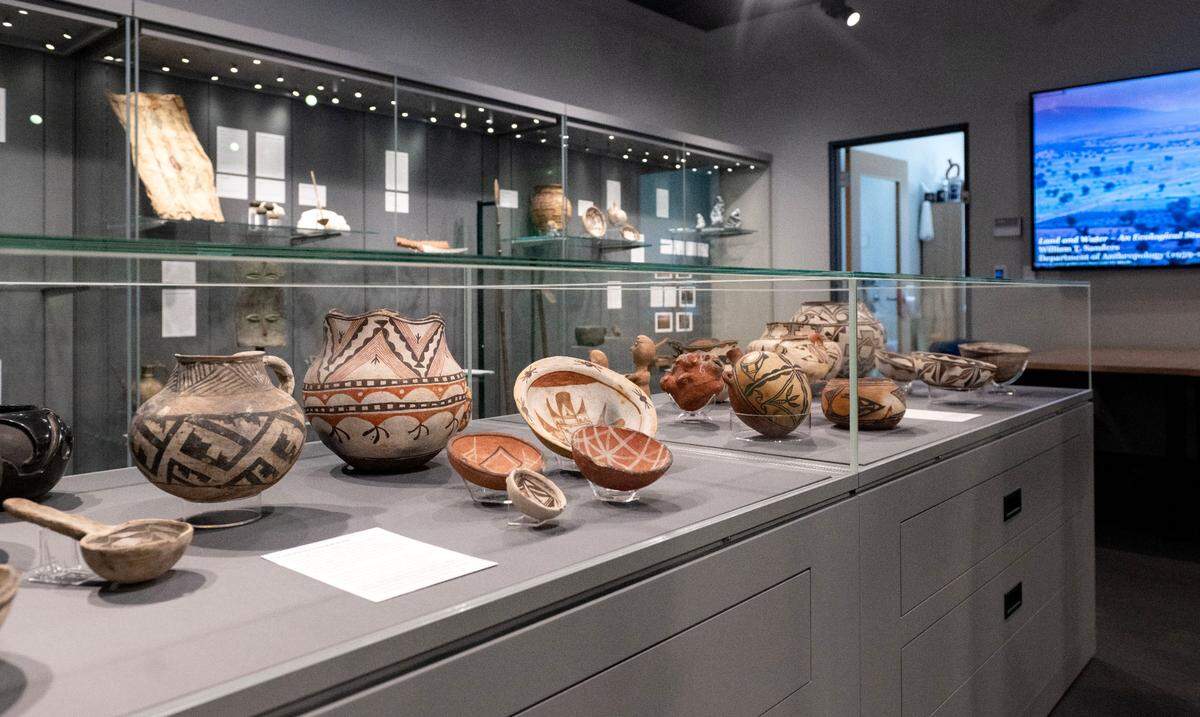
The pottery collection on display includes a group of pots from various Pueblos in what is now New Mexico, all collected from around 1903.
“This sort of Southwest pottery is interesting of that time because it’s kind of after the railroads have gone through. There’s a lot more tourism. There’s a lot more kind of people moving west in the late 19th century, and so the potters in that area began producing things in traditional forms and with traditional surface decorations, but for a tourist market. So it’s kind of this interesting slice of time where we see kind of very almost ancient forms that we see in the ancestral pottery, but in this way, produced for tourism,” Doyle said.
Items like the large jars weren’t even able to be shown before because of the large dimension.
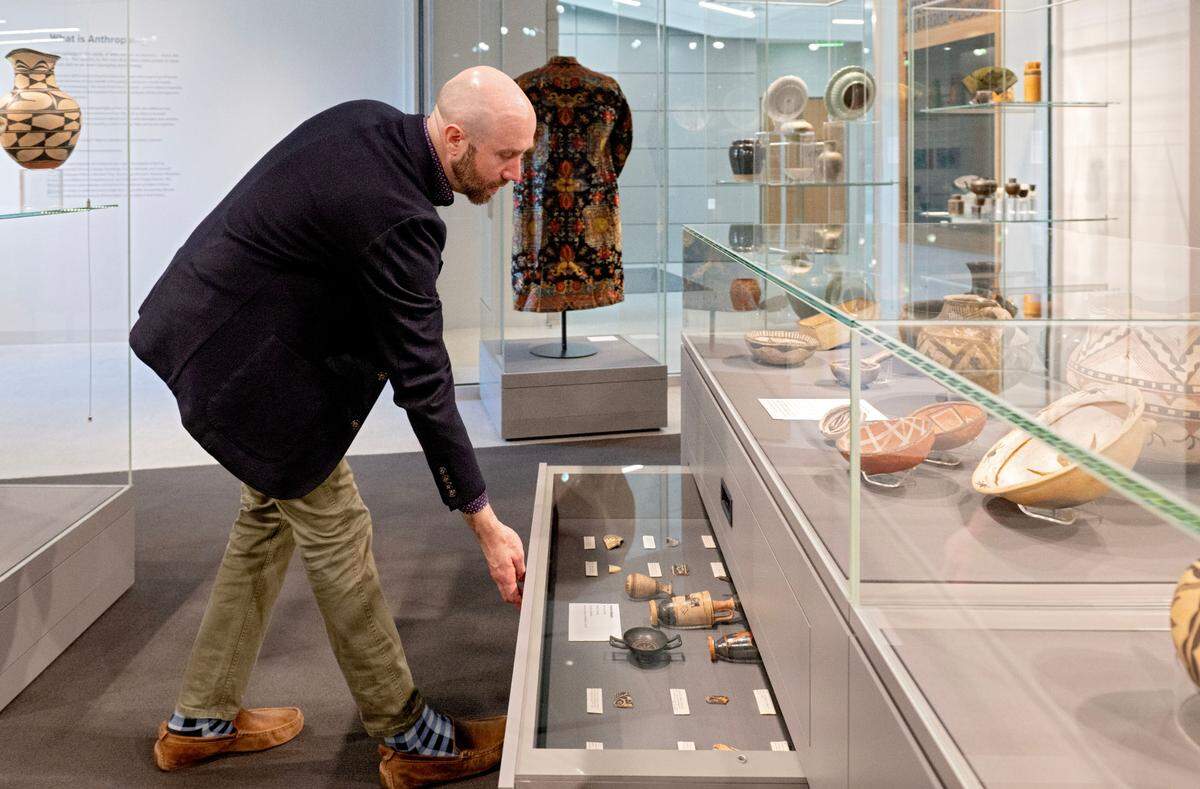
Drawers underneath the main case also provide the opportunity for “mini exhibitions” of smaller items. Doyle had four different examples of that ready for the grand opening in May.
The drawers can also be used for things that are light sensitive.
“So for example, baskets, we can only really show for six months maybe, if they’re on view, just to reduce fading. But with a drawer where they’re revealed, we can have them on view for much longer,” Doyle said.
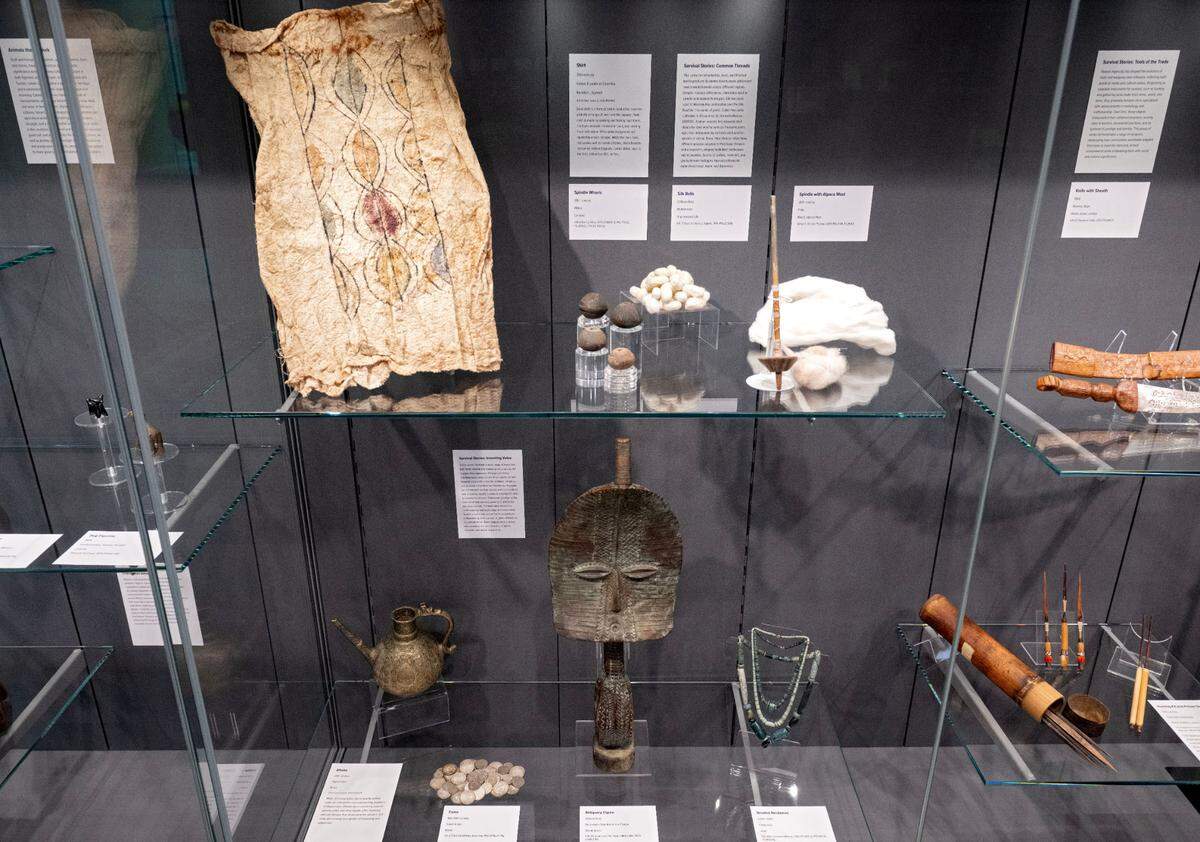
The size of the new museum is about the same as the old space, but having a purpose-built gallery “makes a huge difference,” Doyle said. The museum has high-quality cases with shelves that can be adjusted to accommodate different sizes of objects.
The interior LED lighting is also flexible in the cases. Each light can be focused and each row can be dimmed independently, he said.
The museum is free and open to the public, 11 a.m. until 4 p.m. Monday through Friday.
This story was originally published June 22, 2025 at 6:00 AM.