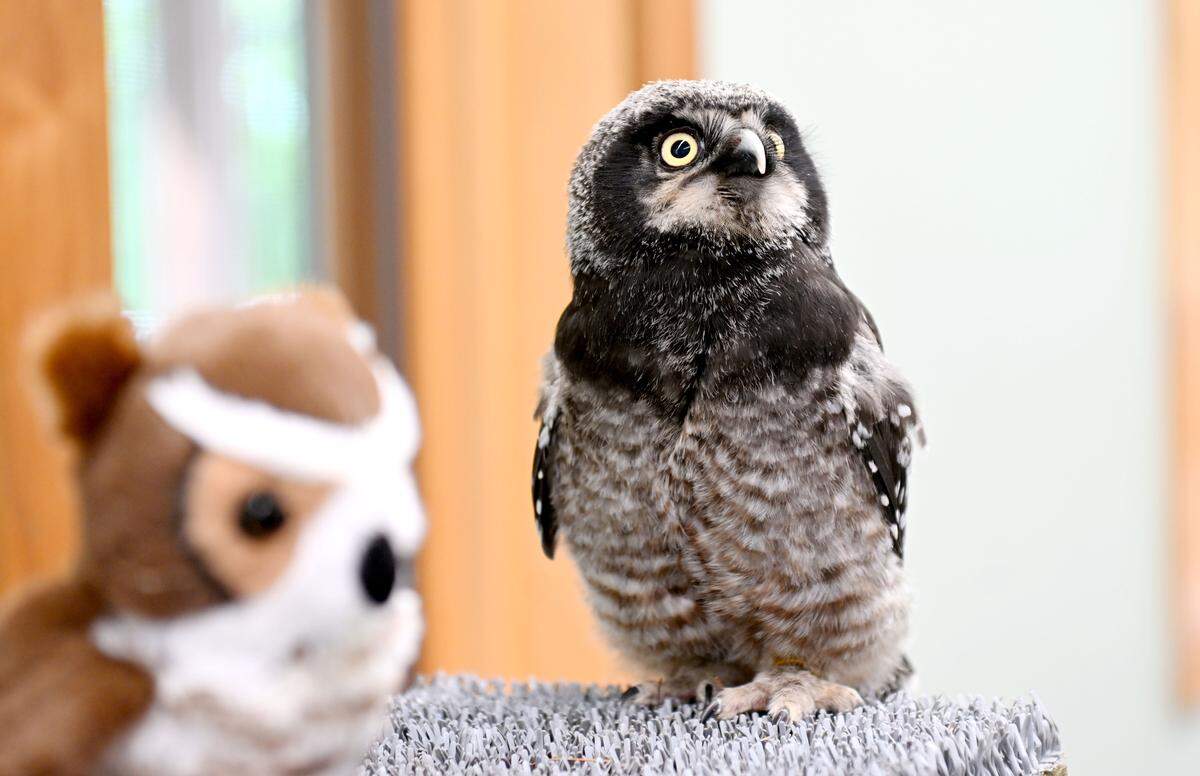
‘An emotional time.’ Shaver’s Creek announces death of new Northern Hawk Owl chick
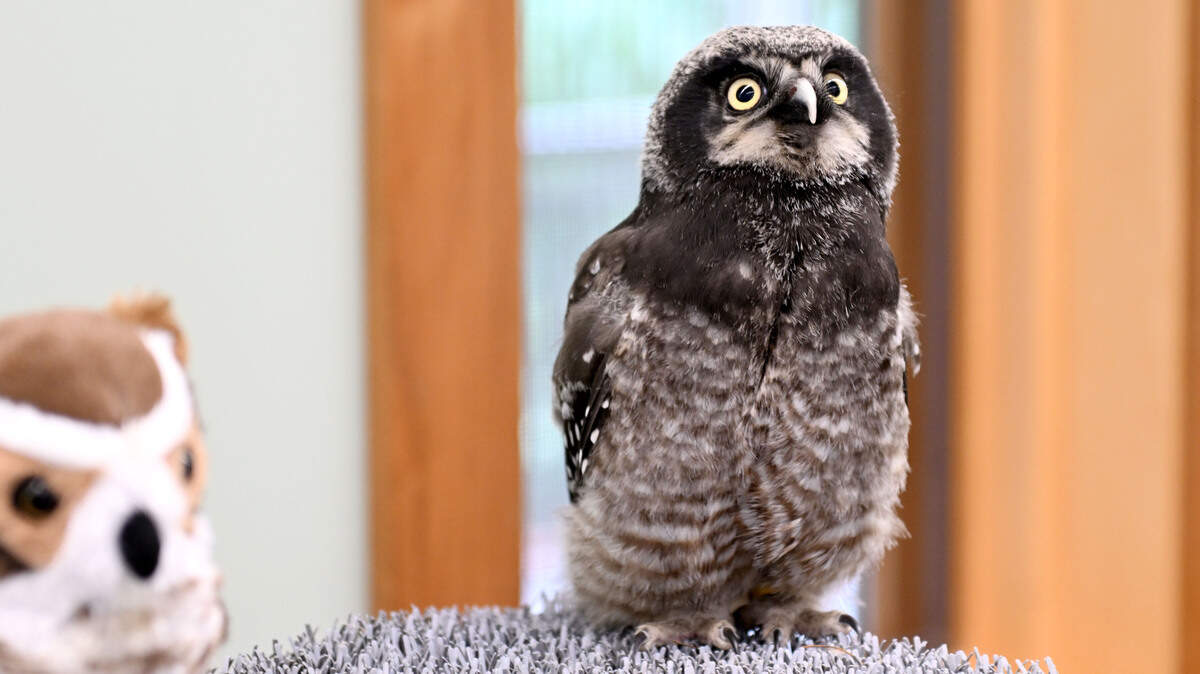
The Shaver’s Creek Environmental Center’s newest addition has died, the center said on its website and social media pages Monday.
The environmental center welcomed Pip, a Northern Hawk Owl chick, to its Klingsberg Aviary this summer. He and his siblings, which were placed around the country, were bred for conservation education in Washington state, the first time this species has been bred in the United States.
Pip died on Sunday, after a “brief but deeply meaningful time with us,” Shaver’s Creek wrote online. Having Pip was a unique opportunity for Shaver’s Creek and its visitors, because it was the first time a Northern Hawk Owl was raised under human care, so there were a lot of research opportunities and collaborations available.
“Shortly after Pip’s arrival, our team noticed a subtle breathing issue and began working closely with veterinary experts at Penn State and nationwide to understand and treat it,” the post states. “While we saw some initial improvement, Pip’s condition worsened last week, leading us to seek advanced care. Despite the best efforts of our team and specialists, Pip was unable to recover. We do not yet know the exact cause of his decline, and we are continuing to seek answers.”
They plan to share more information as it becomes available, the post states, and said they’re grateful to everyone who welcomed Pip into the community. The environmental center hosted some programs for the public to meet Pip, and more programming was planned for the future.
“This is an emotional time for our wildlife team, for everyone at Shaver’s Creek, and for those in the community who had the chance to meet Pip and experience his unique presence,” the post reads. “Though his time with us was brief, Pip brought immense joy, wonder, and hope. He helped us imagine new possibilities for conservation education and created meaningful connections with everyone who met him. Pip’s legacy will continue to shape our work and inspire future efforts in wildlife care and education.”