
How does Pennsylvania vote? See how in-person, mail-in voting has changed since 2020
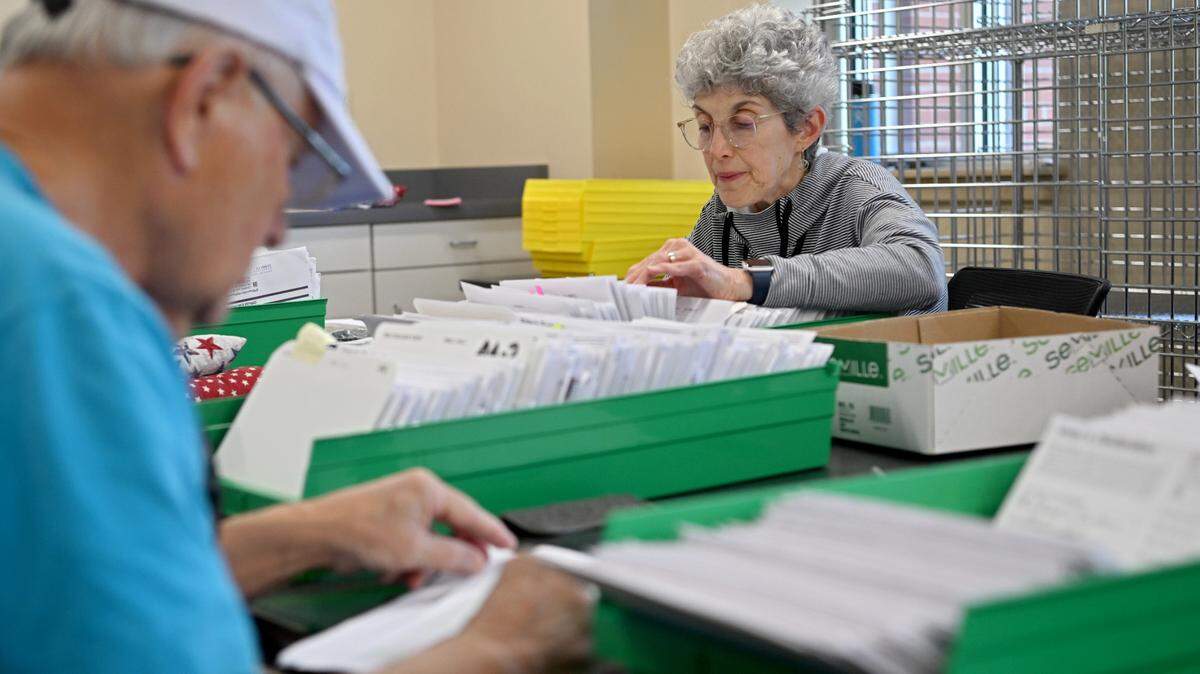
We’re less than two weeks from Election Day, but there’s still plenty of time to get registered and make a plan to vote in Pennsylvania.
As Republicans and Democrats campaign to help their candidates win Pennsylvania’s coveted 19 electoral votes, the commonwealth remains a pivotal swing state this election cycle. Luckily, if you’re eager to play your part in the democratic process, voting has perhaps never been easier.
Pennsylvania’s 9 million registered voters can visit their polling place in person on Election Day, Tuesday, Nov. 5, but they might also consider voting early or casting their ballots through the mail. These options are all safe and legal, but what what do Pennsylvanians prefer?
Here’s what you need to know about how voting has changed in the Keystone State, plus a look at registration deadlines and the different ways you can cast your ballot.
Is voting by mail growing more common?
Yes. Broadly, voters from across the country are becoming more likely to vote through the mail than show up at the polls in person on Election Day, according to data from recent elections.
More than 35 million mail-in ballots were cast and counted during the 2022 midterm elections, according to the U.S. Election Assistance Commission. A 2023 report from the agency found nearly 32% of voters who cast a ballot in 2022 did so through the mail, up from about 25.6% in 2018.
Before the 2020 election, voting in person was by far the most common choice for voters across the U.S., the EAC says. The majority of voters, roughly 58%, cast their ballots in person on Election Day in 2018. But by 2020, voting by mail became the most common method of casting a ballot, comprising about 43% of all votes.
The EAC’s report concludes the COVID-19 pandemic “appears to have had lasting effects on how voters cast their general election ballots.”
Pennsylvania observed a notable spike in mail-in voting during that period, too. According to the commonwealth’s elections records, roughly 37.8% of Pennsylvania’s votes for president in the 2020 general election came through mail-in or absentee ballots. Approximately 2.7 million mail-in and absentee ballots were counted for election, and nearly 75% of them were cast for Joe Biden, the Democratic nominee who carried Pennsylvania by just about 80,000 votes. Democrats are generally considered far more likely to vote by mail than Republicans.
Locally, roughly 42.1% of Centre County’s votes for the 2020 general election came through absentee or mail-in ballots, according to the county’s board of elections. That mark dipped in the following three elections, tumbling to 30.9% in 2021, 25% in 2022 and 28% in 2023.
Centre County’s mail-in and absentee ballots cast over the past four elections remain well ahead of historical averages, according to the Voting and Registration Supplement of the U.S. Census Bureau’s Current Population Survey (CPS). Between 1996 and 2010, voting by mail grew from representing 8% of U.S. voters to about 18.1%. That rate increased to 23.1% in 2018 before drastically jumping to 43% during the 2020 general election, the Massachusetts Institute of Technology’s Election Data and Science Lab reports.
How can I vote by mail in Pennsylvania?
Voting by mail is easy in Pennsylvania, but be sure to know the difference between a mail-in ballot and an absentee ballot. Any registered voter can apply for a mail-in ballot without an excuse or reason, but absentee ballots are reserved for voters who will not be in their municipality on Election Day or have a disability or illness that would prevent them from voting in person at their polling place.
Applications for mail-in or absentee ballots must be received by your county election office by 5 p.m. Tuesday, Oct. 29. Your county election office must receive your completed mail-in or absentee ballot by 8 p.m. Tuesday, Nov. 5. A ballot that arrives past the deadline but is postmarked before 8 p.m. Nov. 5 will not be counted.
If you encounter an emergency, such as an unexpected illness, disability or injury, you might be eligible for an emergency absentee ballot even after the Oct. 29 deadline.
Just because you applied for a mail-in or absentee ballot doesn’t mean you can’t wind up voting in person instead. To do so, you’ll need to surrender your mail-in or absentee ballot and its pre-addressed return envelop to be voided before signing an agreement to vote in person and, eventually, casting your ballot.
Back in September, the Pennsylvania Supreme Court ruled mail ballots submitted with incorrect dates can’t be counted in November. Some ballots may also be thrown out if they are deemed “naked,” or submitted without the required secrecy envelope. However, under state law, voters whose mail-in ballots are thrown out can still vote with a provisional ballot at a polling place.
What to know about voter registration in Pennsylvania
You can check your voter registration status online through the Pennsylvania Department of State’s virtual portal by searching your name, driver’s license number or Pennsylvania Department of Transportation ID number. If you search by name, be sure to list your first and last name, date of birth, ZIP code and county of residence.
As of early October, more than 8.99 million Pennsylvanians were registered to vote. Notably, that figure is still down from the 9.09 million residents who were eligible to vote during the 2020 presidential election.
Republicans now hold voter registration advantages in four counties — Beaver, Berks, Bucks and Fayette — that previously leaned in favor of Democrats, according to 2020 end-of-year registration data published in 2021. Registration edges aside, Pennsylvania remains home to roughly 3.95 million registered Democrats and about 3.62 million registered Republications.
To learn more about voting in Pennsylvania, visit pa.gov/en/agencies/vote.html.
%202.JPG)