
You can track your PA mail-in ballot to make sure your vote counts. Here’s what to do
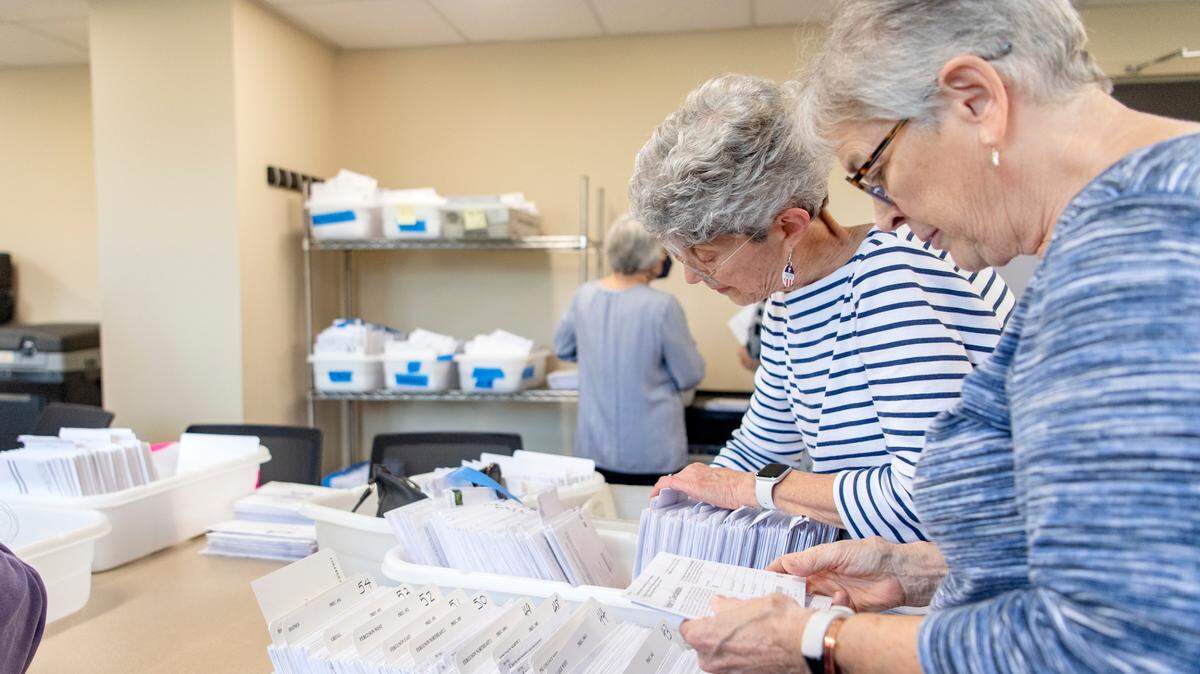
Now just two weeks out from Election Day, it’s time to start putting together a plan to vote Tuesday, Nov. 5.
Pennsylvanians hoping to cast a ballot this year have plenty of options at their disposal, but voting by mail might be the most convenient — and popular — method. After all, more than 35 million mail-in ballots were cast and counted during the 2022 midterm elections, the U.S. Election Assistance Commission reports, and roughly 37.8% of Pennsylvania’s votes for president in 2020 came through mail-in or absentee ballots.
Voting by mail is safe and legal, but there’s plenty you’ll need to keep in mind if you still need to cast your ballot. Here’s what you should know about voting by mail in Pennsylvania, including key deadlines, mistakes to avoid, ballot-tracking methods and more.
How can I apply for a mail-in ballot?
Unlike some other states, Pennsylvania does not require registered voters to provide reasoning for choosing to vote by mail. However, voters may need to provide a reason for requesting absentee ballots, which are typically reserved for those who are expected to be out of their municipality on Election Day or are blocked from voting in person due to injury, illness or disability.
To successfully request a mail-in or absentee ballot, Pennsylvania voters’ county election offices must receive applications by 5 p.m. Tuesday, Oct. 29. You can apply for these ballots online, through the mail or in person at your county’s election office.
You can even visit your county’s election office to complete the process in one fell swoop by requesting your ballot, receiving it, completing it and submitting it back to local officials before leaving. Additionally, Pennsylvania makes emergency absentee ballots — reserved for those who encounter last-minute barriers to voting in person on Election Day — available by request starting at 5 p.m. the Tuesday before the election (Oct. 29).
Regardless of your method, your county election office must receive your completed mail or absentee ballot by 8 p.m. Nov. 5. A postmark by that time is not sufficient. If your ballot arrives too late, it won’t be counted.
Pennsylvania maintains an online list of official ballot return locations, organized by county. You can use it to find addresses and working hours for your county’s election offices, ballot drop boxes, satellite offices and more at pa.gov/en/agencies/vote/voter-support/mail-in-and-absentee-ballot/return-ballot.html.
How can I make sure my mail ballot gets counted?
Carefully following instructions and avoiding mistakes will go a long way toward making sure your ballot is counted, Pennsylvania election officials say.
The commonwealth recommends voters follow these steps while submitting their mail-in or absentee ballots:
- Carefully read the instructions and mark your ballot. Be sure to complete the front and back of each page.
- Seal your ballot in the yellow envelope marked “Official Election Ballot.” Don’t write or make any stray marks on that yellow envelope.
- Seal your yellow envelope in the pre-addressed return envelope. Sign and write the current date on the voter’s declaration on the outside of the return envelope.
- Return your completed ballot to your county election board by 8 p.m. Election Day, Nov. 5.
Mail-in and absentee ballots will not be counted if they are not sealed within the yellow secrecy envelope or if voters do not sign the declaration on the outside of the return envelope. Back in September, the Pennsylvania Supreme Court ruled mail ballots submitted with incorrect dates can’t be counted in November.
Return your ballot as soon as possible to ensure it gets counted before the deadline, commonwealth officials suggest.
Even if your mail-in or absentee ballot is thrown out due to errors or mistakes, you can still vote with a provisional ballot at your polling place, Pennsylvania law reads. Some county election offices, including Centre County’s, will notify voters of ballot errors to provide enough time for them to be corrected or give voters notice to vote with a provisional ballot instead.
Roughly 21,800 mail ballots were rejected during the 2020 general election cycle, state officials estimate. The number of rejected mail ballots grew to about 23,700 for the 2022 midterm elections, leading Gov. Josh Shapiro’s administration in 2024 to introduce simpler mail ballot materials that aim to decrease ballot rejections.
How can I track my mail ballot?
The Pennsylvania Department of State offers an online tracker that offers updates on your mail-in or absentee ballot. You can find it by visiting pavoterservices.pa.gov/pages/ballottracking.aspx.
Enter your first name, last name, date of birth and county just as they appear on your ballot application. The online tool should then show the dates on which your ballot application was received, your ballot application was processed, your ballot was mailed out and your ballot was received by your county.
Once your ballot is received by your county, the tool will note your vote has been recorded. This means your ballot was received and counted, according to the Pennsylvania Department of State. Voters who provide an email address in their ballot application should also receive a notification when their vote is counted.
This ballot-tracking service does not provide updates on the status of ballots submitted for those who vote in person on Election Day.
Is it too late to register to vote?
The last day to register to vote in Pennsylvania in time for November’s election is Monday, Oct. 21.
As of Oct. 14, about 9.04 million Pennsylvanians are registered to vote, though that figure is down a bit from the 9.09 million registered voters for the 2020 presidential election.
Republicans now hold voter registration advantages in four counties — Beaver, Berks, Bucks and Fayette — that previously leaned in favor of Democrats, according to 2020 end-of-year registration data published in 2021. Registration edges aside, Pennsylvania remains home to roughly 3.96 million registered Democrats and about 3.65 million registered Republications.
Even minor advantages in voter registration could help Pennsylvania and its 19 electoral votes lean in favor of Democrats or Republicans. Joe Biden carried the commonwealth by just 1.2% in 2020, while Donald Trump won its electoral votes by an even-slimmer 0.7% margin in 2016.
Since 1900, the winner in 24 of 31 presidential elections (77%) wound up carrying Pennsylvania.
%202.JPG)