Centre County to elect jury commissioners Tuesday, 1 of just 3 US counties that do
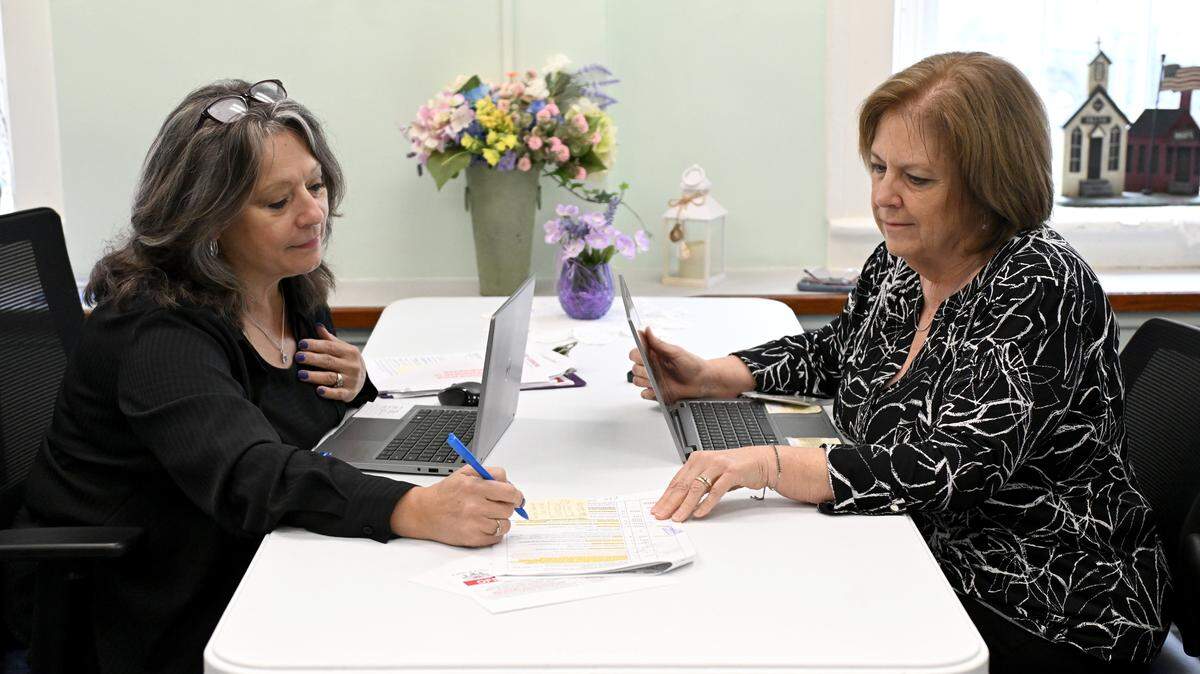
Two women in Centre County stand between you and three days on a jury for a tax fraud trial.
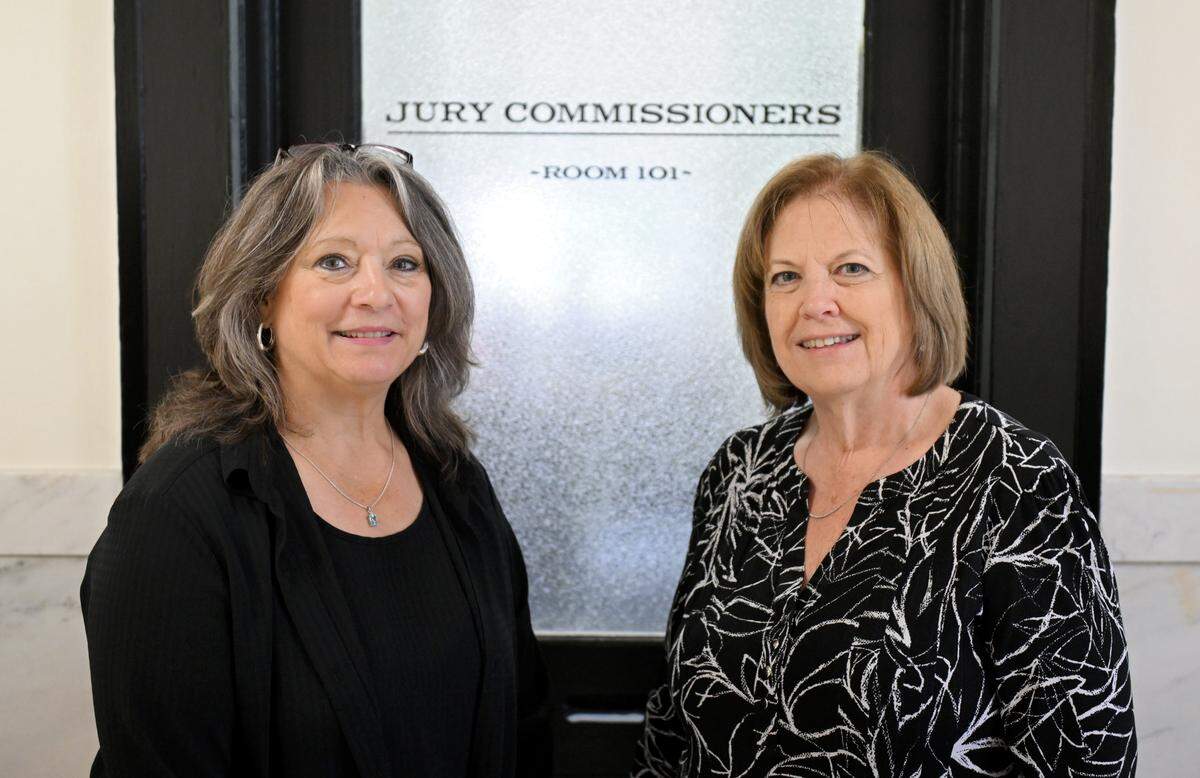
They are your jury commissioners, on the ballot Tuesday, Nov. 4 in a partisan election. Vote for one, but both will win — almost nowhere else in America does this.
For Hope Miller and Shelley Thompson, the job is equal parts paperwork and public trust. They view themselves as a bulwark against bad-faith interference in the local justice system, even if much of the part-time gig was long ago outsourced to software.
“We’re here to protect the people,” said Miller, who is running for her fifth four-year term. “We take our job and our oath seriously.”
All 67 of Pennsylvania’s counties once had jury commissioners, but only three do today.
An old corruption-busting job
When the commonwealth created jury commissioners more than 150 years ago, it was attempting to clean up a corrupt system. Sheriffs and county legislators determined the jury pool, setting up an inherent conflict of interest.
Jury commissioners in the early days were the race’s top two vote-getters, according to the state archives, eventually morphing into one Democratic and one Republican jury commissioner, with no representation for independents or minority parties.
“It’s to ensure the jury selection process is balanced and nonpartisan,” said Trinette Schmidt Cunningham, a Democratic jury commissioner in deep red Fayette County. Just like “there’s not a Republican or a Democrat way of recording a deed,” she said, there is no partisan way to manage jury selection.
Then politics seeped in. According to one retrospective in the Western Pennsylvania Historical Magazine, elected jury commissioners in the late 1800s would “allegedly select corrupt and pliable individuals to serve on the jury panels, and thereby helped to develop their own political power base.” The Allegheny County Bar Association unsuccessfully advocated for the abolition of jury commissioners at the time.
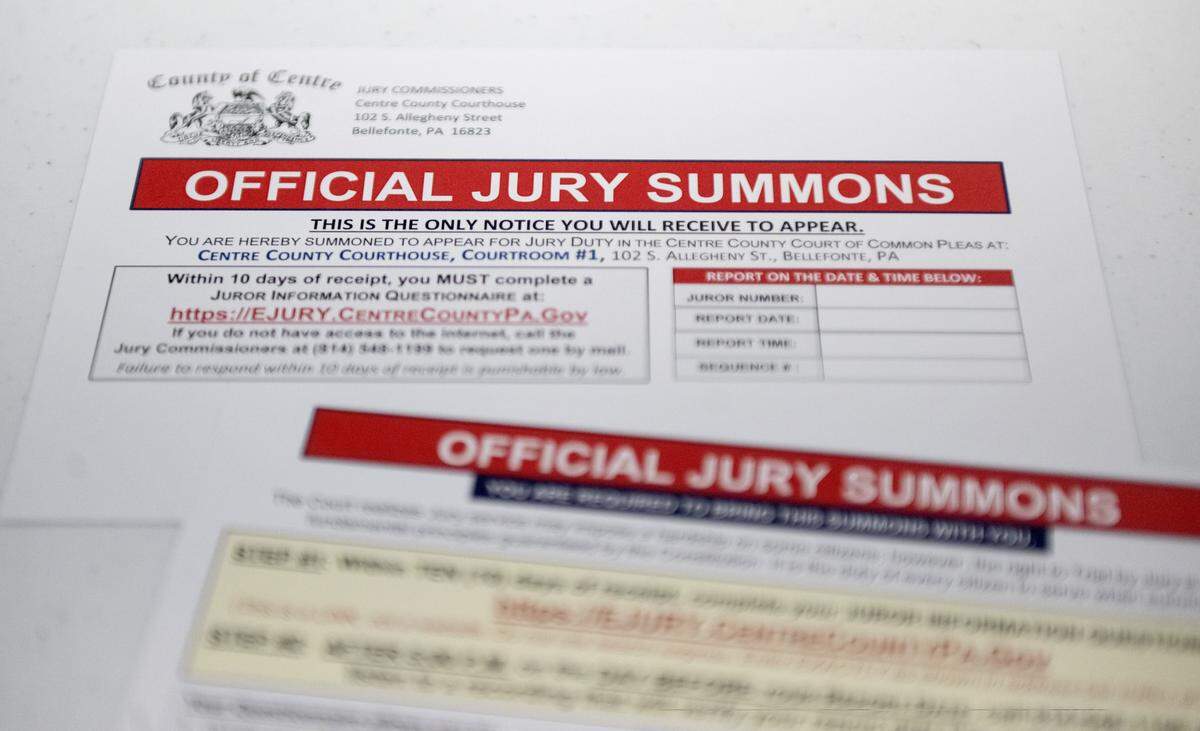
Jury commissioner abolition gained traction in the 1990s, and it took decades for most counties to eliminate the position.
“The reason is quite simple, and that is that there are really no responsibilities that remain, in many counties at least, for the jury commissioners,” state Sen. Michael Bortner said during a 1994 Senate floor debate. Bortner, who would go on to serve as a York County judge, said computers made it so “jury commissioners have virtually no responsibility other than to pick up their paychecks.”
A day in the life of a jury commissioner
The job description is short enough that Miller, Centre County’s Republican jury commissioner, uses a version of it as her email signature: Preserving our right of trial by jury by maintaining a well-functioning system for the random selection of jurors.
What that entails is pulling thousands of names from a state database each year, then cleaning the data by eliminating nonresidents and dead people.
“We check the obituaries,” said Thompson, the Democrat, in a joint interview with Miller in the mint green office they share. Thompson is running for her second term.
The jury commissioners use a computer program to randomly pick a few hundred names each selection period to mail summonses to. The attrition rate is high — people older than age 75 can opt out, some have pre-planned vacations and many are Penn Staters who have left Centre County after graduating.
“We have 800 of these summonses and they all want out,” Miller said of the potential pool.
If Miller and Thompson can’t agree on something, the county’s president judge breaks the tie.
The most laborious job of the jury commissioner — creating the jury pool by picking cards out of a drawer — was computerized in 2014. Beyond corralling jurors, the job entails checking in prospective jurors for selection and answering questions over phone and email.
The jury commissioners do not pick jurors — that is the job of the attorneys. They do not dart around the county to cut ribbons. They are not policymakers.
“We don’t just run the ship by ourselves,” Miller said. “We can’t do anything without permission.”
Jury commissioner as politician
Asked if she ever gets recognized in the street as a jury commissioner, Thompson replied bluntly, “I don’t.” Miller, who has been in county government for most of her adult life, said she is sometimes recognized.
The work of the jury commissioner isn’t sexy, but it can serve as a stepping stone, something the current officeholders haven’t capitalized on.
Thompson’s predecessor, Laura Shadle, is a rising Democratic Party operative who served as a delegate to the Democratic National Convention last year. Before Shadle was Jason Moser, who served two years as jury commissioner before being elected Centre County controller.
Schmidt Cunningham, Fayette County’s Democratic jury commissioner, serves on the Pennsylvania Democratic Party’s executive board, and Montgomery County’s Democratic candidate for jury commissioner is running with the endorsement of Planned Parenthood.
The propensity of jury commissioners to get involved in politics beyond the courthouse has been a point raised by the position’s opponents.
“It provides another place for political people,” said retired Blair County Judge Daniel Milliron, who 19 years ago encouraged a gathering of jury commissioners to educate skeptical lawmakers on the importance of their jobs. Blair County abolished jury commissioners in 2017.
But Miller and Thompson stressed that they adhere to rules designed for the judicial branch — of which they are not — only engaging in politics during election season.
“I have to tell people on the Republican committee when they invite me to something that I can’t come,” Miller said.
“I’m a Democrat on the year I run,” Thompson said, adding that she would endorse her Republican counterpart and ostensible competitor.
Why does Centre County have jury commissioners?
The Centre County Board of Commissioners considered abolishing jury commissioners in 2012, but voted down the proposal.
“I think the jury commissioner position has been almost a tradition in Centre County,” said Commissioner Steven Dershem, who voted against the proposal at the time. “I think that’s probably why it still exists.”
Abolishing jury commissioners was in vogue in the early 2010s, when a state law allowed all counties to eliminate the position.
“It was DOGE before DOGE,” said the law’s author, former state Rep. George Dunbar (R-Westmoreland), referring to the Trump administration’s cost-cutting initiative, the Department of Government Efficiency. “It was a political patronage job, is what it was viewed as.”
Dunbar’s law — the jury commissioner portion of which was added by the state Senate — was the culmination of more than 20 years of anti-jury commissioner sentiment among lawmakers, who created carveouts for their own counties to abolish the position. The Pennsylvania Supreme Court overturned the law in 2013 for addressing more than one subject, which is illegal in the state.
The legislature tried again in 2013, and the effort stood up to a lawsuit by many of Pennsylvania’s remaining jury commissioners (Miller, already in her first term, was not among them). Subsequently, jury commissioners began dropping from county payrolls.
But not in Centre, which, with Fayette and Montgomery, is one of only three Pennsylvania counties that still have elected jury commissioners, per a Centre Daily Times analysis. Many government officials contacted for this story were puzzled by the inquiry.
According to Jawwaad Johnson, the director of the Center for Jury Studies at the National Center for State Courts, the three counties may be the only ones in America that have elected jury commissioners.
“In Nebraska, Illinois, Washington, and Texas the elected Clerk is also the jury commissioner,” Johnson wrote in an email. “I do not know any other circumstance that the jury commissioner is elected as a standalone position.”
The commissioners earn just south of $17,000 for their work, plus benefits. Miller said she accepts the benefits since her husband is retired, while Thompson said she does not. Miller said the two log more than 20 hours per week apiece, at most 70.
The elections themselves don’t move the needle, even though voters can only vote for one jury commissioner. The loser of the election is guaranteed the job because both major political parties must be represented, meaning the Nov. 4 election will only determine who will be the “lead” jury commissioner and who will be the “vice” jury commissioner, according to county spokesperson JJ De La Cruz.
But the jury commissioners said they equally share responsibilities, and Miller said she didn’t know why voters could only choose one.
“I called the election office and they’re like, ‘We’re wondering that too,’” she said.
This story was originally published October 30, 2025 at 10:12 AM.