
PA municipal election: What to know about PA judicial candidates, retention races
READ MORE
Centre County Voters Guide: 2025 municipal election
The Pennsylvania municipal election is Nov. 4, and Centre County voters will see statewide judicial candidates on their ballots, along with local races for councils, boards of supervisors and boards of education. This voters guide was compiled by the League of Women Voters of Centre County with assistance from the League of Women Voters of Pennsylvania.
Expand All
PA municipal election: What to know about PA judicial candidates, retention races
PA municipal election voters guide: Bellefonte, State College school board races

PA municipal election: What to know about council, supervisor races in Centre County
PA municipal election: Who’s running for Centre County DA, district judge?
Pennsylvania Judge of the Superior Court
Description of office: The Superior Court is one of Pennsylvania’s two statewide intermediate appellate courts. This court, established in 1895, reviews most of the civil and criminal cases that are appealed from the Courts of Common Pleas in the Commonwealth’s 67 counties. The Superior Court consists of 15 judges. The president judge is elected to a five-year term by his/her colleagues. A large number of appeals flow to the Superior Court from the trial courts. Generally, appeals are heard by panels of three judges sitting in Philadelphia, Harrisburg, or Pittsburgh. The court often is the final arbiter of legal disputes. Although the Supreme Court may grant a petition for review of a Superior Court decision, most petitions are denied, and the ruling of the Superior Court stands.
Term: 10 years
Salary: $247,188
Vote for ONE.
For more nonpartisan information on appellate court candidates, view the PA Bar Association’s ratings and questionnaires here: www.pabar.org/site/For-Lawyers/Committees-Commissions/Judicial-Evaluation/Resources/JEC-Ratings/2025
Candidates (Standard race):
Brandon Neuman

Party: Democratic
County: Washington
Occupation: Judge of the Court of Common Pleas
Education: University of Richmond - BA in Criminal Justice. Duquesne University Kline School of Law - Juris Doctorate
Qualifications: 8th year as a Judge- Presiding over Family, Civil, Criminal and Veteran’s Court -Sheriff & Deputy Sheriff Education and Training Board. PA House of Representatives. Served on House Judiciary Committee, Commission on Crime Delinquency, and PA Commission on Sentencing -Former Trial Lawyer
Campaign website: judgeneuman.com
Facebook: facebook.com/VoteNeuman
Q: Why do you seek to serve as an appellate court judge?
A: To bring my extensive and diverse experience to the Superior Court. The PA Bar Association stated, “The Candidate’s opinions demonstrate knowledge of substantive and procedural legal issues and the ability to provide good factual backgrounds and well-developed legal arguments.” I have a proven record of being fair and impartial. As a judge, I have the experience to properly rule on any case presented to the PA Superior Court. As a legislator, I wrote laws to protect victims of sexual assault. Pennsylvanians deserve a judge who has broad experience. As a Judge, I have presided over Veterans Court, Family, and Criminal matters, Dependency cases, and Civil cases. My experiences allow me to be the best candidate for the PA Superior Court.
Q: What process would you follow to be fair and impartial in reviewing and evaluating opposing positions presented in a case?
A: Part of the reason I was Highly Recommended by the PA Bar Association was that my colleagues indicated I have a high level of integrity, treat all individuals fairly, and is patient with all persons who appear before me. I will not have any preconceived opinions prior to having heard all of the information. I have a proven record as a judge of patiently listening to each party and applying the law equally and appropriately. I understand that parties deserve and expect an impartial ruling that follows the law. Once a case is properly presented to the PA Superior Court, each party is entitled to be heard as the law allows. I am the best candidate for the PA Superior Court based on my unique experiences and proven record as a judge.
Q: What criteria would you consider in deciding a case that could affect long-standing precedent?
A: The analysis remains the same for every case. I would first read all documents provided to the court. Then I would research any legal issues that are presented. Next, I would determine if any distinguishable facts about this case would set it apart from any previous ruling made by a PA Appellate Court or The PA Supreme Court. I would also research to determine if there was any change in law since previous rulings addressed a similar legal issue. If there are no distinguishable facts or change in law, then legal precedent would be given great deference. If there was a change in law or the facts of the case are distinguishable, then a full legal analysis pertaining to the legal issue must be explored.
Maria Battista

Party: Republican
County: Clarion
Occupation: Executive/Attorney
Education: 2 undergraduate degrees: Elementary Education, Speech Communication & Theatre, Clarion University, B.S.; Westminster College, M.Ed.; Ohio Northern University, J.D.; University of Pittsburgh, Ed.D.
Qualifications: 15+ years experience in Civil, Criminal and Administrative Law; Former Assistant District Attorney; Former Attorney with the Governor Corbett Administration; Served as an Administrative Hearing Officer where I presided over hundreds of hearings and issued hundreds of administrative decisions.
Campaign website: battistaforjudge.com
Facebook: facebook.com/BattistaForJudge
Instagram: www.instagram.com/mariabattistaforjudge/
Q: Why do you seek to serve as an appellate court judge?
A: In 2008, after studying the courts in more detail, I put on two legal symposiums about the courts. One program discussed the role of courts as protectors of children as a result of the Luzerne cash for kids scandal. I have seen as a practicing attorney, educator and mother how important our judicial system is and what happens when there is a breakdown of that system. When I served as a hearing examiner, which has similar functions as a judge, I issued hundreds of decisions. The decisions I wrote impacted the lives of others. I believe it is a calling and higher duty to serve as a judge. I would be honored to serve as a judge of the Superior Court to ensure our laws and constitution are upheld as written and to provide justice for all.
Q: What process would you follow to be fair and impartial in reviewing and evaluating opposing positions presented in a case?
A: The Superior Court is one of two intermediate appellate courts in PA. The Superior Court is responsible for appeals in criminal and most civil cases from the Courts of Common Pleas. This court is also responsible for appeals involving children and families. When a matter is appealed to the Superior Court, it is the role of the judges assigned to the case to review the record from the lower court along with the issue or issues on appeal. Each case has opposing positions/parties. Each case should be fairly and impartially evaluated by the judges based on the specific facts, law and if applicable, the constitution. It is not the role of the court or any judge to legislate from the bench.
Q: What criteria would you consider in deciding a case that could affect long-standing precedent?
A: The evaluation of a case does not change even if it could affect long-standing precedent. The role of the judge is to do what is right in every case. The review of case law related to the issue or issues before the court must be analyzed thoroughly in each case along with any constitutional issues raised. While it is rare that landmark cases are overturned, it is possible with a particular set of facts before the court.
Daniel Wassmer

Party: Liberal
County: Pike
Occupation: Attorney/College Professor/Business Owner
Education: MBA/JD
Qualifications: Attorney
Campaign website: Wassmer4pa.com
Q: Why do you seek to serve as an appellate court judge?
A: I was asked to run by a cadre of like minded individuals who believe that “judicial independence” is a paramount to good government while opposing the political and special interest influence that has recently seems to have permeated our judicial system.
Q: What process would you follow to be fair and impartial in reviewing and evaluating opposing positions presented in a case?
A: I would pledge to keep an open mind to all arguments. I would note that I am the only truly “Independent” candidate in this race and have over the course of my life changed many of my earlier positions after educating myself on issues I initially thought I fully understood. If something is fair and reasonable that is the goal of achieving equity. From the appellate position of evaluating such matters working with or listening to other judges is equally important. It is my goal to act in a cordial manner regardless of positions and to always seek the proper position based upon law as well as equity.
Pennsylvania Judge of the Commonwealth Court
Description of office: The Commonwealth Court is one of Pennsylvania’s two statewide intermediate appellate courts. This court, established in 1968, is unlike any other state court in the nation. Its jurisdiction generally is limited to legal matters involving state and local government and regulatory agencies. Litigation typically focuses on subjects such as banking, insurance, utility regulation, and laws affecting taxation, land use, elections, labor practices, and workers compensation. The Commonwealth Court also acts as a court of original jurisdiction, or a trial court, when lawsuits are filed by or against the Commonwealth. The Commonwealth Court is made up of nine judges. The president judge is elected to a five-year term by his/her colleagues. Generally, appeals are heard by panels of three judges sitting in Philadelphia, Harrisburg, or Pittsburgh.
Term: 10 years
Salary: $247,188
Vote for ONE.
For more nonpartisan information on appellate court candidates, view the PA Bar Association’s ratings and questionnaires here: www.pabar.org/site/For-Lawyers/Committees-Commissions/Judicial-Evaluation/Resources/JEC-Ratings/2025
Candidates (Standard race):
Stella Tsai
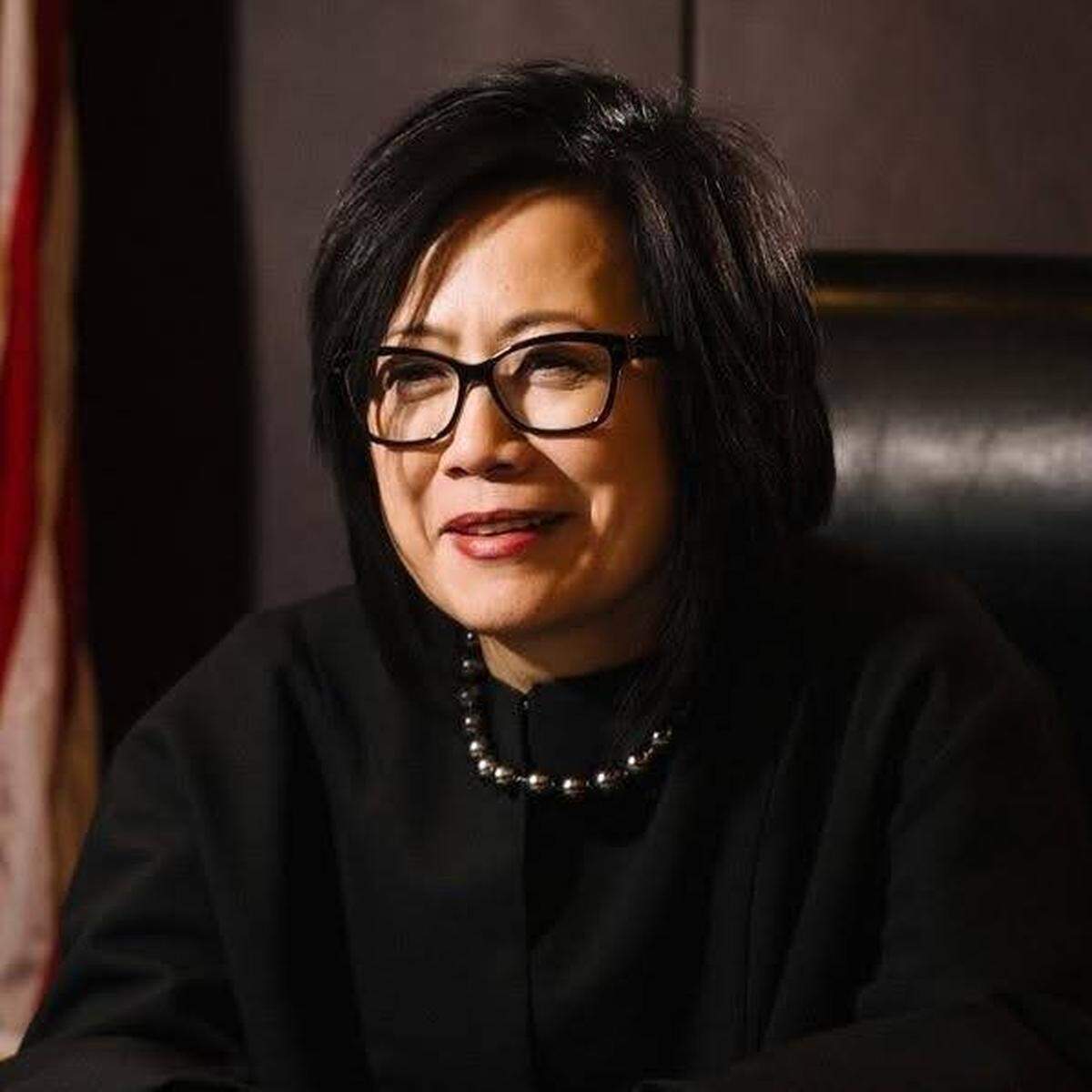
Party: Democratic
County: Philadelphia
Occupation: Judge, Court of Common Pleas
Education: B.A. - Pennsylvania State University J.D. - University of Pennsylvania
Qualifications: My 35 plus years of experience in law and the judiciary have equipped me with the skills and insights necessary to address the complex social, economic, and governmental issues facing our Commonwealth.
Campaign website: stellaforjudge.com
Facebook: facebook.com/StellaForJudge
Instagram: instagram.com/stellaforjudge/
Q: Why do you seek to serve as an appellate court judge?
A: It has been my great honor to serve as judge of the Court of Common Pleas for the last eight years. I decided to run for the vacant seat on the Commonwealth Court of Pennsylvania because the judges on this Court weigh in on many of the important issues of our day that will affect citizens across the Commonwealth of Pennsylvania, such as public education, the environment, voting rights, workers’ rights, and the right to free and fair elections. The Commonwealth Court is often the last resort for these litigants because the Supreme Court only hears a select number of cases. I understand the responsibilities which come with serving as a judge and have an established record which demonstrates my commitment to ethics, integrity, and fairness.
Q: What process would you follow to be fair and impartial in reviewing and evaluating opposing positions presented in a case?
A: My job requires me to act impartially and to treat all parties with respect. I want all parties to feel that they are on a level playing field. I do my best to put the parties at ease and allow them to have a free and fair opportunity to present their case, including language access, and that parties receive what they recognize to be due process under the law.
Q: What criteria would you consider in deciding a case that could affect long-standing precedent?
A: If I were to consider a case that might affect long-standing precedent, I would apply the guidelines articulated by the Pennsylvania Supreme Court, which recognized that a decision to overrule a past decision requires special consideration and depends on a number of factors, including: the age and lineage of the decision, the quality of reasoning, the workability of the rule it established, and its consistency with other related decisions reliance on the decision.’”See Allegheny Reproductive Health Center v. PA Department of Human Services, 309 A.3d 808 (Pa. 2024). Stare decisis is “afforded ‘special force in the area of statutory interpretation” In contest to constitutional law” and “does not demand unseeing allegiance to things. Id.
Matt Wolford

Party: Republican
County: Erie
Occupation: Attorney
Education: Undergraduate degree: Penn State; Juris Doctorate degree: Temple University School of Law
Qualifications: 38 years of relevant experience in government and private sectors, including Commonwealth Court hearings and appeals; ranked “Highly Recommended” by the PA Bar Association; see website for additional details
Campaign website: www.mattwolfordforjudge.com
Facebook: facebook.com/Mattwolfordforjudge
Q: Why do you seek to serve as an appellate court judge?
A: I seek to serve on the Commonwealth Court specifically due to its critical importance to the fundamental rights of “We the People.” The Commonwealth Court – which acts mostly as an appellate court but can also act as a trial court for certain matters – is limited to cases involving State and local governments. As a result, Commonwealth Court judges are often gatekeepers in striking an appropriate balance between the necessity for government on the one hand versus unreasonable government interference with personal freedoms and private property rights on the other. I believe the Court needs common sense, constitutional conservative judges who are willing to push back on government overregulation and overreach and not legislate from the Bench.
Q: What process would you follow to be fair and impartial in reviewing and evaluating opposing positions presented in a case?
A: For this response, I assume that the Commonwealth Court is acting in its capacity as an appellate court. In my view, appellate courts should be “hot” courts, meaning that prior to oral argument, judges should become versed in the legal arguments presented. This requires reading the opening, response, and reply briefs; and, to the extent indicated by the arguments, reviewing portions of the reproduced record. Timely preparation allows judges to take advantage of the opportunity to ask unbiased, intelligent questions at oral argument. During oral argument, judges should treat all counsel with dignity and respect; and should be mindful of the extraordinary expenditure of time, effort, and resources required to appear before the Court.
Q: What criteria would you consider in deciding a case that could affect long-standing precedent?
A: This question suggests the existence of a legal issue in a case that implicates revisiting well-settled precedent. Such cases are necessarily rare (and should be) under the principle of stare decisis; otherwise, society cannot rely on the certainty and security the law is intended to provide. Nevertheless, there are occasions when precedent is legally infirm or ongoing injustice must be remedied. Plessy v. Ferguson comes to mind as clearly bad precedent on legal and moral grounds. In deciding such cases, in addition to the two above-referenced criteria, fairness to the parties and the likely practical consequences of a change in the law should be carefully considered. The facts of the case are also obviously relevant.
Judicial Retention
Judicial retention is a nonpolitical method of reelecting Pennsylvania judges. The merit retention provision of Pennsylvania’s constitution allows all but magisterial district judges to be retained with a simple “yes” or “no” vote without ballot reference to political affiliation. This provision was designed to remove judges from the pressures of the political arena once they begin their first term of office.
For more nonpartisan information on judicial retention candidates, view the PA Bar Association’s ratings and questionnaires here: www.pabar.org/site/For-Lawyers/Committees-Commissions/Judicial-Evaluation/Resources/JEC-Ratings/2025
Learn more about the current justices on the Pennsylvania Supreme Court here: pacourts.us/courts/supreme-court/supreme-court-justices
Pennsylvania Supreme Court Judicial Retention Election 1
Shall Christine Donohue be retained for an additional term as Justice of the Supreme Court of the Commonwealth of Pennsylvania?
A Yes vote would keep Justice Christine Donahue on the Supreme Court until she reaches the mandatory retirement age of 75.
A No vote would remove Justice Christine Donahue from the bench at the end of her term. When a justice is removed, the Governor can appoint a temporary replacement with 2/3 approval of the State Senate. A special election would be held in 2027 to permanently fill that seat.
Pennsylvania Supreme Court Judicial Retention Election 2
Shall Kevin M. Dougherty be retained for an additional term as Justice of the Supreme Court of the Commonwealth of Pennsylvania?
A Yes vote would keep Justice Kevin Dougherty on the Supreme Court for another 10 year term.
A No vote would remove Justice Kevin Dougherty from the bench at the end of his term. When a justice is removed, the Governor can appoint a temporary replacement with 2/3 approval of the State Senate. A special election would be held in 2027 to permanently fill that seat.
Pennsylvania Supreme Court Judicial Retention Election 3
Shall David Wecht be retained for an additional term as Justice of the Supreme Court of the Commonwealth of Pennsylvania?
A Yes vote would keep Justice David Wecht on the Supreme Court for another 10 year term.
A No vote would remove Justice David Wecht from the bench at the end of his term. When a justice is removed, the Governor can appoint a temporary replacement with 2/3 approval of the State Senate. A special election would be held in 2027 to permanently fill that seat.
Pennsylvania Superior Court Judicial Retention Election
Shall Alice Beck Dubow be retained for an additional term as Judge of the Superior Court of the Commonwealth of Pennsylvania?
A Yes vote would keep Judge Alice Dubow on the Superior Court until she reaches the mandatory retirement age of 75.
A No vote would remove Judge Alice Dubow from the bench at the end of her term. When a judge is removed, the Governor can appoint a temporary replacement with 2/3 approval of the State Senate. A special election would be held in 2027 to permanently fill that seat.
Pennsylvania Commonwealth Court Judicial Retention Election
Shall Michael H. Wojcik be retained for an additional term as Judge of the Commonwealth Court of the Commonwealth of Pennsylvania?
A Yes vote would keep Judge Michael Wojcik on the Commonwealth Court for another 10 year term.
A No vote would remove Judge Michael Wojcik from the bench at the end of his term. When a judge is removed, the Governor can appoint a temporary replacement with 2/3 approval of the State Senate. A special election would be held in 2027 to permanently fill that seat.