
Cooler weather coming to central Pennsylvania. When will autumn’s first frost arrive?
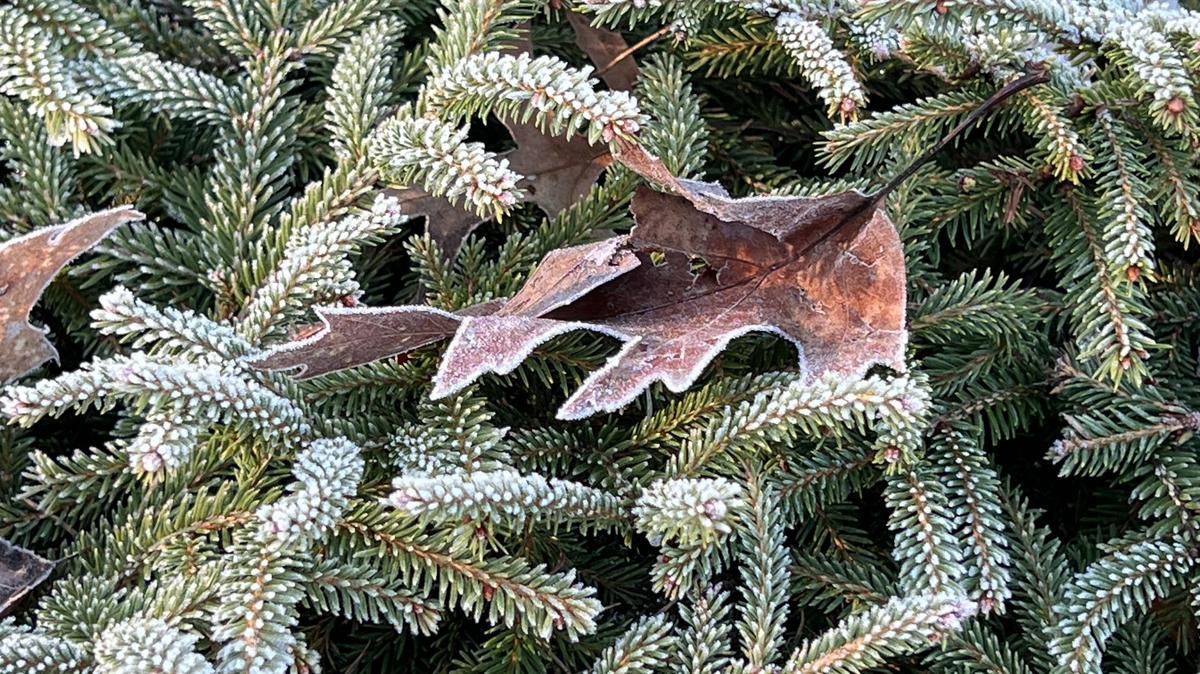
There’s a chill in the air as the fall season hits its stride in October, and that means one thing is certain: The season’s first frost is on its way.
Frost, usually seen as a thin layer of ice on a solid surface, forms from water vapor that deposits on a freezing surface. It requires outside surfaces to cool past the dew point, or the point at which water vapor in the atmosphere turns into a liquid.
This freezing process is primarily seen at the beginning and end of growing seasons between fall and spring, often threatening plants in your yard and other sensitive vegetation.
Knowing when that first frost might arrive can help you prepare your lawn, protect your plants and plan for the cold weather that lies ahead. Here’s what you should know as the season’s first frost approaches in central Pennsylvania.
When does the first frost usually arrive in central Pennsylvania?
Here in Centre County, the last spring frost and first fall frost usually arrive in late April and late October, respectively.
According to National Weather Service archive data, the average last spring frost in State College between 2000 and 2023 arrived April 23. The average first fall frost during that stretch, meanwhile, checked in Oct. 26, the data reads.
The earliest last spring frost for State College over that 23-year span came April 7 in 2011, according to the NWS. No fall season since 2000 saw an earlier first fall frost than 2001, which observed one Oct. 8.
State College’s latest final spring frost since 2000 came May 21, 2002, while its latest first fall frost arrived Nov. 12, 2005, the NWS reports.
What does the forecast suggest for Centre County?
State College should see its first autumnal frost this week, according to AccuWeather senior meteorologist Tom Kines.
“Any of the next few nights… tonight, tomorrow night or even Friday night is fair game for frost,” Kines said Wednesday afternoon. “Even over the weekend, if you live in a typically cooler spot, nights are going to get chilly even if it’s warmer in the afternoon. I wouldn’t be surprised if the colder spots in the region have some frost on Saturday night or even Sunday night. You’d best be protecting your sensitive plants over the next few nights.”
The NWS’ State College office issued a freeze warning Wednesday that stretches from 2 to 9 a.m. Thursday. The advisory calls for sub-freezing temperatures in the upper 20s and lower 30s throughout a good portion of central Pennsylvania. The cool temperatures could create frost that might kill crops and other sensitive vegetation.
As of Wednesday afternoon, AccuWeather’s forecast for State College calls for lows of 33 degrees Wednesday and Thursday followed by lows of 35, 37 and 30 degrees Friday, Saturday and Sunday, respectively. High temperatures range from 51 degrees Wednesday up to the upper 60s and lows 70s starting this weekend.
“We’re going to get into a warmer pattern on Friday and into the weekend, and in general, it looks like temperature next week and probably the week after are going to average out above normal,” Kines said. “That doesn’t mean there can’t be a couple of chilly days thrown in there, but mild days will likely outnumber chilly days.”
Clear skies and light winds — two key factors in the creation of frost — are in the forecast this week, Kines said. The absence of a strong breeze helps develop a heavier dew overnight, while clear skies allow for the maximum release of heat in the form of radiation from Earth’s surface en route to cooling soil. Moist soil can also help turn dew into a layer of frost.
“Foliage right now is getting close to peak, so with sunshine and warm afternoons and light winds on tap, this weekend ought to be a nice chance to view the foliage,” Kines added.
The Old Farmer’s Almanac, meanwhile, predicts the fall’s first frost in State College will arrive Oct. 20. It expected the final spring frost April 27, but that last cold spell came April 22 instead.
Earlier this year, the NWS Climate Prediction Center suggested Pennsylvania would likely observe above-normal temperatures between September and November. The eastern half of Pennsylvania was expected to see above-normal precipitation those months, while the western half had a better chance of seeing above- or below-average precipitation.
Despite the current cold spell, you probably don’t need to break out the winter gear just yet. NWS data stretching back to 1893 suggests the average first measurable snow of the season in State College (usually exceeding 0.1 inches) falls around Nov. 17. The long-term average for State College is about 45.9 inches of snow per winter season.
Protecting your plants from fall frost
If you’ve still got plants and crops to protect as the first frost of fall looms, you can take several steps to limit the damage.
The Old Farmer’s Almanac recommends covering sensitive plants with blankets or row covers to trap eat and keep plants warmer. Row covers made of nonwoven polyester can work well, but bed sheets, drop clothes and other medium-weight fabrics might also do the trick.
Consider these tips to protect your gardens from frost this fall, the almanac advises:
- Water soil before frost arrives, but avoid soaking the ground and allowing water to freeze. Water can hold heat better than dry soil, but too much can freeze and wind up damaging plant roots.
- Mulch your garden beds with straw, pine needs or wood chips to preserve heat and moisture.
- Bring houseplants and other tender plants indoors before frost arrives.
- Harvest herbs, tender vegetables and greens before they are damaged by frost. Some crops, including green tomatoes, don’t need sunlight to ripen, so feel free to let them ripen indoors.
%202.JPG)