
Let’s reap the benefits of powering our schools with solar power | Opinion
The school year is well underway here in Centre County, and students are learning new things every day. But one thing remains the same: the rising cost of electricity here and all across Pennsylvania. This leaves many school districts facing tough decisions on how to prioritize expenses, and looking for ways to save money.
Luckily, a new study by the PennEnvironment Research & Policy Center shows that one way that school districts can save money on their energy bill is by powering their buildings with cost-saving, clean solar power.
As reported by Matthew DiSanto at the Centre Daily Times last month, incorporating solar can be a triple win for schools: it helps school districts’ bottom line, reduces climate and air pollution, and increases energy reliability.
The new PennEnvironment report laid out a strong case for these potential benefits. “Solar Schools: Repowering Education with Clean Energy” found that of the roughly 5,000 schools in Pennsylvania, there’s a combined total of nearly 2,000 football fields’ worth of rooftop space. PennEnvironment estimates that if solar panels were installed on all that available space, it would produce enough electricity to power more than 187,000 Pennsylvania typical homes each year.
The report notes that if Pennsylvania used its full potential for school-based solar panels, our schools — and local taxpayers — could save approximately $342 million over 25 years. It would also protect them from the impact of rising — and increasingly unstable — electricity rates, a pressing issue in Pennsylvania.
Energy bills are currently the second largest cost for U.S. schools after teacher salaries — around $8 billion annually nationwide. But on-site solar (which has dropped in price by 70% since 2000 and increased in efficiency) offers a way to bring costs down instead of cutting teacher salaries or school resources.
Here in Centre County, the report estimates that there’s sufficient available rooftop capacity to generate enough electricity to power over 1,500 homes and save our schools $570,000 over the lifetime of the panels.
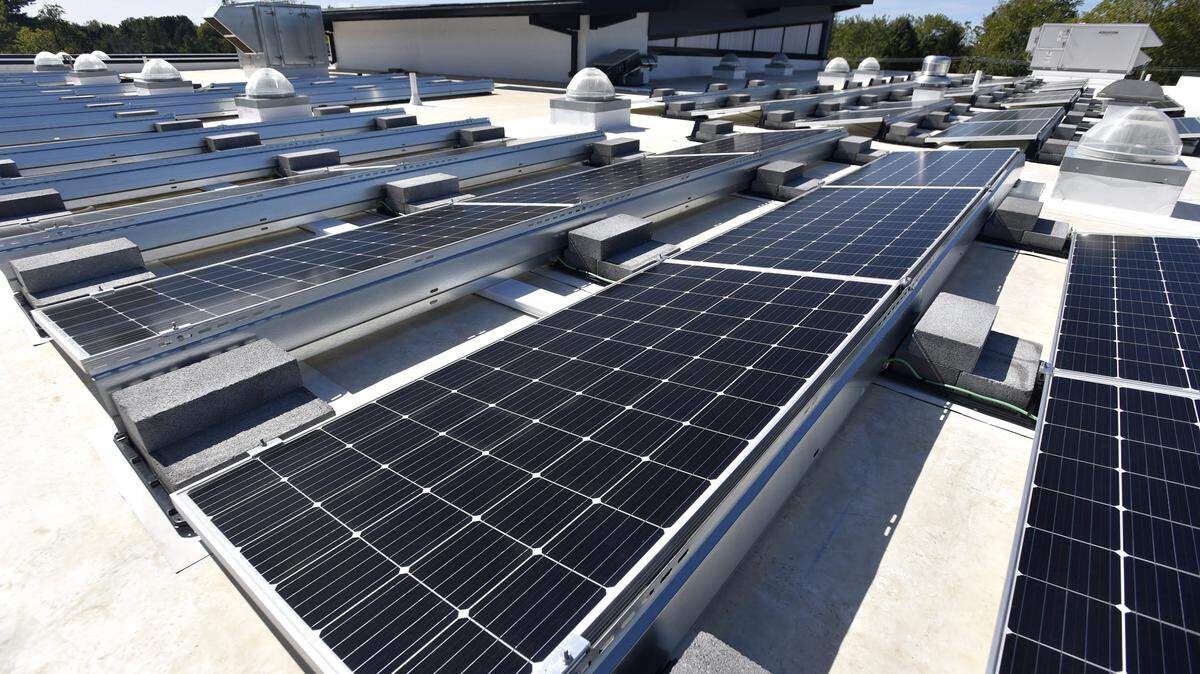
One school that’s already taking advantage of this cost efficient resource is Corl Street Elementary in the State College Area School District. The solar panels on its rooftop are projected to supply 20% of the building’s energy with clean, reliable solar energy.
And Corl Street Elementary isn’t an isolated case. Across Pennsylvania and the nation, K-12 schools are investing in solar panels on their rooftops, over their parking lots, or out in their fields.
And this isn’t only good for local taxpayers’ pocketbooks: the PennEnvironment study estimates that these solar installations also help reduce climate pollution equal to taking nearly 300,000 cars off the road each year.
That can make a big difference both here and across the state where approximately 1 out of every 13 children suffers from asthma and where 17 counties were given an “F” grade for particle air pollution in a 2025 report from the American Lung Association.
Helping our kids — and all of us — breathe easier is reason enough to have our schools “go solar,” but there’s more. Schools are the perfect place for solar because they often have large, flat, and unshaded rooftops, as well as parking lots and nearby open spaces such as fields — all of which can be ideal locations for solar panels.
So while students are busy learning in the classroom, directly above and around them solar panels can be busy soaking up and storing energy from the sun, reducing our reliance on energy sources like oil and gas that pollute our air and makes our weather more extreme and volatile. And on-site solar can also contribute to public safety by providing backup in the event of a widespread power outage.
And if the financial sense, health benefits, safety, or ease of installation aren’t enough reasons for your school to go solar, here’s one more: Solar on schools helps students to become familiar with this future energy source in a direct, hands-on way, hopefully inspiring them to support clean energy and contribute to its future development. Today’s solar school students can be tomorrow’s solar advocates, entrepreneurs, installers and designers.
To make it as easy as possible for schools to “go solar” in Pennsylvania, officials should take some commonsense steps, including renewing and expanding the state’s Solar for Schools grant program, restoring federal solar incentives that Congress recently repealed, and implementing parts of Gov. Josh Shapiro’s statewide energy plan.
When we drop our kids at school or wave them onto the bus in the morning, we hope that they are going to places where they will learn, play and succeed. By installing solar on rooftops and surrounding land, schools can also be a bridge to a better future for us all. Powering Pennsylvania’s schools with affordable, reliable solar energy will pay dividends for local taxpayers, our health and our planet.
David Masur is PennEnvironment’s executive director. State Rep. Paul Takac represents the 82nd state House district and State Rep. Scott Conklin represents the 77th state House district.