How Micah Shrewsberry built a career — and now a program — by caring about family
When Micah Shrewsberry finally got the call he had been waiting — and working — for in March 2021, he had his wife Molly and his kids by his side.
Yes, he knew it was coming. And yes, they planned to have the family there when it would happen.
But that didn’t change how special it was.
He stood in his home in West Lafayette, Ind. as the associate head coach of Purdue one moment, the head coach of Penn State men’s basketball the next.
Then-Penn State athletic director Sandy Barbour gave him the news — he was now a Division I head coach, reaching the peak of the mountain he had spent years climbing.
“We were all there, all the kids,” Molly told the Centre Daily Times. “He was on the phone with (Barbour) and accepted it while we were all there. All the kids were so excited. It was fun to be there. It’s just a neat experience, especially because it’s a family decision. And it was just fun to see how excited the kids were.”
It is of little surprise that Micah had Molly and their children around him. The chase to reach this moment began 22 years prior in 1999 with Molly by his side, and evolved over that time to include all four of their children — Braeden (17), Nick (15), Caitlin (14) and Grace (10).
That instant of great news was not just about Micah — it was about him, Molly, their children and the slew of friends and family that helped them reach it.
Their presence was the representation of who helped him reach the peak — and how he was able to do it.
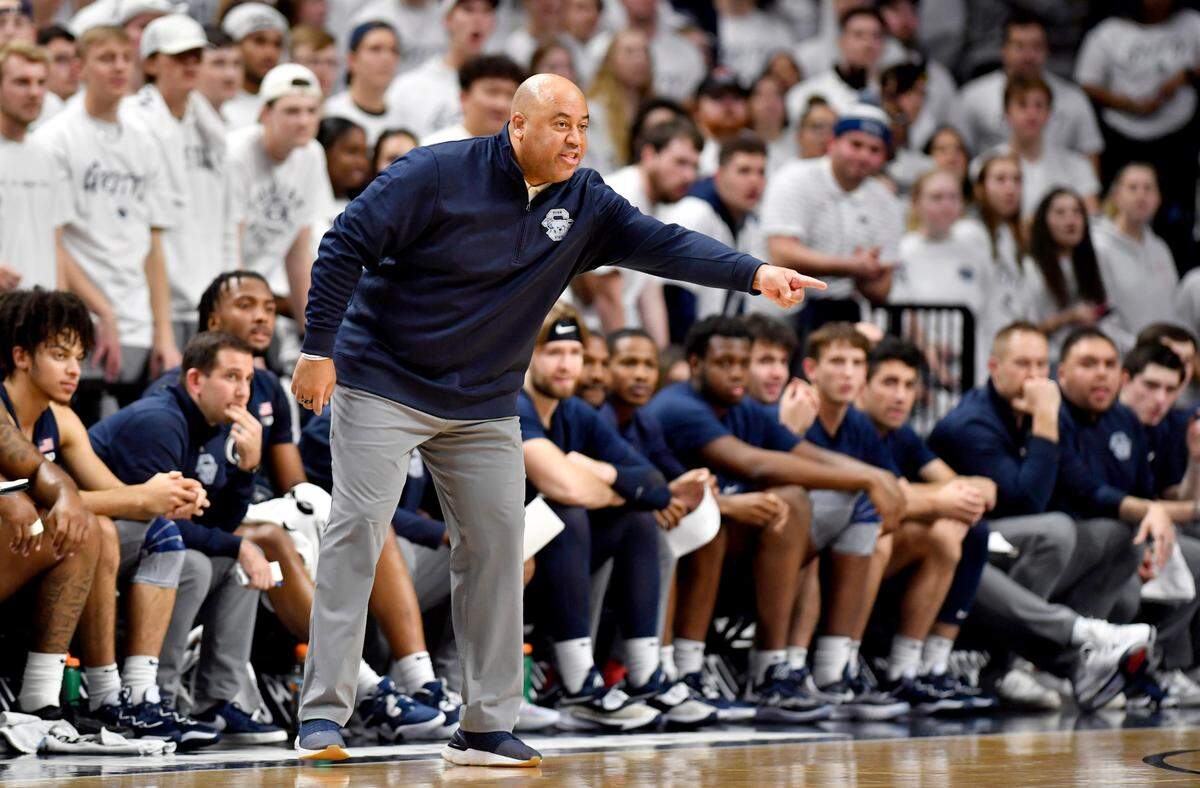
Falling in love with basketball
Micah’s journey with basketball began almost at the same time his journey with Molly did. He grew up in Jeffersonville, Ind. — near Louisville, Ky. — where his love for the sport formed. He and his family would go to the Indiana high school state finals where he saw greats like Shawn Kemp and Glenn Robinson play.
During those formative years, his family moved to Indianapolis after his dad took a job to work for then-Indiana Governor Evan Bayh.
He attended Cathedral High School from there, where he met Molly.
Both were athletes at the time and had a shared interest in basketball — with both playing and excelling at that level — and soon enough that led to them being high school sweethearts.
They continued their relationship and Micah began to chase what he knew he wanted to do — staying involved with the game of basketball.
He played at Division III Hanover College, where he started for three years and led the Heartland Collegiate Athletic Conference in assists with 4.4 in his final season. Micah knew pretty quickly that his time on the court as a player was winding down, and he wanted to find a way to stay involved.
“I knew I could play in college at a certain level,” he told the CDT. “But I loved hoops. I loved the game. I wanted to stay around it. Then I was like, ‘well, I can become a coach.’ ... I knew I wanted to coach (while at Hanover).”
Micah quickly turned to that page, beginning his career as a graduate assistant, staying at the D3 level, at the University of Indianapolis.
He then bounced around jobs for a few years at the lower levels, taking jobs at Division III Wabash and Depauw for one and two years, respectively. He worked to make ends meet, even serving as a house dad at a fraternity at Depauw.
It was then that he caught his first big break, one that came after the couple got married in 2003, not knowing what would come next.
“He had finished his (graduate assistant) job at Depauw. And it’s so hard to get a job, so he has some different options but he’s really trying to get in Division I. So it’s the day before our wedding and he still has no job. We have no clue what we’re doing,” Molly said with a laugh.
Not long after, Micah received an offer to join the staff at Marshall University as the director of basketball operations.
The then-Division III assistant had finally made the rise to the highest division in college basketball after four years of trying to make a big break while relying on Molly and his family to stay on the path and make things work financially.
But that did not mean things were going to be smooth sailing from then on.
Grind of coaching
It is rare that a relationship — of any magnitude — is perfect from the onset to the conclusion, and being a coach can even further strain even the most important ones. That applies at the highest levels, but can be even more true for coaches working their way up through the ranks.
Molly and Micah dealt with the issues many coaches’ families do — they moved from town to town, not knowing how long one stop would last until the next.
Once at Marshall, where Molly accepted a job at the school of medicine, they started a family with their first of four children — their son Braeden — and further added to the items to consider when moving to the next gig.
Molly was able to find her own stability with the university that began when Micah accepted the job.
“I had just finished graduate school when we moved,” she said. “... We were there two years and I was able to stay on with them for like 10 years remote and part time, which was nice because you move so much. It’s hard once you have kids to really dive into your own career in this field. I had to find something that was flexible with the lifestyle and the kids.”
Two seasons at Marshall turned into three at Indiana University South Bend, where Micah was the head coach, making his debut at 29 years old.
Those years back home in Indiana were his first chance to lead a team and helped him earn an opportunity under then-Butler head coach Brad Stevens. He spent three seasons there with him and eventually spent six more seasons under him with the Boston Celtics, with those experiences sandwiched around two seasons at Purdue from 2011-2013.
Then, in 2019, he returned to the college ranks and Purdue because he wanted to pursue a college head coaching position.
He parlayed more success with the Boilermakers into his current job as the leader of the Penn State men’s basketball program, but it was the lessons learned under Stevens, Purdue head coach Matt Painter and building a life with Molly that put him in that position.
For Micah, everything is about the people. Yes, he wants to win games. Yes, he wants to compete for titles. Yes, he wants to make the NCAA Tournament.
But none of those things happen if you can’t build, and Micah can build because he cares.
Some coaches care at the surface level, doing just enough to get a player to buy into their program.
That is not enough for Micah. He actually cares.
He has proven how much he cares time and time again.
Jalen Pickett, for instance, had his pick of the litter when he transferred from Siena but chose Penn State because the staff’s family-oriented environment resonated with him. Now that he’s on campus and has been for well over a year, that family feel has not changed.
“He cares about where we come from, he cares about our backgrounds, how we’re raised,” Pickett said. “Like, my mom and my grandma come to every game. To know I have a strong family, and that he’s also a family guy, that’s the best part.”
There is no reason for Micah to put on a show and act any other way.
His empathy for those around him is a tenet he grew up with, and is not one he plans to abandon any time soon.
“I’m the same person at all times. I’m not any different as a basketball coach than as a dad or as a PTO worker. Whatever I’m doing, this is who I am. ... I don’t have enough energy to bounce around from person to person,” he said with a laugh.
“I don’t change. I’m me.”
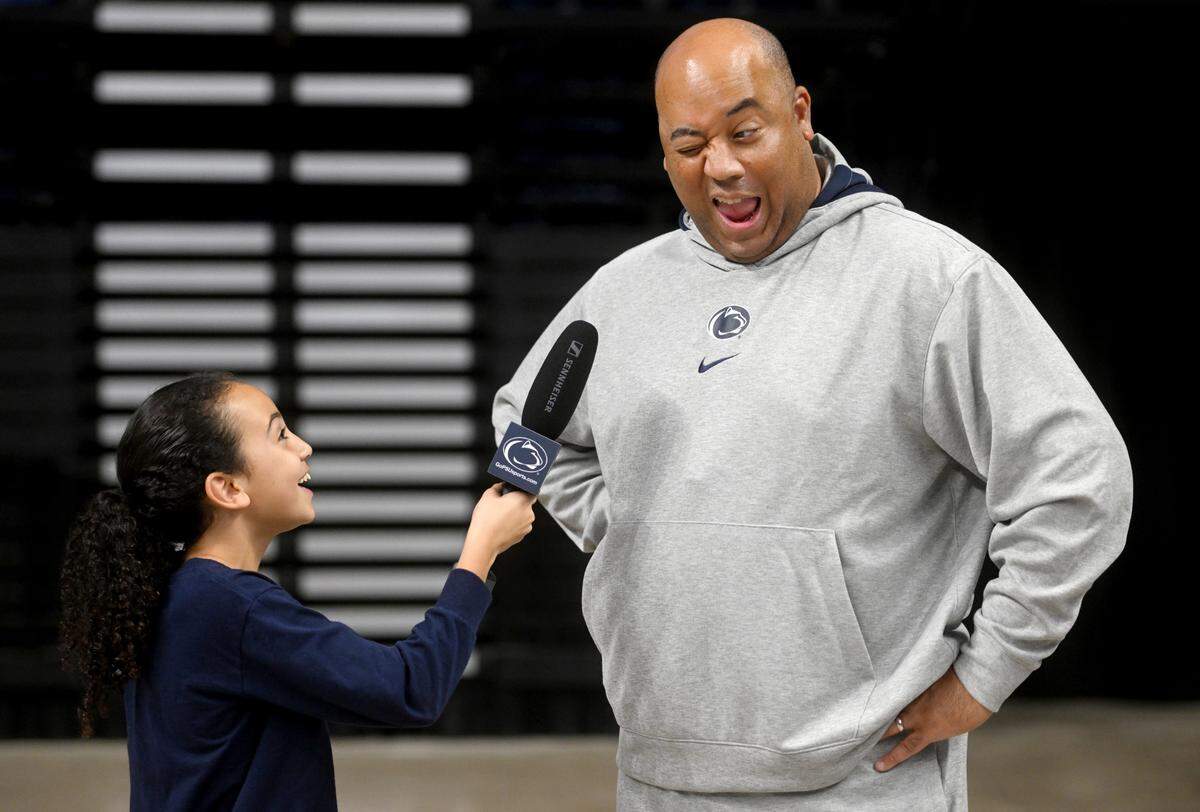
Translating love to team
His family sees it, too — he doesn’t alter his personality for his players, or have to flip a switch when he goes home.
“He’s always been the same,” Braeden said. “That’s one thing I can remember. He’s always had the same personality. He’s always acted the same no matter who he’s around. That’s something I can remember my whole life. It doesn’t matter if he’s a head coach like now or an assistant back then. He still has the same mindset and the way he goes about himself.”
He is who he is, unabashedly, and that has helped him grow into the coach he’s become. Before his first season at Penn State he was tasked with both building a staff and almost an entirely new roster after several Nittany Lions entered the transfer portal.
The staff was the first task at hand, and now-associate head coach Adam Fisher was the first to get a call. He reached out to Micah to congratulate him on taking the job at his alma mater, and the response was not one he anticipated. He asked to call Fisher.
“I thought it was about questions about Penn State,” Fisher said. “I really did. And he, right off the bat, was like, ‘What can we do to get you back to Penn State?’”
The vision Micah had for the program stood out to Fisher, but there was more to it than that.
There was a sense that he was talking to someone who had a genuine care and interest in him as a person, and that it wasn’t all just about basketball.
“Just the way he spoke about family,” Fisher said. “He knew my wife and daughter’s name, mentioned them right away, wanted his daughters to be big sisters to my little one.”
That feeling was felt across the staff when Micah made his decisions. Assistant coach Aki Collins was a longtime friend of the head coach that formed that relationship when both were at Marshall together. Assistant coach Mike Farrelly did not have that long-term relationship with his new boss, but could tell right away that he was prioritizing the people involved.
Farrelly was working on getting his family into town, with them staying in Long Island he traveled back and forth with four days in State College and then three at home with them.
Micah encouraged it, making sure Farrelly knew he wanted him to do what was best for his family.
“Understanding the needs of (my family), he’s unbelievable with that,” Farrelly said. “It’s different than working for a guy that doesn’t have kids, or who has older kids who have already grown up. His understanding and feel for all of that is really, really great.”
How long can it last at Penn State?
That family feel will soon be tested at the highest level. Micah will be coaching his oldest son Braeden — a senior at State High — next season. Braeden is good, too. Not just a coaches’ son making the team because of that fact. He’s a legitimate talent who had other options and instead chose to play for his dad.
Braeden hasn’t decided yet if he will be calling Micah “Coach” or “Dad” yet, that’s something that he will have to figure out later on.
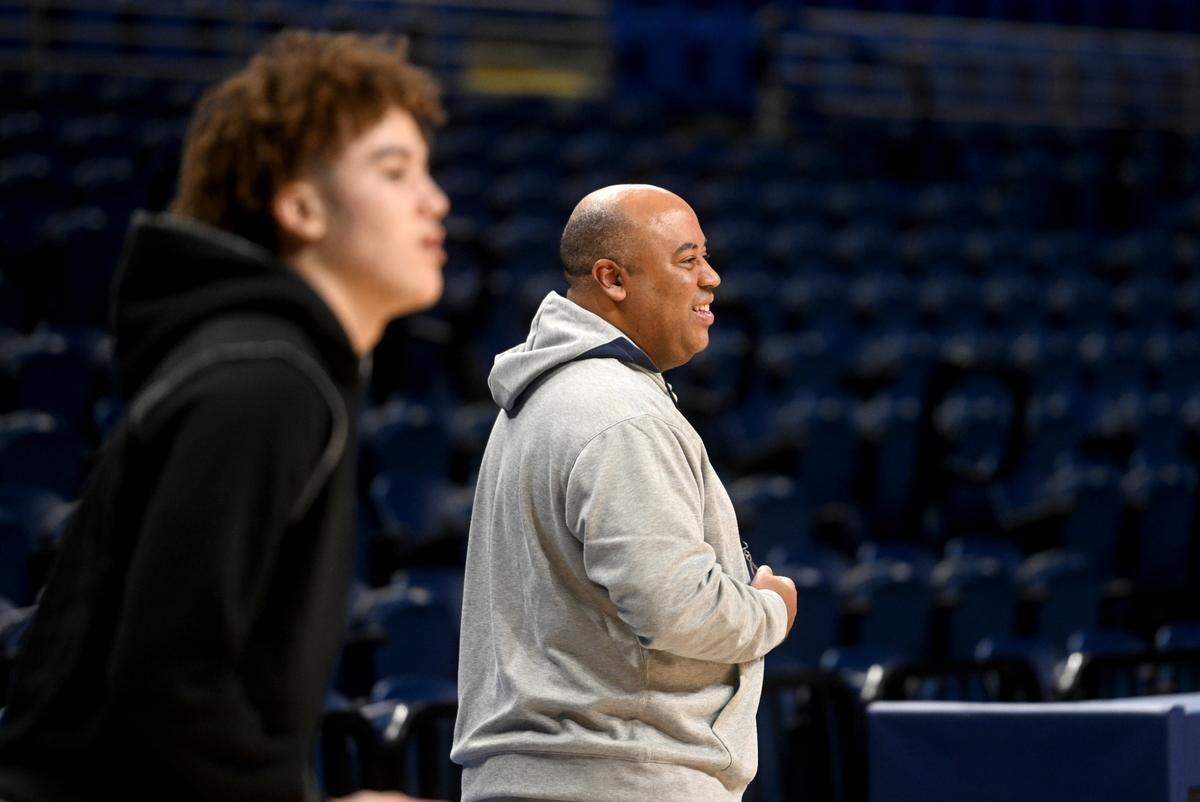
And who knows how long he’ll be playing for him. With the program’s current success — the Nittany Lions are 11-4 and are on the path to make the NCAA Tournament — Micah will eventually have larger schools come calling. They will want them to create that family environment for them and turn it into the immediate on-court turnaround that he has with the Nittany Lions.
Maybe that’s after this year, maybe it’s after next year, maybe it’s further down the road.
But one thing seems to be clear — Micah is not in a rush.
“I can’t plan out,” he said with a smile. “I have a hard time planning out what I’m gonna do on the weekend. I can’t plan ahead for anything. I like this place, though. ... Nobody has ever hired me before. I’m fortunate to be here. I grew up around the Big Ten. There’s 360 jobs in the country and I get to be one of 14 in the Big Ten. I love it. ... I can chill and just be myself.”
That can be seen as lip service to some, but his answers track with who he is. Micah cares about the people around him, and he has helped foster an environment that he can help people find success in.
He has built a basketball family — that is having success on the court — and found a home for his own.
Maybe that’s all he needs.
This story was originally published January 7, 2023 at 9:00 AM.