Who are Penn State’s top-10 running backs of the last 25 years? How our panel voted
READ MORE
Penn State football: The best players since 2000
For summer 2025, we’re looking back on the past quarter century of Penn State football and Nittany Lions. We formed a panel of voters to determine the best players at each position since the 2000 season, along with the top 10 offensive and defensive players overall.
Expand All
Our summer series ranking the best Penn State football players of the last 25 years continues on with a position that’s experienced a lot of recent success — running back.
As a reminder, we had 10 Penn State beat writers form a panel of voters to determine the best Nittany Lions at each position since the 2000 season, along with the top 10 offensive and defensive players overall, based on their stats, accomplishments and the eye test.
That panel is made up of Neil Rudel (Altoona Mirror), Rich Scarcella (Reading Eagle), Audrey Snyder (The Nittany Dispatch), Mark Brennan (Lions247), Mark Wogenrich (Penn State on SI), Frank Bodani (York Daily Record), Daniel Gallen (Lions247), Johnny McGonigal (PennLive), Josh Moyer (Centre Daily Times) and Jon Sauber (Centre Daily Times).
And at the end of each week, you’ll have a chance to vote on each position in a poll at the bottom of the story and have your say on the best Nittany Lions since 2000. Results will be shared at the end of the series later this summer.
We’ve already covered wide receivers, offensive linemen and tight ends. So let’s move on to the 10 best running backs since 2000.
Note: All stats and years played are from 2000 and beyond unless otherwise noted. First-place votes are in parentheses for players with a high rank of one.
10. Rodney Kinlaw
High rank: 9 | Low rank: NR | Average rank: 10.1
Years played: 2004-2007
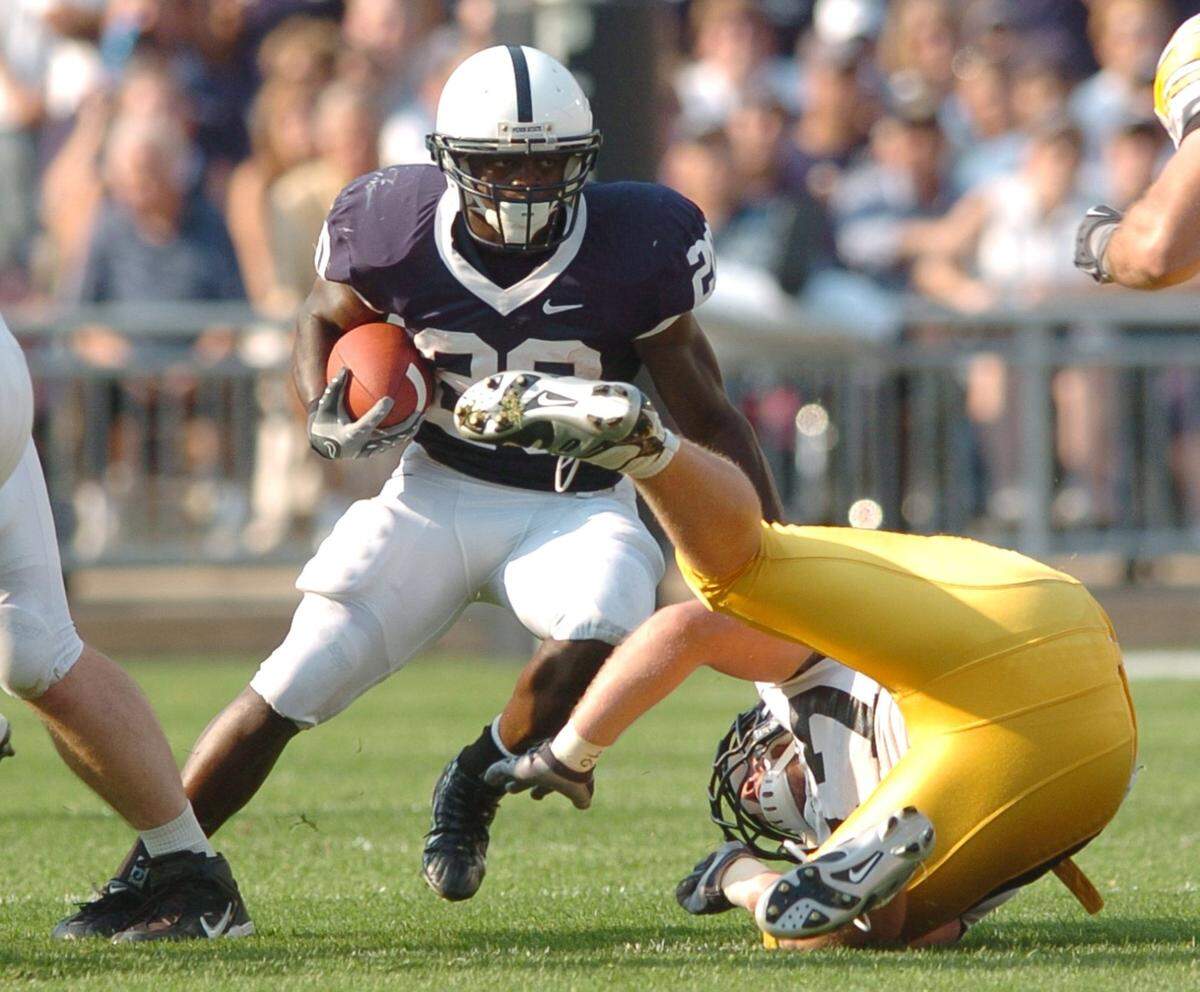
Kinlaw had just 80 career carries heading into his senior season, but it turns out what many saw as PSU’s third-best RB recruit of the 2003 class just needed an opportunity. In 2007 he exploded onto the scene with 1,329 rushing yards, 128 receiving yards and 10 TDs while averaging 5.5 yards per carry. While the media lauded his quick cuts and “fancy footwork,” the balanced back also earned plenty of praise for his relentless drive and lower-body strength. (The Football Letter blog once commented on his carrying Buffalo’s safety into the end zone.) He only got stronger as the season wore on, culminating in a 143-yard performance in the 2007 Alamo Bowl, where he was named Offensive MVP.
9. Zach Zwinak
High rank: 7 | Low rank: NR | Average rank: 8.9
Years played: 2011-2014
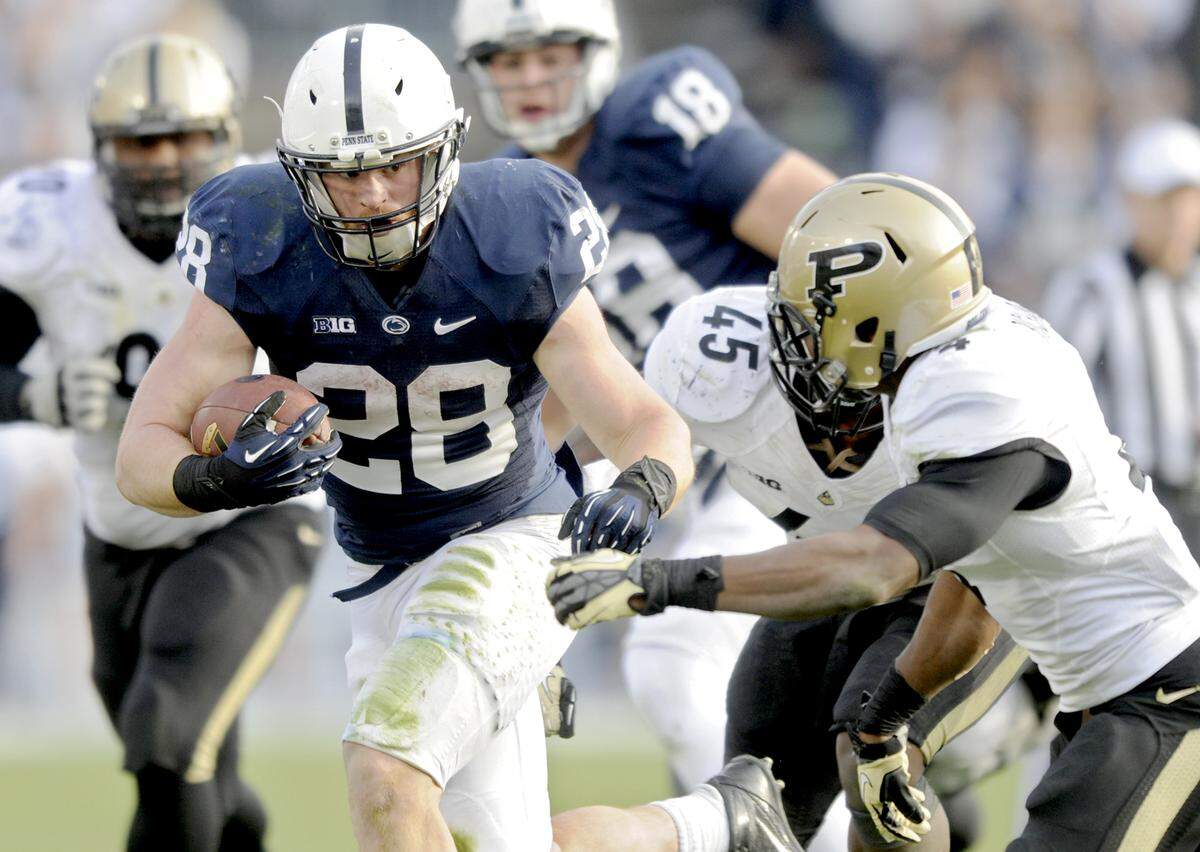
Speaking of overlooked running backs, how about a former fullback who went from a fifth-stringer to a 1,000-yard rusher in one short offseason? When star Silas Redd bolted for USC in the wake of the Jerry Sandusky child sex abuse scandal, new head coach Bill O’Brien needed someone to step up — and no one expected Zwinak, who had three carries in the season’s first three games, to eventually outrush Redd that season by 95 yards. (Zwinak had 1,000 rushing yards in 2012, then 989 yards in 2013.) Zwinak was a punishing runner, one who was “ready to deliver a blow on every play.” He wasn’t the fastest or the best, and James Franklin minimized his role his senior season before an injury ended it, but Zwinak was exactly what Penn State needed at the time.
8. Journey Brown
High rank: 5 | Low rank: NR | Average rank: 8.4
Years played: 2018-2019
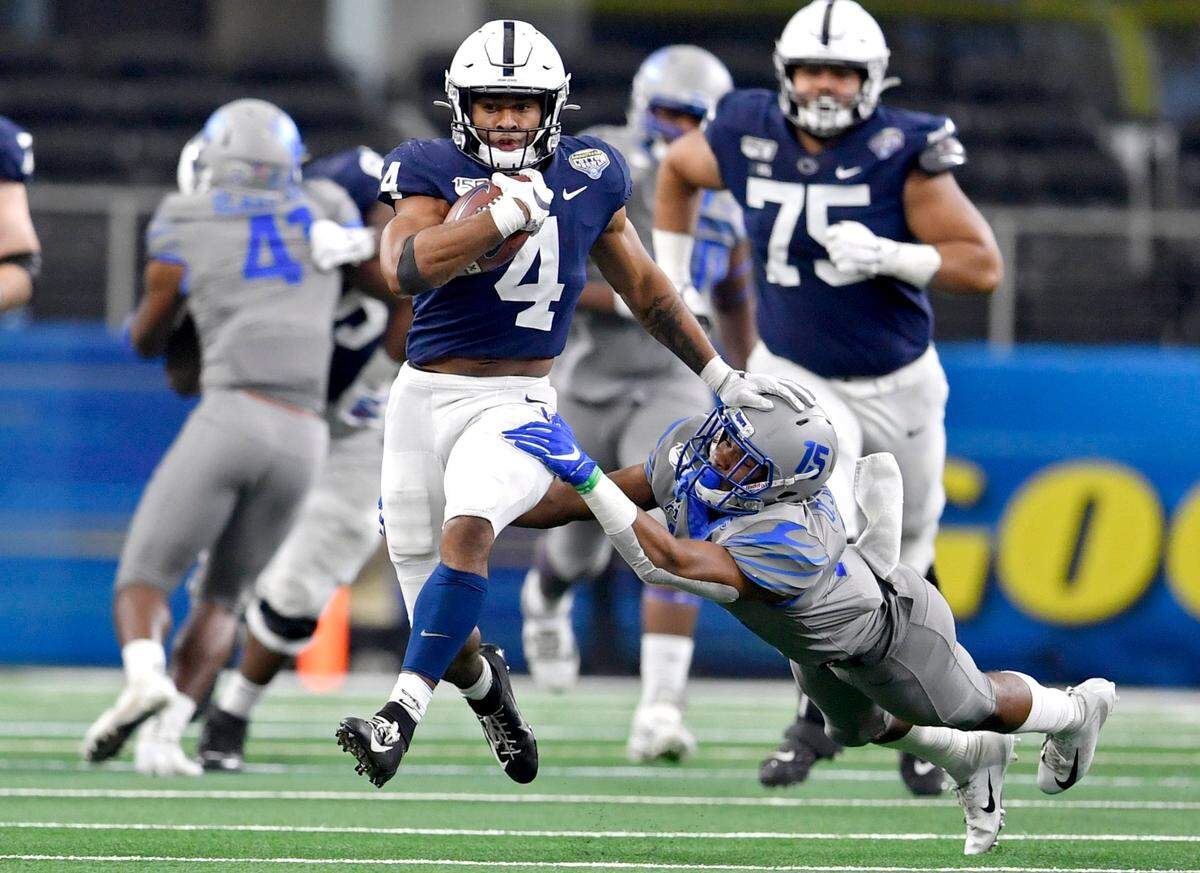
On one hand, the speedy runner — who once broke an Olympian’s high school track record — finished his career with less than 1,000 rushing yards and never surpassed All-Big Ten honorable mention. But, on the other hand, Brown was a bit like the Penn State version of Bo Jackson: An incredible athlete, with an incredibly bright future, who was forced to give up his career due to an injury (or, to be more exact, a medical condition involving his heart). Brown more than passed the eye test, and the five-game stretch to end his career was one of the best in recent memory. During that time, which included a Cotton Bowl win, Brown amassed 593 rushing yards and nine touchdowns while averaging 7.6 yards per carry. He was poised to become the next great Penn State back. That never materialized — but those who watched him play won’t soon forget.
7. Miles Sanders
High rank: 5 | Low rank: 10 | Average rank: 7.1
Years played: 2016-2018
Saquon Barkley’s successor in 2018 made sure to keep the Penn State RB Hype Train running smoothly. In his lone season as a starter, Sanders ranked within the top 10 nationally in missed tackles (47) and average yards after contact (3.68), deftly using a blend of power and elusiveness to frustrate opposing defenses. It was unique. After all, how often do you see a guy regularly picking up more than 3 yards after contact — when his 40-yard dash is clocked at 4.49? Some felt he danced too much in the backfield, or maybe didn’t have elite playing speed, but it’s difficult to argue with the results. He’s sixth in the PSU record books with a career rushing average of 5.97 yards, and he was a second-round NFL draft pick.
6. Kaytron Allen
High rank: 4 | Low rank: 8 | Average rank: 5.7
Years played: 2022-present
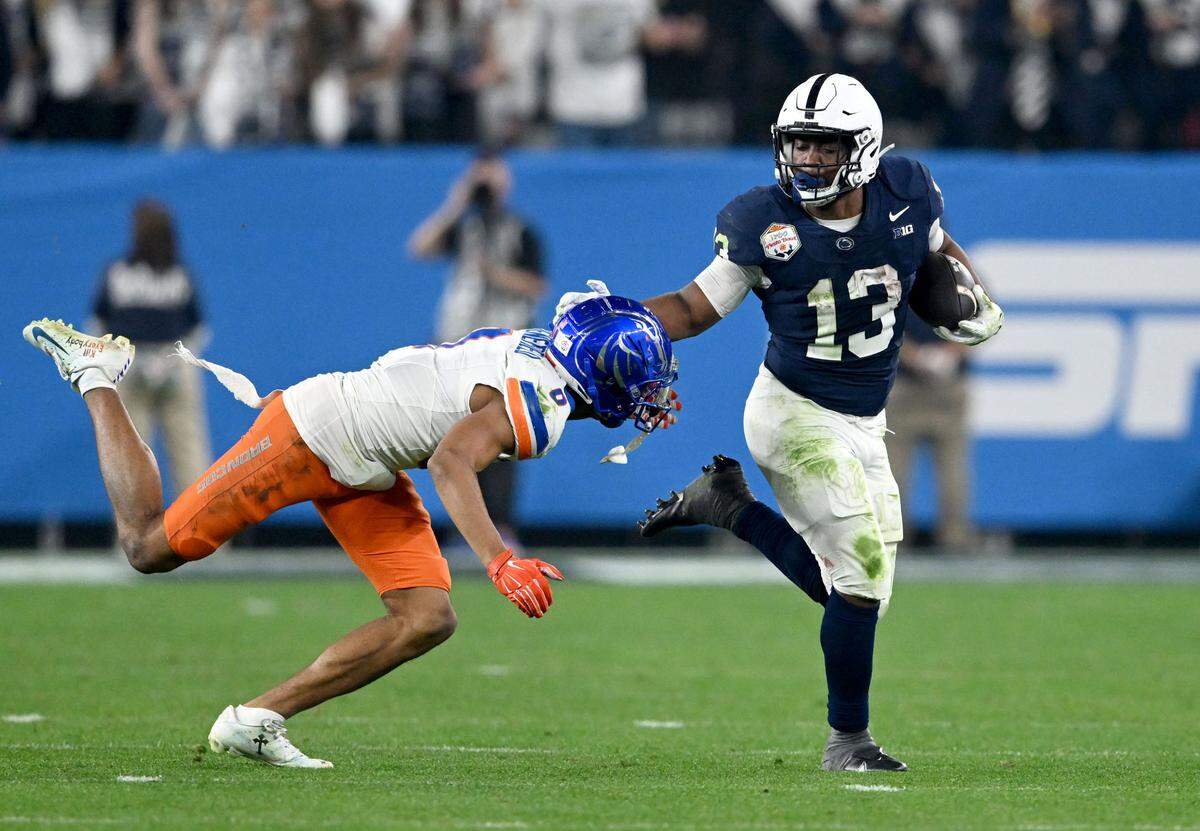
He may be nicknamed “Fatman” — which stemmed from being a chubby baby — and, sure, he’s earned a reputation as a punishing, one-cut runner who likes to initiate contact. But that doesn’t tell the full story of Allen’s ability. He’s been a consistent force, one that reporters have often referred to as being criminally underrated in the Big Ten, and he’s able to get up the field quickly. He’s not known for his breakaway speed, but he’s still shown he’s capable of breaking off longer runs in addition to grinding out short-yardage situations. He technically needs only 1,056 more rushing yards to become the Nittany Lions’ all-time leading rusher ... as long as teammate Nick Singleton doesn’t surpass him first.
5. Tony Hunt
High rank: 3 | Low rank: 8 | Average rank: 5.1
Years played: 2003-2006
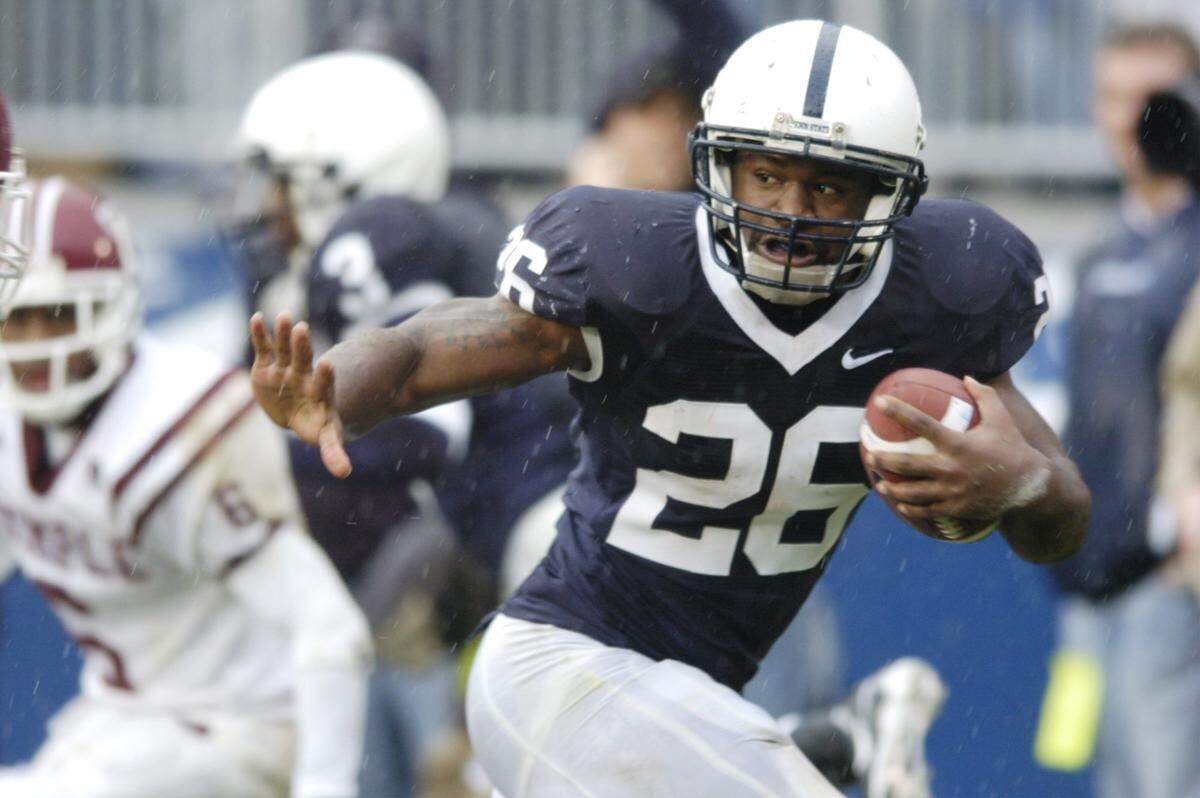
He could block, he could catch — and, oh yeah, he could run. He was one of this time period’s most versatile backs, and his old-school grind-em-down mindset was embraced by fans and teammates alike. In other words, he wasn’t flashy, but he was efficient. He stands at No. 4 on Penn State’s all-time career rushing list (3,320 yards), and he earned a reputation as a humble, hard-working player who wouldn’t be denied in high-pressure situations. He rarely lost yards, did everything asked of him and developed into a two-time all-conference selection. Hunt embodies the program’s blue-collar mentality.
4. Evan Royster
High rank: 2 | Low rank: 6 | Average rank: 4.1
Years played: 2007-2010
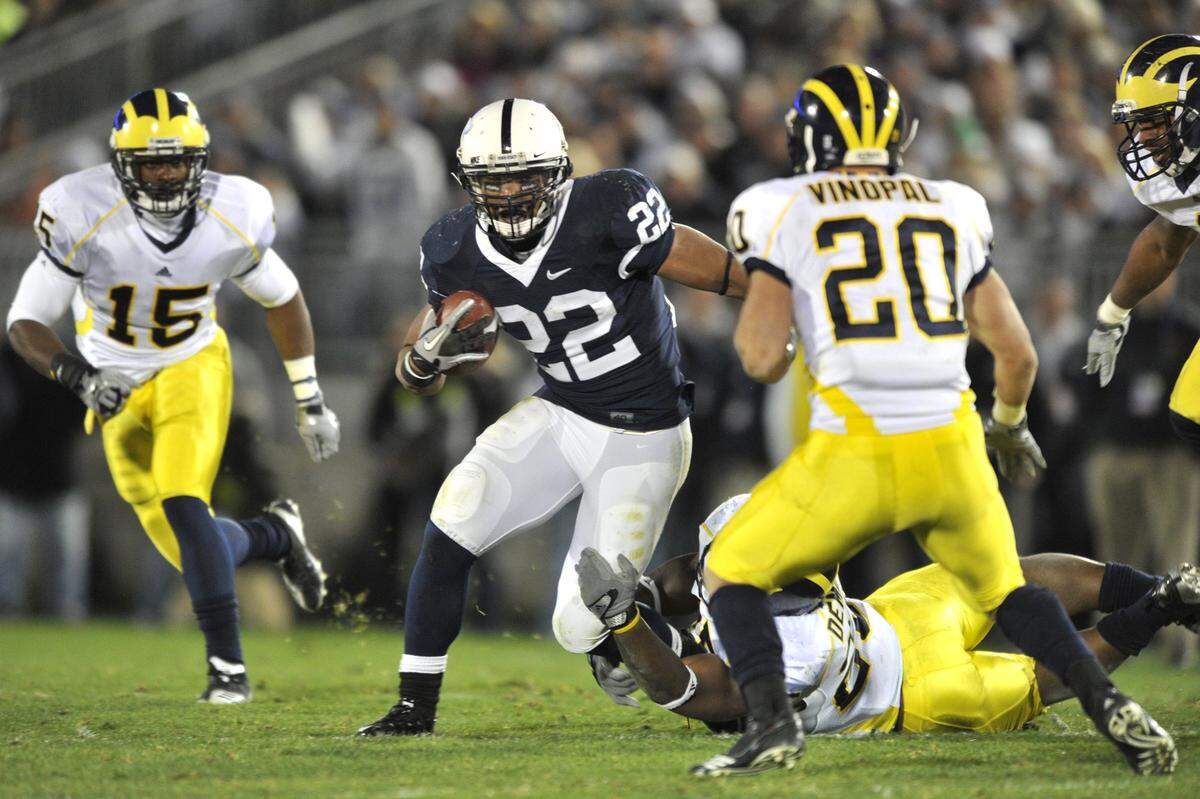
Stop me if you’ve heard this before: He wasn’t the strongest or the fastest ... but he was smart, patient, effective and could make a defender miss in a phone booth. Royster was as consistent as he was productive and simply had a knack for finding the hole. He became the first Nittany Lion to ever rush for 1,000 yards in three consecutive seasons, and he was rewarded with a selection on three All-Big Ten teams — two on the second team, one on the first team. He remains Penn State’s all-time leading rusher with 3,932 yards. He also has 32 career TDs, 5.7 career yards per carry and 562 receiving yards.
3. Nick Singleton
High rank: 3 | Low rank: 5 | Average rank: 3.7
Years played: 2022-present
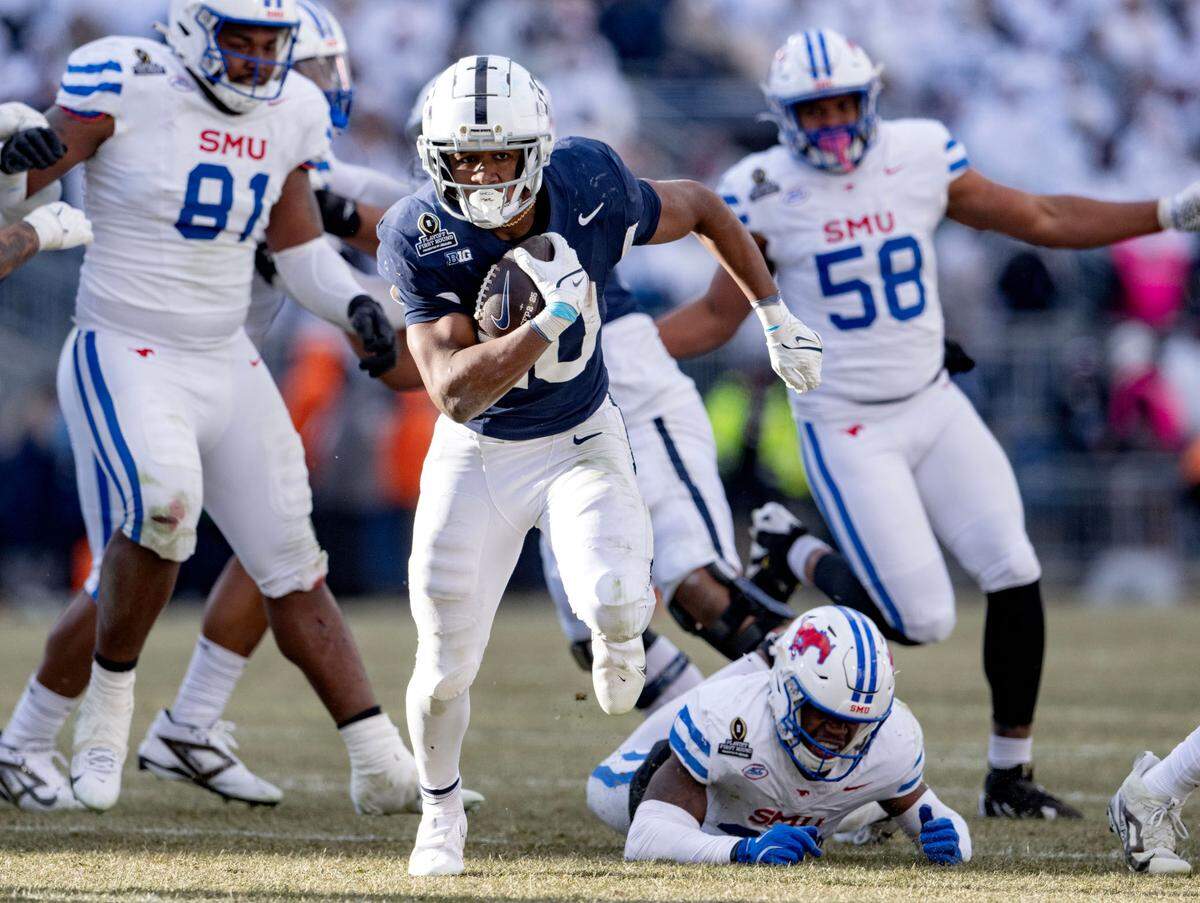
Could he move up even further in the rankings after this season? We’ll see. Singleton is entering his final year of eligibility but, even if he quit football tomorrow, he’s already cemented his legacy as one of the Nittany Lions’ best. He’s within striking distance of the school’s all-time career rushing mark — he needs 1,020 yards to tie it — and he’s already a three-time all-conference selection (honorable mention in 2024, third team in 2023, second team in 2022). His high school coach might’ve best summed up his running style: “People are afraid to get in his way. If he’s in the open field, he’ll run you over. If he gets to the edge, he’ll outrun you.” Singleton’s physicality and explosiveness make him a unique talent, one that ESPN.com’s Greg McElroy ranked as the No. 4 RB in the nation heading into the upcoming season.
2. Larry Johnson
High rank: 2 | Low rank: 4 | Average rank: 2.2
Years played (after 1999): 2000-2002
OK, OK. We doubt there’ll be much controversy when it comes to our panel’s 1-2. But let’s just say this: While Saquon Barkley remains the best Penn State RB of the last 25 years, Larry Johnson clearly had the best Penn State RB season. In 2002, the local State High grad rushed for a national-best 2,087 yards, 7.7 yards per carry and 20 touchdowns. (Barkley never surpassed 1,500 yards in a season, nor 6 yards per carry.) It’s easy to forget just how good Johnson was because, for some reason, the running back only saw significant time as a senior. Three times that season, he broke Penn State’s single-game rushing record with more than 250 yards — big-play ability that earned him the Maxwell Award, Doak Walker Award and Walter Camp Award. (He was also third in the Heisman voting.) He was a first-round NFL draft pick who, for a few years, was arguably the world’s best RB. He rushed for 1,700 yards in back-to-back NFL seasons.
1. Saquon Barkley
High rank: 1 (10) | Low rank: 1 | Average rank: 1
Years played: 2015-2017
It’s virtually impossible to exaggerate while talking about Saquon Barkley. Analysts like Matt Millen were comparing Barkley to Penn State legend Curt Warner just a few games into his career — and who knew Barkley would exceed those comparisons so quickly? Fans and locals immediately recognized Barkley’s talent, and the nation would catch on soon enough. Barkley was a staple on SportsCenter — diving over, through and around defenders — and there was always a sense he could break one at any moment. He didn’t have the offensive line of Larry Johnson or Ki-Jana Carter, but it didn’t matter. His balance, vision, power and speed combined to make a generational back — one that even Barry Sanders, the NFL legend himself, couldn’t deny. “What Saquon did, I think he really restored a lot of faith in what the running back position can do,” Sanders said in March. “He’s a unique individual in that his skill set, the way he plays the game, the situation he’s in, the great team that he’s surrounded by — all those things matter and help with what he’s doing. But he’s certainly a generational type of talent.” Legend recognizes legend.
This story was originally published June 30, 2025 at 6:30 AM.