Who could start on offense for Penn State in Matt Campbell’s first season? Here’s a look
Penn State’s roster additions and subtractions are nearly complete, with late transfer portal additions being the only thing between new head coach Matt Campbell and a completely settled roster. Campbell has brought in plenty of new talent, largely from Iowa State where he previously coached, and should have a competitive team on both sides of the ball this year.
Sure, it’s only January, but it’s never too early to project what the Nittany Lions could look like this season. Let’s take a look at the projected offensive depth chart for Penn State in 2026.
Quarterback
Starter: Rocco Becht
Backup: Alex Manske
Depth: Peyton Falzone, Kase Evans, Connor Barry
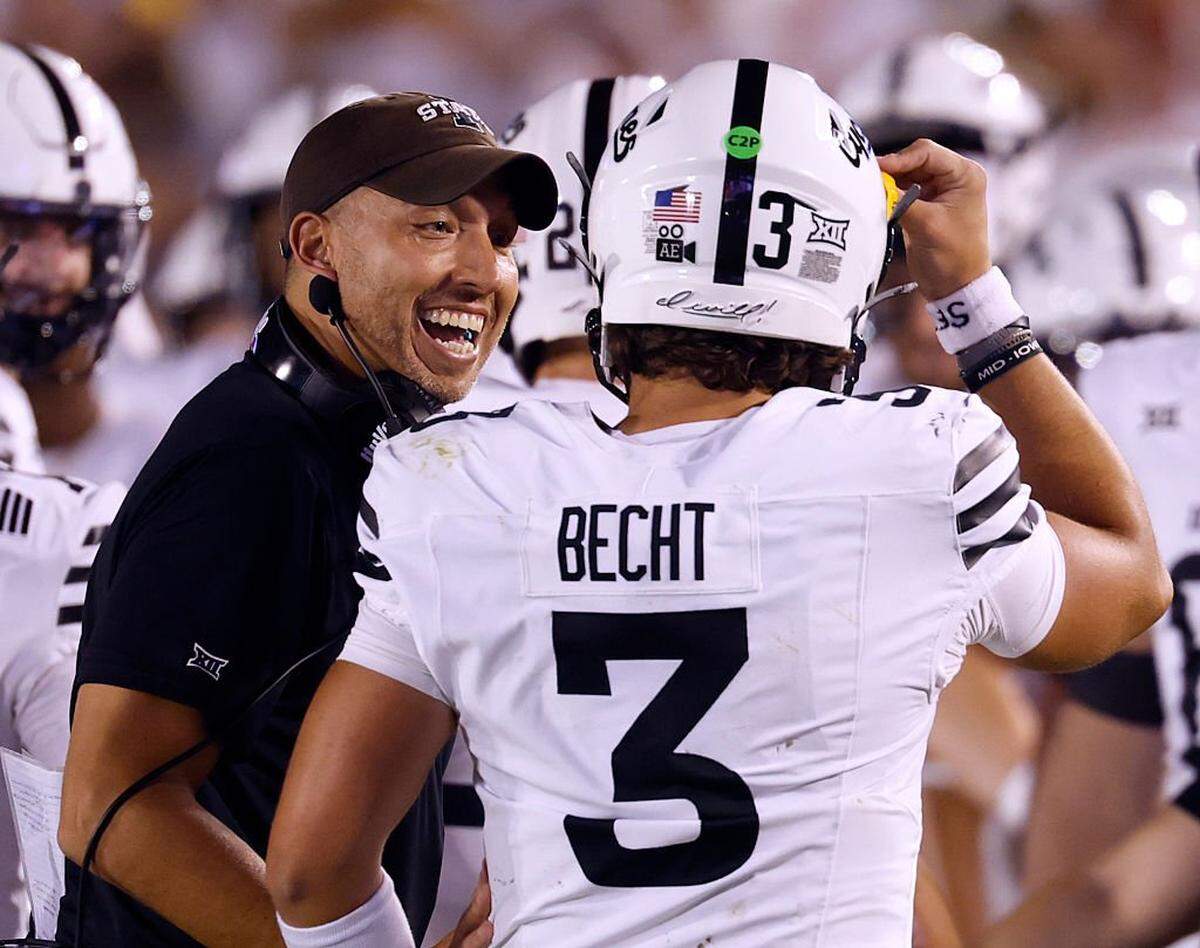
There isn’t a position on the roster more straightforward than this one. As long as Becht is healthy, he will be the starter in 2026. The Iowa State transfer had surgery on his non-throwing shoulder, but may need spring reps the least of any player on the roster, so there shouldn’t be any reason to fret if he’s limited at all this spring. Becht will be playing under offensive coordinator Taylor Mouser and quarterbacks coach Jake Waters, both of whom coached him with the Cyclones and should have his top targets from his Iowa State days, too. Behind him, Manske is the front-runner to be the backup after holding that spot as a true freshman at Iowa State. He should get reps in blowouts this year, while Falzone and Evans are likely to redshirt, and Barry is an emergency QB3 for the Nittany Lions.
Running back
Starter: James Peoples
Backups: Carson Hansen, Quinton Martin Jr.
Depth: Cam Wallace, D’Antae Sheffey
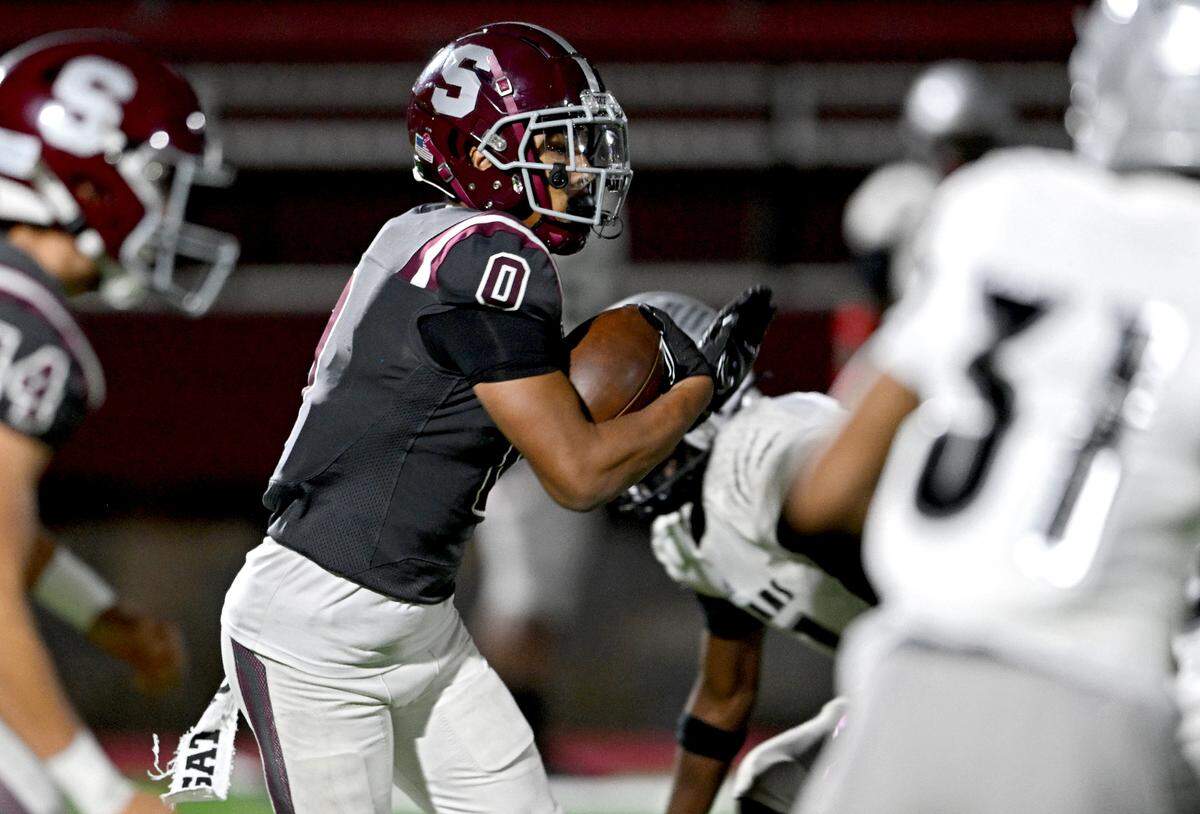
While quarterback is the most straightforward spot on the roster, this might be the most complicated. Hansen, Peoples and Martin will all have a claim to the starting job and will likely end up getting the vast majority of the carries this season. Peoples is a consistent back, as is Hansen, with the former providing more speed and the latter having more size. Neither is a home-run hitter, but both provide a quality floor for the offense. Martin is the big-play threat in the trio, with size and speed that give him the most upside in the offense. He should have a role in the offense no matter what this season because of that. Wallace returns as another depth piece who could work in some snaps on occasion, while State High’s Sheffey is highly likely to redshirt during his first year of college.
Wide receiver
Starters: Chase Sowell, Brett Eskildsen, Koby Howard
Backups: Keith Jones Jr., Zay Robinson, Peter Gonzalez
Depth: Lyrick Samuel, Karon Brookins, Ben Whitver, Amarion Jackson, Josiah Zayas
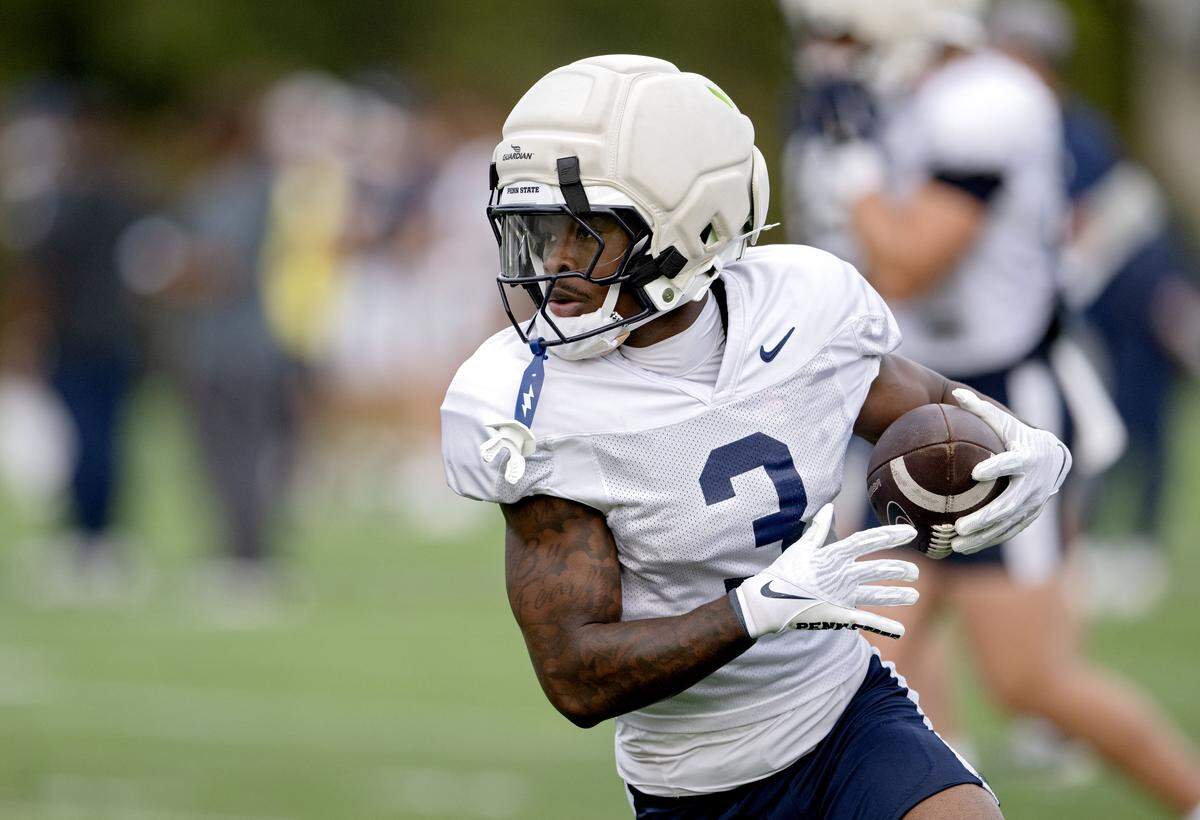
The starting group has been reshaped at wide receiver with two newcomers slotting into the lineup immediately. Eskildsen is a burner, with the ability to get open downfield and make big plays with his long speed, but Sowell is the real prize from the portal. He’s a legitimate No. 1 wide receiver with the size, speed and quickness to go over 1,000 yards this season for the Nittany Lions. There are some drop concerns with Sowell, but not enough to project them being a major issue in 2026. Howard is the third receiver on the depth chart, although he might not always start as the offense leans on packages with two tight ends on the field. He should still have a much larger role than in 2025 when he struggled to see the field until James Franklin was fired. The rest of the group is mostly unknowns, with Jones having the best chance of seeing the field early because he has experience as a starter at Grambling.
Tight end
Starters: Benjamin Brahmer, Andrew Rappleyea
Backups: Gabe Burkle, Cooper Alexander
Depth: Brian Kortovich, Finn Furmanek
This is an Iowa State-heavy position with three players coming in from the Cyclones — with all of them in the top two rungs of the depth chart. Brahmer should step in right away as a starter and should be one of the best tight ends in the country. He’ll like be one of Becht’s most reliable targets in the passing game and could finish in the top three in receiving yards for Penn State this year. Rappleyea should get plenty of reps alongside Brahmer as Mouser leans into 12 personnel with two tight ends, and he should get the same amount of snaps a starter usually would. Burkle and Alexander will likely be their backups, with Burkle being right behind Brahmer and Rappleyea on the depth chart and the first player off the bench at the position. Kortovich and Furmanek could contribute in small roles but are not likely to see a lot of snaps this season.
Offensive tackle
Starters: Owen Aliciene, Anthony Donkoh
Backups: Garrett Sexton, Malachi Goodman
Depth: Kuol Kuol II, Mason Bandhauer, Pete Eglitis
Penn State is in need of a player to step up at left tackle, with Donkoh likely slotting in as the starting right tackle. Aliciene and Sexton are the favorites to start on the left side as things stand, but Goodman has enough upside to start if he takes big strides in his development this offseason or even during the season. That could be a game-changer at a position that could be below average for the Nittany Lions in 2025. All of Kuol, Bandhauer and Eglitis are in need of development in order to see the field, and Bandhauer could reasonably be a guard at this level.
Offensive guard
Starters: Trevor Buhr, Cooper Cousins
Backups: Chimdy Onoh, Vaea Ikakoula
Depth: Caleb Brewer, Tyshon Huff, Donnie Harbour
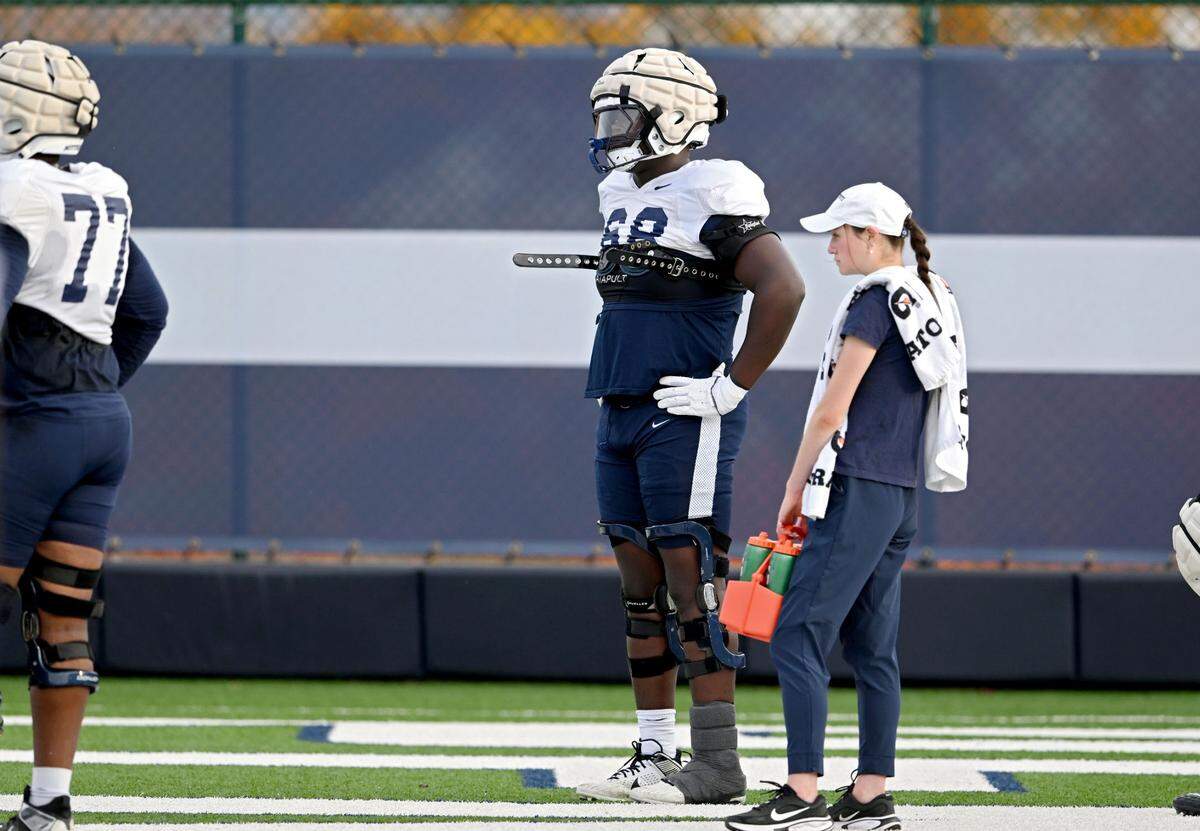
It would be a surprise if — assuming they’re healthy — Buhr and Cousins aren’t Penn State’s starting guards in its season opener. Cousins was a rotation player for Penn State in 2025 and is ready to step into a starting role, but will need to improve as a pass protector in order to reach his upside. Buhr was a starter at Iowa State and shouldn’t have any issue transitioning to the Big Ten as a starter at 6-foot-4, 325 pounds. Ikakoula also comes from the Cyclones and could have a rotational role if he takes a step this offseason, while Huff is the most unknown of the group after starting 11 games at guard in 2025 at Division II Tiffin. Onoh, Brewer and Harbour are all returners who are in need of some development, with Onoh having the most direct path to seeing the field.
Center
Starter: Brock Riker
Backup: Dom Rulli
Depth: Will Tompkins
This one will likely come down to Riker and Rulli, with Tompkins joining Iowa State as an offensive tackle out of high school for 2025 but having a chance to move inside to center where the Nittany Lions will badly need a developmental center. It’s also worth noting that one of the guards for Penn State could also kick inside to center to back up Rulli and Riker. Of course, what matters most in 2026 is who wins the job, and Riker gets the edge here after starting 12 games at Texas State as a redshirt freshman last season. He’s a very good athlete with a good frame, but will need to add weight to ensure he can hold up in the Big Ten after playing in G.J. Kinne’s up-tempo offense with the Bobcats. Rulli will likely push him for the job, but he’s still best-suited as a backup in the Big Ten.