How should State College’s zoning overhaul address student housing? Council debates
AI-generated summary reviewed by our newsroom.
- Council voted unanimously to advance zoning and SALDO drafts.
- College Ave downtown buildings may reach up to nine stories; West College Ave up to seven.
- Ordinance uses deed restrictions to prohibit student occupancy in certain units or floors.
State College Borough Council voted Monday to advance drafts related to the ongoing zoning overhaul, though some members were apprehensive about what it could mean for student housing and the character of downtown districts.
The council has spent the past year reviewing and revising a new comprehensive zoning ordinance that is focused on creating more housing opportunities for long-term, non-student housing. Borough staff introduced a clean second draft during a June 1 work session meeting, which is still being refined.
The unanimous vote to send the latest drafts of the updated zoning ordinance and the Subdivision and Land Development Ordinance to planning boards did not reflect the tenor of the discussion, as council members spent much of the meeting debating the potential impacts of specific language that would incentivize developers to build more student housing.
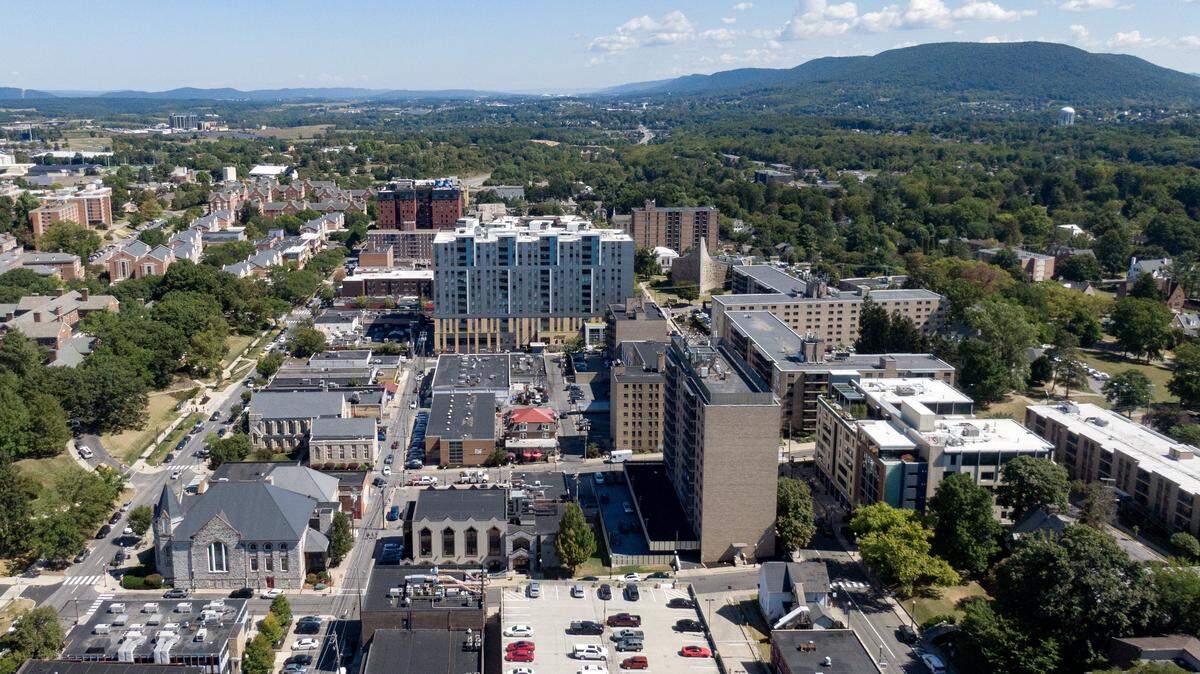
The proposed downtown map would change zoning in key blocks right next to the University Campus, such as Hiester Street, to allow larger mixed-use buildings. There is also language that would incentivize student housing by cutting minimum parking requirements in half or by requiring off-site parking, which can make higher-density projects cheaper and easier.
Council member Susan Venegoni, who voted against a similar draft during a March meeting, said there is still more work to be done and that she voted yes on the condition that there would be changes.
“If we’re going to have the opportunity to talk about all these things, I’ll vote yes tonight. I was going to vote no, but we need more work on this. It’s just not ready to go,” she said.
Venegoni expressed concerns about the ordinance not having sufficient language that would incentivize building non-student, workforce and middle-income housing with real paths for homeownership.
“I don’t think what we have written is going to get us what we say we want. What we’re going to get is a bunch of happy developers and more student housing.”
Council member Gopal Balachandran initially opposed the draft, arguing that the downtown rezoning provisions would hand greater power to large student-housing developers and private equity firms at the expense of downtown’s character. He ultimately voted to advance the proposal after receiving assurances that the draft would undergo further revisions.
“I’ve come to the very sad conclusion that the only people that want to really build housing here are purpose‑built student housing,” he said. “If the zoning map, as it’s constructed, goes in, the Hiester Street plaza is going to be basically nullified — Manny’s, all of those areas are going to be redeveloped to build purpose‑built student housing.”
Other council members were in favor of moving the draft forward due to time constraints in what they described as a housing crisis in State College.
“Housing is a crisis in our community. There aren’t enough places for people to live,” Evan Myers, borough council president, said. “I think it’s past time for us to move forward. Will we have to revise this at some point? I suspect so, but it’s time.”
Myers noted that Penn State has discussed increasing its on‑campus freshman class to about 10,000 students per year, which he said would mean roughly 1,000 or more additional students annually.
“We’ve already taken lots and lots of time to discuss these changes,” council member Matt Herndon said. “Delaying this has consequences. I’ve already mentioned how council’s failure to adopt new zoning soon enough has led to the current situation at Addison Court.”
During the public comment period, several residents asked the council to move the draft forward and include more non-student housing options.
“We shouldn’t let perfect be the enemy of good, and I feel like I have seen that happen over and over and I’d rather have something that is better than what we have now,” Ethan Dean, a borough resident, said. “If we don’t pass something like this, what we will lose is not necessarily the character of our town but the people who make up this town who will have to move away.”
Student housing parameters in downtown State College
One of the components of the update is to increase height and density downtown and adjacent areas, which council members said would increase student housing developments.
The plan includes language that would allow buildings along College Avenue in the Downtown Central district to reach up to nine stories, and buildings in the West End district fronting West College Avenue — from Atherton toward the Ferguson Township line — to reach up to seven stories. Height limits would then step down to three stories between Calder Way and Beaver Avenue, and two stories closer to the single‑family neighborhoods.
While the ordinance seeks to expand housing opportunities across the borough, it would also manage student density through deed-restricted portions that prohibit student occupancy in certain units or on designated floors. The goal is to preserve housing options for long-term, non-student residents even as overall residential density increases, Ed LeClear, borough planning and community development director, said.
But prioritizing long-term, non-student housing in the ordinance does not guarantee there will be more of this type of housing, he added.
“The market only wants to build student housing in the borough, according to the market information that we run into from a planning department standpoint,” he said. “So part of this is that council is probably going to have to adopt the ordinance, and then we’ll see how the market responds.”
Monday’s approval on the final draft means it will be submitted to the Centre County Planning, Centre Region Planning Commission and State College Borough Planning Commission for required statutory review.
The council plans to continue discussing the drafts during council meetings in the coming months. There will also be four neighborhood meetings between July and August. Both ordinances are tentatively scheduled for a public hearing in November, with adoption thereafter.