Looking forward, looking back: How has State College changed since the turn of the millennium?
READ MORE
Business Matters: Downtowns in transition
Across Centre County, downtown areas are in a period of transition. From State College growing up with high-rises to Philipsburg tackling blight, the Centre Daily Times’ annual Business Matters section examines the changes and the way those changes affect our communities.
Expand All
In 1896, State College was just a town abutting the Pennsylvania State College, enrollment 347, but now the metropolis bordering Pennsylvania’s top research university is more likely to be described as a “city.”
And over the past 20 years, many things — from businesses, to housing, to traffic — have changed in State College’s downtown.
Mike Albright, the manager at Woodrings Floral Gardens at 145 S. Allen St., said changes in retail and community are the most noticeable today.
“We’ve lost a lot of that kind of community feeling in the downtown,” he said. For the non-student population, there isn’t much that brings them downtown, since the only grocery store in the borough is on Westerly Parkway, and there are dozens of retail options at shopping centers in the Centre Region.
Albright said he thinks the rise of student housing in the borough is driving some of that change, although local businesses all over the country lost ranks between 1997 and 2012, with retailers losing over 100,000 and community banks and credit unions cut in half from around 26,000 to 13,000.
Changes led to State College growing up
“I think probably one of the biggest changes has been the results of the Signature Development ordinance that was passed when I was on council (in 2007), which ... allowed for more height in building in exchange for certain other kinds of things from developers,” said State College Mayor Ron Filippelli, who served on State College Borough Council from 2006 to 2015.
Council adopted the Signature Project Overlay in 2005, which allowed buildings up to 12 stories within a 10-block area of downtown, provided that developers designated 40% of gross square footage to commercial use, deeper setbacks and lots at least 30,000 square feet total. In 2007, council voted to expand the overlay to two blocks of East College Avenue between South Garner and Hetzel streets.
Later, during Filippelli’s tenure, council adopted ordinances that required new construction to have 10% of units contain inclusionary housing and established provisions for off-site affordable housing and fees-in-lieu of building units. In 2013, council adopted a “non-owner occupied” residential section of the Signature Project Overlay, which increased the amount of rental housing allowed in the buildings, and reduced the commercial space required.
Two years later, the adoption of the Collegiate Housing Overlay allowed additional height and rental residential square footage in the Commercial zoning district for the 500 block of East College Avenue for developments that included two floors of graduate and professional housing and additional retail space.
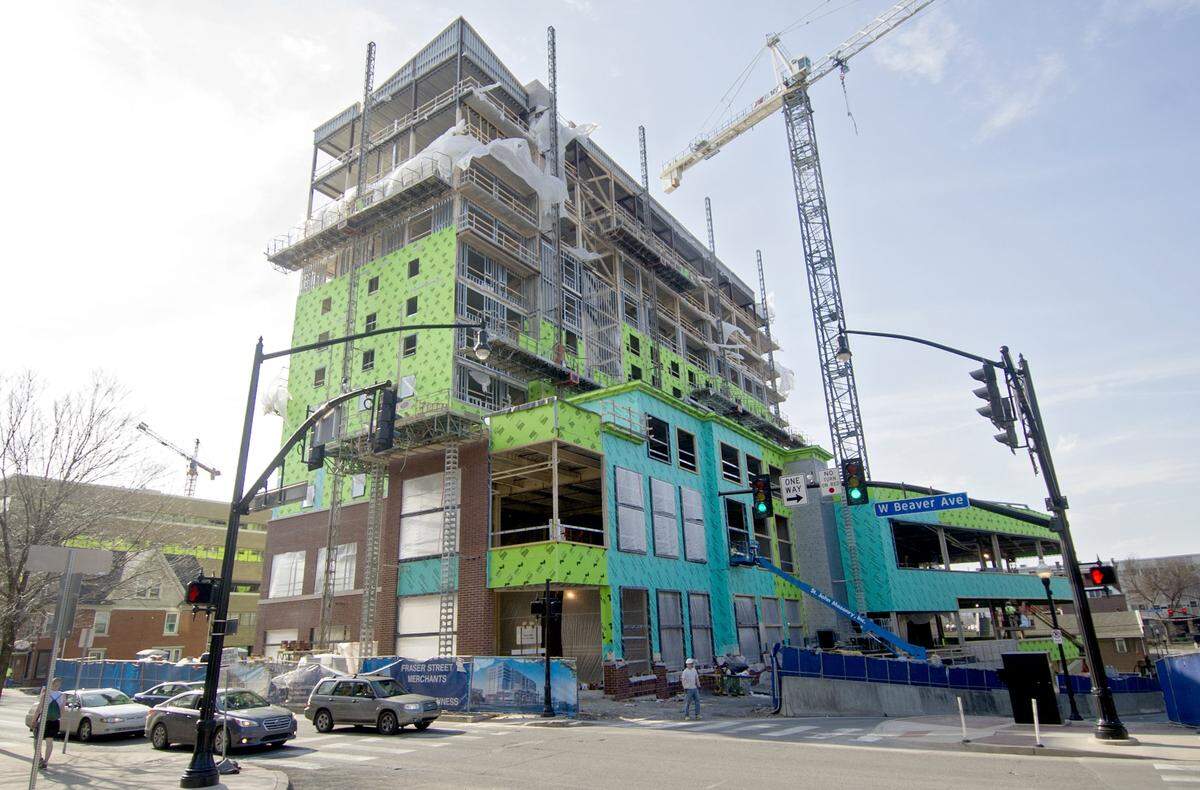
“The result of what happened with that ordinance, in my opinion, is not what we intended,” Filippelli said. “The real motivation for the ordinance was, at the time, we were trying to get Fraser Centre built. Even though it’s kind of a signature building, it’s not a student housing complex. We wanted to get non-student residents downtown.”
Unintentional student housing boom?
State College has a “real tax issue,” Filippelli said, because of its high percentage of student residents who don’t pay income and public service taxes. For local governments, that doesn’t bode well, he said.
But with the 2013 amendment of “non-owner occupied” housing, the outcome of council’s vision changed. “In fact, instead of Fraser Centre-type buildings, what we got was ‘purpose-built student housing,’” Filippelli said.
After the 2008 recession, interest rates dropped and developers all over the country scrambled to take advantage of yield opportunities, he said. One of those biggest boom areas was investment in student housing.
There’s no doubt that the signature project overlay and its later amendments, combined with market forces, have led to State College’s luxury student housing boom since 2017 and the town’s changing character.
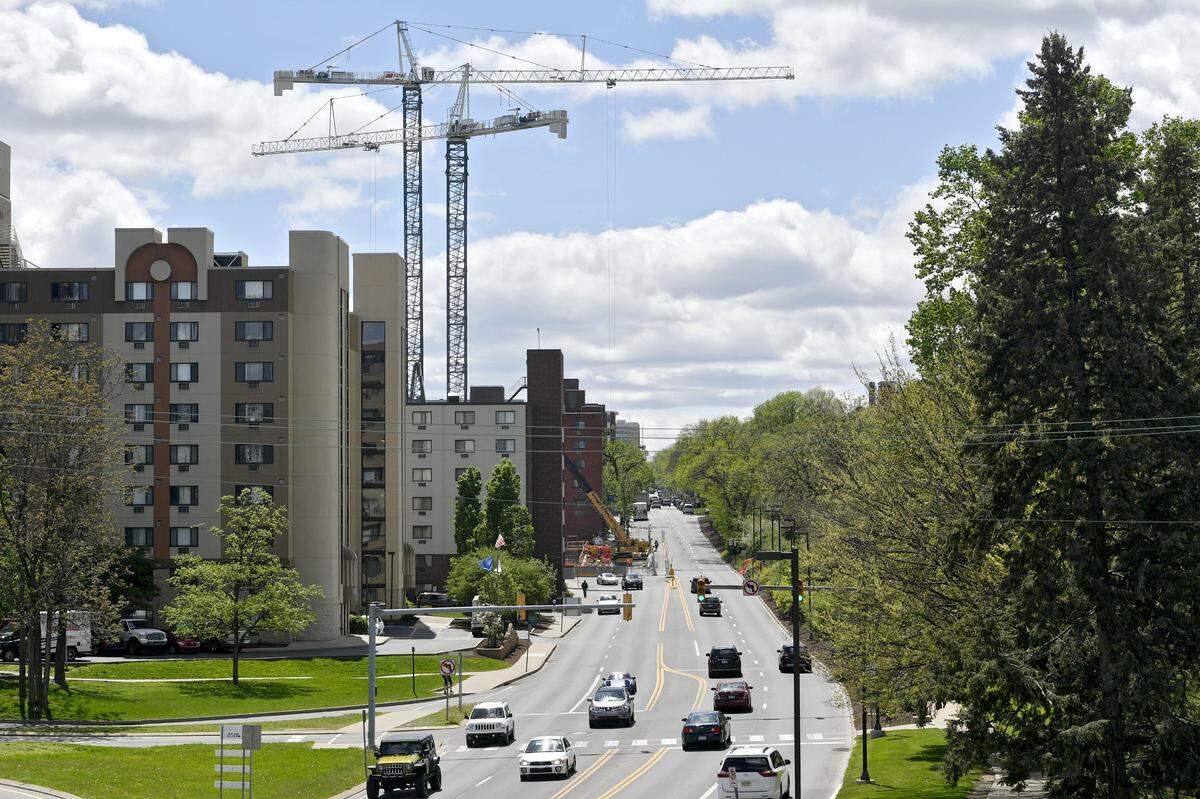
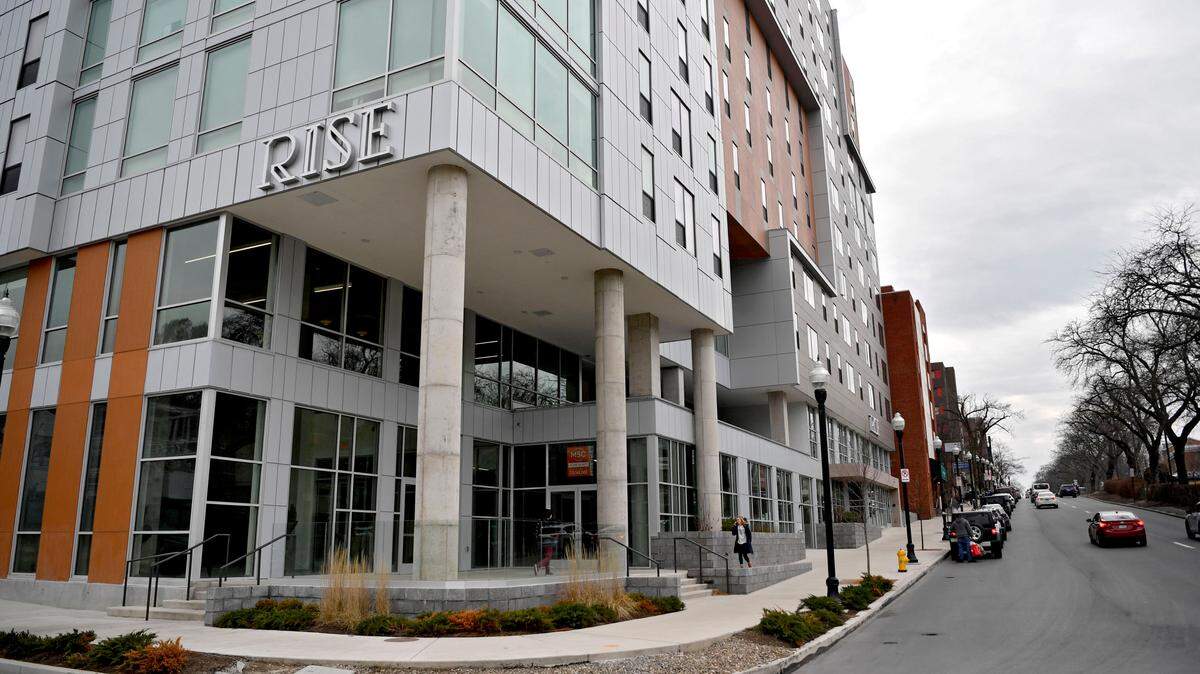
After the the 12-story Fraser Centre went up in 2016, buildings in the Collegiate Housing Overlay began to pop up. The 12-story Metropolitan at 412 W. College Ave. followed in 2017, then the 12-story mixed-use building The Rise at 532 E. College Ave. in 2018 and the seven-story mixed-use building The Edge at 254 E. Beaver Ave. in fall 2018.
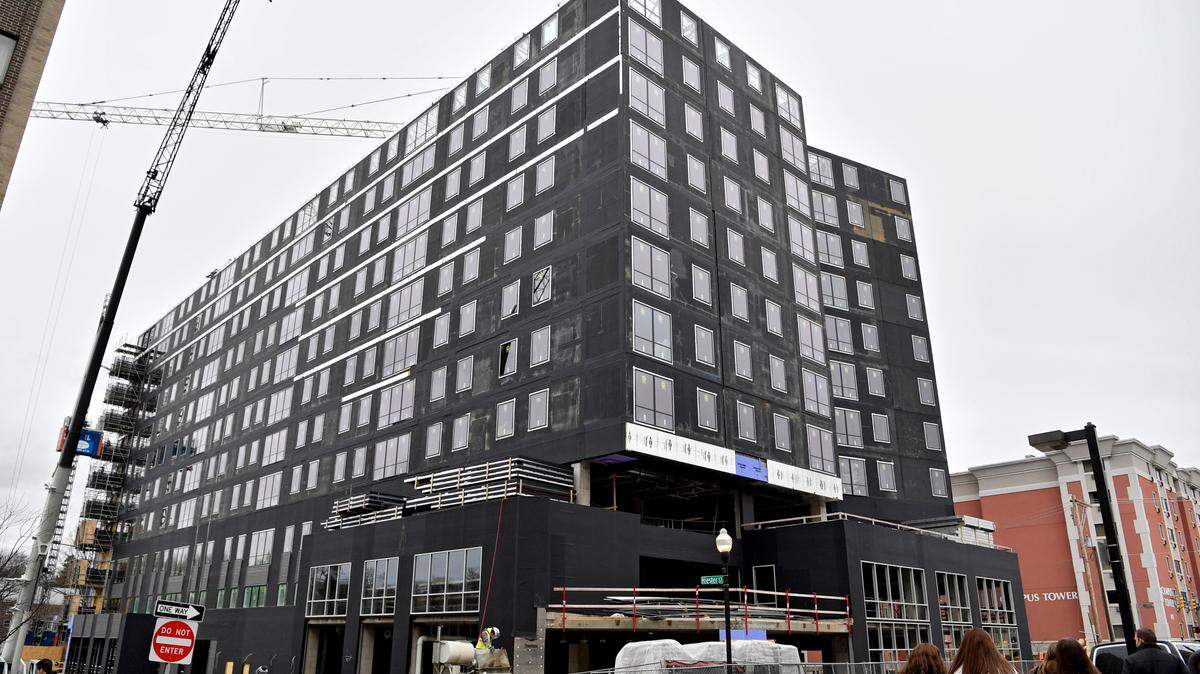
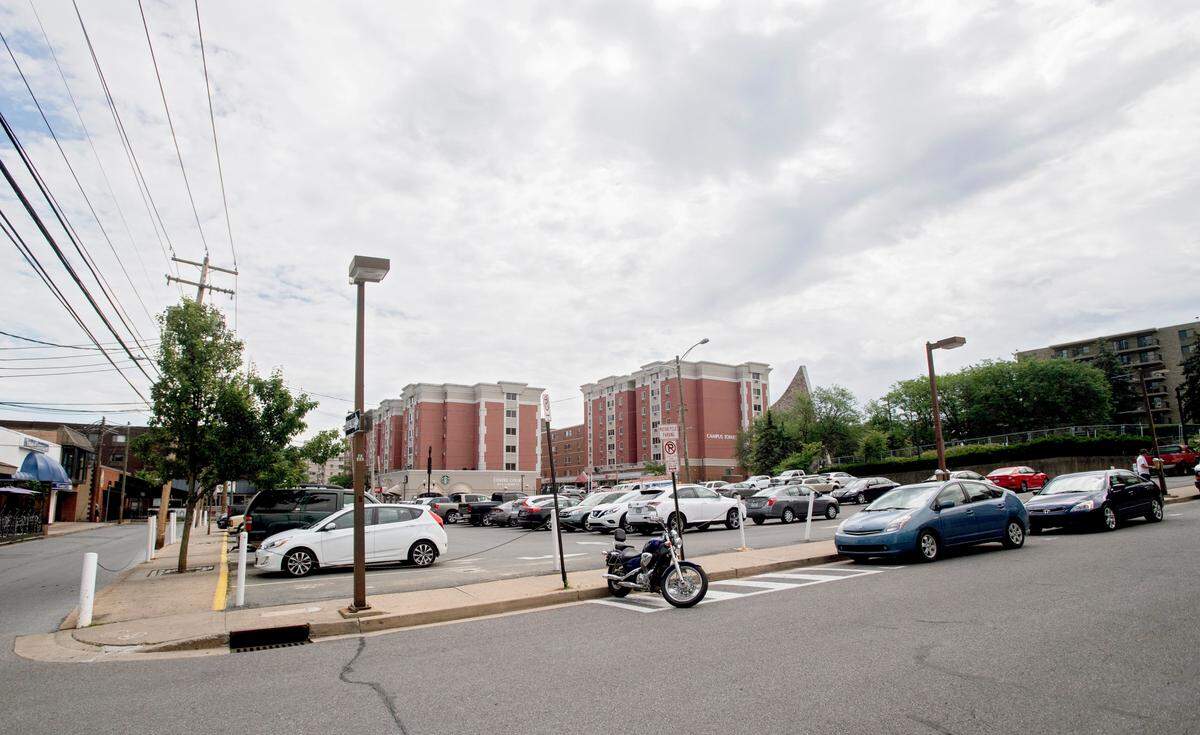
Next fall, those buildings will be joined by The Standard — formerly The Residences — on West College Avenue across the street from the Metropolitan, and Here State College, which is being constructed on the site of the former Garner Street parking lot. At the corner of East Beaver Avenue and South Pugh Street, the seven-story Pugh Centre is under construction with an expected completion date of August 2020.
Chicago-based developer Core Spaces submitted plans in November to demolish several buildings on the corner of East College Avenue and Hetzel Street to build a 12-story mixed-use building.
Mulling the pros, cons of high-rises
State College Planning Director Ed LeClear said last month that development in the borough added 4,200 beds since 2017.
That year, council rolled back part of the Signature Project Overlay by removing the “non-owner occupied” amendments from McAllister Street westbound to the properties on Atherton Street. It was an attempt, said LeClear, at creating opportunities for developers to build more buildings like the Fraser Centre on the western half of the overlay and leave the 12-story buildings like the Metropolitan on the eastern half of the overlay.
But some don’t think that’s enough to curb development.
“Quit building big, 12-story apartment buildings on every corner. That’s sort of taken away the whole character and ambiance of State College,” Albright said. “It’s tearing down the quaint little houses and buildings that have been here for decades and putting up big box apartment high-rises that I don’t think have much character or much appeal.”
Brian Cohen, owner of menswear store Harpers State College, said the high-rises add a nice element to downtown.
“I like these new high-rises,” he said. “It adds density, I think it actually reduces car travel.”
Harpers has been on East College Avenue for 94 years, and Cohen said the biggest change to his business, which he took over from his father, actually came in the mid-80s to early 2000s, when chains and big box stores started entering the retail economy. State College had about six menswear stores downtown at one point, and after longstanding businesses closed and retailers like Men’s Wearhouse and Joseph A. Banks came to shopping centers, Harpers is the only local menswear store that remains.
Having weathered these storms, Cohen said he still thinks downtown is the best place for a business like his, which relies heavily on local clients, tourists and Penn State alumni.
“We do a lot of business that people that could shop elsewhere ... but they love to come back here and they like what we do,” he said.
LeClear said a positive from all the new mixed-use high-rise buildings is the addition of new, high quality office space that was previously absent from State College’s market.
KCF Technologies recently moved into an office space on the second floor of the Metropolitan at 400 W. College Ave., and plans to expand its workforce in the new space.
“Our focus is firm location. We want businesses to come and stay, or grow, we want them to be here, we want them to grow here,” said LeClear.
Additionally, the fee-in-lieu money from developers following the inclusionary housing ordinance established in 2013 “has been a lifesaver,” he said, because it’s allowed the borough to keep owner-occupied housing costs down. The Redevelopment Authority and the borough are also talking with local business CEOs about connecting them with landlords of older rental units seeking tenants, he said.
“The answer is: the more that we diversify our economy from just being about the university.”
This story was originally published February 9, 2020 at 6:00 AM.
.jpg)