State College is adding more retail and office space. But is it getting filled?
READ MORE
Business Matters: Downtowns in transition
Across Centre County, downtown areas are in a period of transition. From State College growing up with high-rises to Philipsburg tackling blight, the Centre Daily Times’ annual Business Matters section examines the changes and the way those changes affect our communities.
Expand All
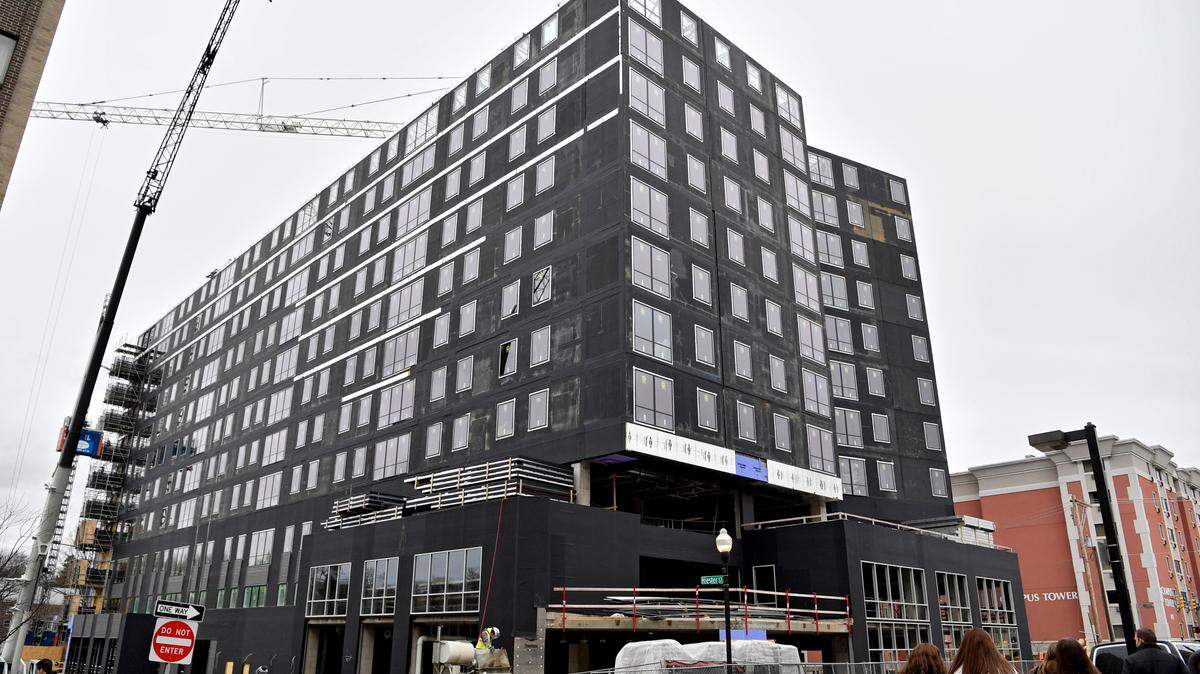
Four new mixed-use high rise buildings have come to State College since 2016, and this year three more will join downtown’s skyline. But with a changing retail market and shifting area demographics, what happens when some of those designated commercial spaces go unfilled?
While Fraser Centre had its two retail spaces — Target and H&M — filled upon opening in 2016, other mixed-use high-rise buildings have had more trouble filling both their retail and office spaces immediately.
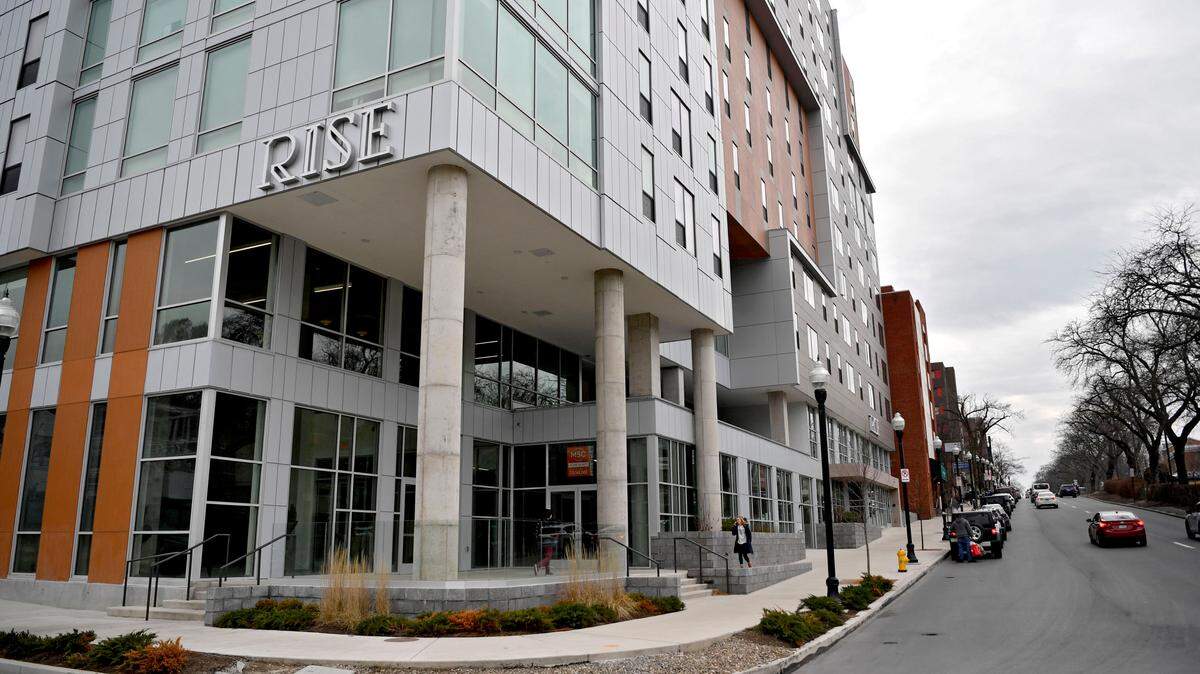
“The Metropolitan, which is owned by Landmark (Properties), they have everything leased except for one retail space, but it took them three years,” said State College Planning Director Ed LeClear. “The Rise has a first floor commercial space, but they designed it for a market. So there are some physical constraints to the space that don’t lend themselves to things like a restaurant as much.”
The Metropolitan, at 400 W. College Ave., opened in 2017 but didn’t fill its first retail space until the summer of 2018. In January 2019, local Japanese restaurant Tadaschi filled the second retail space.
Late last month, KCF Technologies filled the second floor office space in the Metropolitan, over two years after the building opened.
Kandy Weader, a commercial agent with Keystone Real Estate Group, which is helping Landmark lease office space in the Metropolitan, said some of the new retail spaces present challenges for local businesses.
“These spaces are priced at the top of their market, and that means that most local businesses can’t afford that,” she said. “The (other) problem is the location. Because we have a lot of national franchises that are looking at our market, they don’t want to be on the outskirts of town.”
The borough originally designed the Signature Project Overlay to allow 12-story buildings in the Commercial Incentive District for most of downtown, except for the “core” area including the College Avenue corridor from HiWay Pizza Pub to Burrowes Street and the 100 block of South Allen Street.
With the 2017 amendment that removed the “non-owner occupied” section of the overlay from McAllister Street westbound to the properties on Atherton Street, many of the newer, mixed-use, mostly student housing buildings were relegated to the ends of town.
Rise State College, at 532 E. College Ave. on the east end of downtown, has retail space that’s sat empty since it opened in 2018. Originally, developer CA Ventures planned to have Urban Market grocery store in the first floor retail space, but the tenant backed out before construction finished.
CA Ventures didn’t respond to requests for comment for this story.
Weader said Rise is in a tough spot, because it lacks the same visibility on the east end of town that west end buildings get from Atherton Street.
“(National franchises) will pass by these retail spaces like the Rise,” she said. “The one thing that the Metropolitan and the Standard has going for them, both from an office and a retail standpoint, is visibility. Their traffic is much higher.”
The Edge at 254 E. Beaver Ave., which opened in fall 2018, took months to fill its first retail space. Frutta Bowls opened in March 2019, almost seven months after the building. Roots Natural Kitchen filled the second ground-floor retail space almost a full year after the Edge opened, in July 2019.
Another challenge for the retail market is that these new retail spaces are often delivered to the tenant “in a raw state,” Weader said. Usually, if a tenant wants to retrofit the space to their needs, it requires a large build-out budget, which may deter some local, or smaller, businesses.
Filling office space presents a challenge, too, because the market for new, high quality — Class A — office space in State College isn’t as high as in major cities with growing technology sectors.
“In order to make the pro forma, these buildings have to be priced at the top market rate. ... We’re starting to get more inventory of Class A space in our market and there’s just not a lot of users,” said Weader. “Most of our users are Class B users. And they’re looking for usually smaller space, move in ready space, and a little more affordable.”
LeClear said the borough sees those problems, and is working hard to bring in outside firms and identify ways for existing businesses to lease these spaces, which will keep the growth and innovation in State College.
“I think overall, the biggest issues are the desire to get second floor office space,” he said. “But I think that trying to match up all of these companies that are spinning off through Invent Penn State, the price point of the rent that they need for the space, how do you match that up with what’s being asked for?”
Jeremy Frank, CEO of KCF Technologies, said last month that the company’s new location at the Metropolitan is attractive because of its visibility and high profile. In talking to other business leaders, he said, he’s heard concerns about relocating to downtown that include lack of parking and logistical challenges for deliveries.
“The demand to occupy that (Class A office) space ... it’s not obvious, that’s for sure,” he said. “I like the idea of being an example of that and I think people will notice this. Those companies will notice if people want to work in a place like this, and it helps us to recruit ... it’ll help spur that demand.”
Weader is also working with The Standard, set to open this fall, and Core Spaces’ latest 12-story building proposal, set to open in 2022 if approved, to fill their incoming office space. She sees the growth of the Class A office space market as an opportunity.
“We have a lot of office inventory right now and we’re trying to fill that inventory,” she said. “It’s an exciting time for our market right now, to have some new inventory for our market, and opportunity to attract some new businesses to our area ... it’s also given me an opportunity to work with local business like KCF and say, ‘how can we meet your business needs?’”
This story was originally published February 9, 2020 at 6:00 AM.
.jpg)