Biking has become increasingly popular in the Centre Region. Is the infrastructure there to support it?
READ MORE
Business Matters: Reshaping communities
How is Centre County growing, and how does the approach to growth affect families, businesses and visitors? The answer is different depending on where you look — from downtown State College’s ever-evolving landscape to Bellefonte’s small business boom and Snow Shoe’s struggles after business loss. The Centre Daily Times’ annual Business Matters section explores growth and development throughout the county.
Expand All
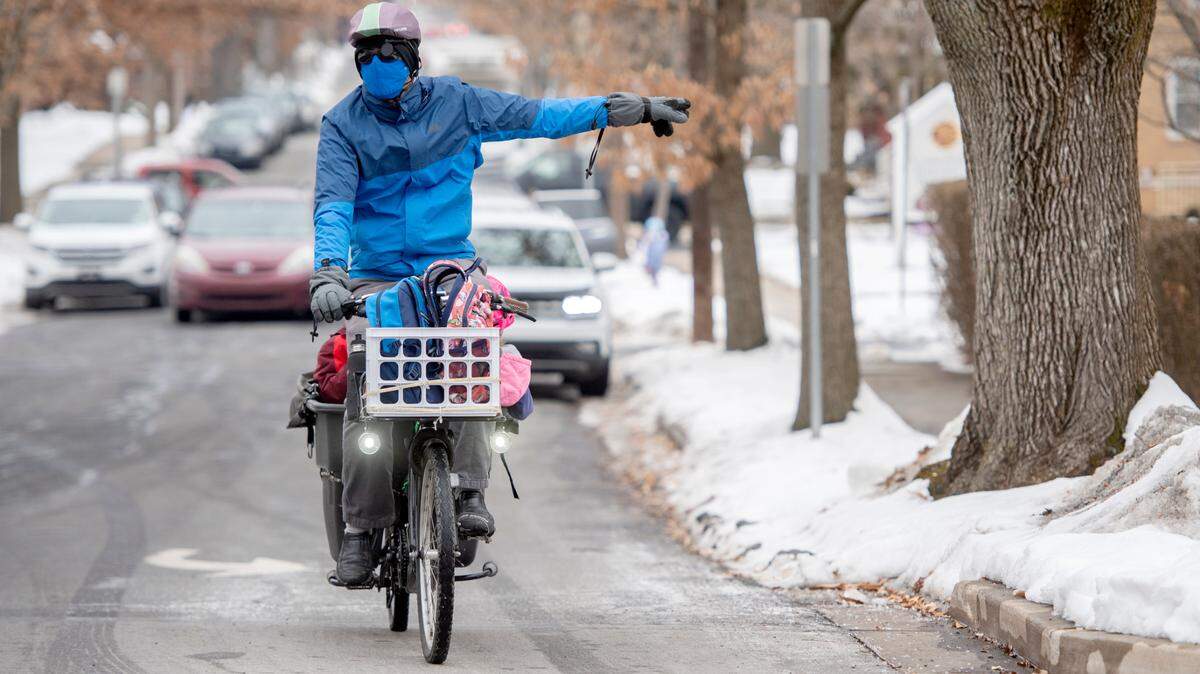
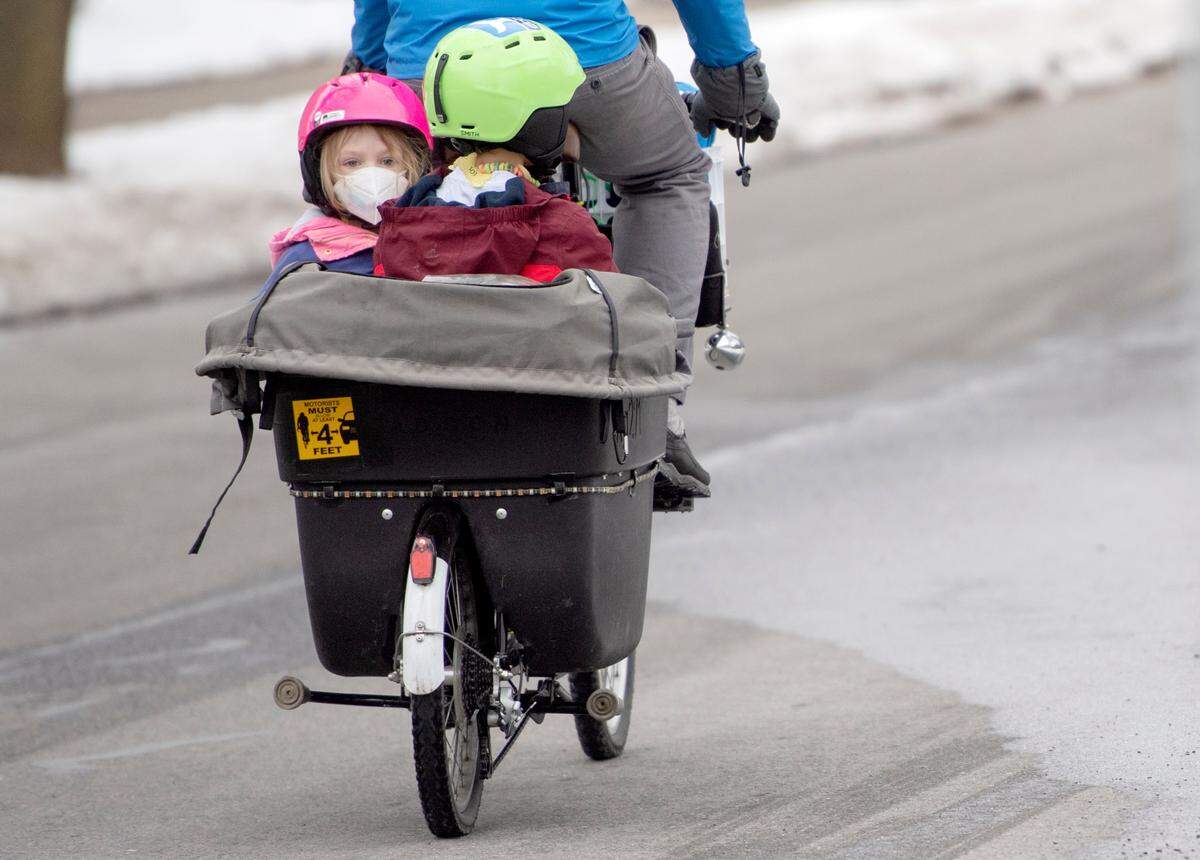
Every day when Matt Herndon drops off and picks up his kids from school, he uses his bike.
He made that decision in the face of COVID so his kids wouldn’t have to take the bus, but it’s also not an unusual choice for him and his family. When he was a kid, he biked to school and to soccer practice, and when he went out into “the real world” and lived in the Washington, D.C., area, he often traveled by bike. Now living in State College borough, he said riding his bike has benefited him — financially and physically — and become part of his everyday life.
“In a city this small, it’s kind of ridiculous not to,” Herndon said. “The (State College) borough is just a couple miles across, why would you do anything but bike or walk to go … less than 5 miles it just, to me it seems obvious.”
Bike and pedestrian facilities are important to many Centre Region residents. As part of the Centre Region’s Council of Governments’ sustainability survey in 2021, a high percentage of those who responded were strongly in favor of expanding and connecting bike networks, and improving walking conditions to help the community choose healthier and more sustainable modes of transportation.
Because long distance travel can be difficult without a car, Herndon’s family does have one electric vehicle. But around town, they often choose to bike. He said there are some bike paths that are nice to ride, like a bike path that goes from behind the State College Area High School through Orchard Park and beyond.
“There’s another offstreet path that’s on the other side of the golf course that goes up to Radio Park Elementary School, there’s even a pedestrian and bike tunnel under Blue Course” Drive, he said. “It’s wonderful. You can cross Blue Course without risking your life on a bike or on foot, which that’s the way it should be.”
Atherton Street is another hazardous street that is unsafe for people to cross, he said. Making it so kids can walk or bike to school without fear of crossing Atherton Street should be at the forefront of everyone’s mind, Herndon said.
“There is just a moral imperative to make it so all kids in our town can safely bike/walk to school. We wonder why kids today aren’t fit, or lack independence and we never look at how our choices to make it unsafe for them to get anywhere on their own have created this scenario,” Herndon wrote in an email.
Taking bike infrastructure from silver to gold
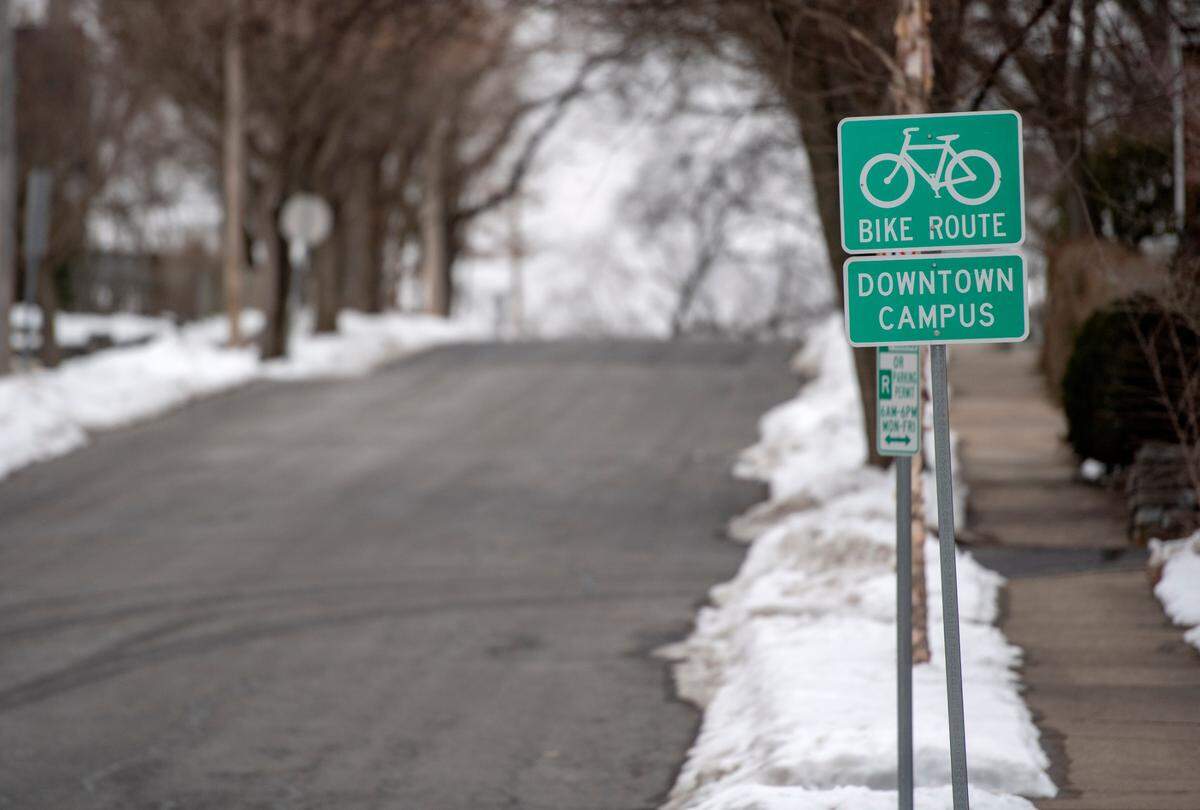
There are a number of different types of bicycle facilities: on-road bike lanes (marked physical space on the roadway with associated signage), bike routes (use the existing cart way and have signs and maybe pavement markings), and shared use paths, which are separated from the roadway and for a mix of users (bikes, pedestrians, dog walkers, etc.). Pedestrian facilities are similar — it usually means a sidewalk or a shared use path.
Herndon said while it’s nice that there is a bike lane on Allen Street downtown, more could be done to increase safety.
“The Allen Street bike lane, it’s a start. It’s nice that it’s there but there’s nothing to stop cars from parking in it, which happens frequently. There’s nothing to stop a car from just literally hitting you while you were in it because all that’s protecting you is paint,” he said.
State College Mayor Ezra Nanes has also been biking his entire life and as he took office this year, he called bike infrastructure his top priority. He said Allen or Pugh streets could be bike corridors if they make the streets one way. It would create safe, efficient and direct transportation for bicyclists while still maintaining the flow of traffic and parking, he said.
“Beaver and College (avenues) are two other places where, you know, what if we put a bike lane in? A dedicated bike lane, a bike lane that was separated by a physical barrier? ... Just painting a bicycle on the street, if the street is designed for high-speed car travel, is not necessarily the answer. What we need to do is create spaces that are dedicated and protected,” Nanes said.
There are a lot of plans for bike infrastructure already created, Nanes said. Now, those plans need to be put into action, including committing money to the projects and having the will do it.
Trish Meek, a transportation planner with the Centre Regional Planning Agency, works with municipalities on planning for and implementing bike and pedestrian infrastructure, among other things.
The COG Land Use and Community Infrastructure Committee is working on a map and table update of the 2016 Bike Plan.
“Basically, we want it to show what the existing, on the ground facilities are. And then also what planning individual municipalities did. We want to make sure we get proposed and existing facilities correct on that plan,” Meek said. “And the thing that’s significant about it is because it’s a regional plan, it’s really important that facilities are seamless and cross municipal boundaries and are connected. So that’s one of the goals.”
From there, they’ll do an active transportation plan for the Centre Region in 2023. Meek said that would include all the infrastructure for the region and recommendations.
Although there are a lot of facilities in the Centre Region, there’s still work to be done, Meek said. The Centre Region Bike Map is interactive and shows users bike facilities and includes the type, distance, name and description. But it can be hard to know exactly where additional facilities are needed, since it can be a personal need or want.
“There’s a lot of places where ... additional bike infrastructure would benefit those that bike. So it’s hard to say, well, this is the place that’s in most need, because it depends really, from an individual perspective. Where are people traveling to and from? And if it’s a network that they need, it’s extremely important to them,” Meek said.
The League of American Bicyclists rated State College and the Centre Region as a “silver” bicycle friendly community in 2020 (previously bronze, 2012-2019). Matthew Cox, president of CentreBike, said in an email he’d like to see the area reach gold in 2024. He highlighted progress made over the years.
“In 2015 the area had (about) 64 miles of bike infrastructure, today we are at over 100 miles. Connectors and projects like the Valley Vista shared-use bike path have increased the mileage over time,” he said.
Like Herndon and Nanes, Cox frequently bikes. He doesn’t drive, and when he lived in the borough, things were more nearby. Now that he lives in the Houserville area, he’s had to learn new paths and trails, which has been fun for him. He said he has biked over 10,000 miles in three and a half years.
“It has been a great alternative to taking the bus during service reductions,” he said.
Growing need at Penn State
Feedback from Penn State students has shown that there is a strong interest to prioritize sustainable modes of transportation, such as biking, at the university, Cecily Zhu, sustainable transportation program manager at Penn State, said. The percentage of bike users on campus is 6%, she said, compared to the statewide bike mode share of 0.5%.
“We’re interested to see what updated numbers can show us as this number was from a 2017 survey. This is likely to have increased dramatically with the introduction of bike share on campus and in the borough,” Zhu said in an email.
Penn State has a bicycle master plan that was developed in 2008. Updates will be coming this year, funded in part by the Student Fee Board. This time around, students will actively be involved in the process, she said, after the 14-year-old plan was created internally.
One area Zhu mentioned that could be improved is east and west travel throughout the core of campus, such as on Curtin Road.
More ‘walkable’ College Township
In College Township, a Pedestrian Facilities Master Plan (previously the Sidewalk Master Plan) is in the works, which will identify existing facilities and plan for future ones. The idea is to make College Township a more “walkable community,” Lindsay Schoch, principal planner, and Mike Bloom, a former management analyst, both with the township, wrote in an email.
“The township has done a great job in the past by requiring sidewalks throughout the township and successfully applying for grants to establish, maintain and extend existing shared use paths,” Schoch and Bloom said. “It is important to emphasize that this plan is focused on projects that improve accessibility and connectivity in College Township for all users. This plan is geared toward pedestrians specifically, with sidewalks and shared use paths as the main focus.”
The demand for these facilities has always been there and based on trends and the feedback received so far in this effort, it is a growing demand, they said. At some point, every user is a pedestrian and having these facilities in place is important, they said.
“We are planning for health, equality, equitability and social justice. At some point in any journey, every user is a pedestrian, likely utilizing pedestrian facilities. Well-connected and accessible communities eliminate barriers and allows for an equity of access to key destinations for all users,” Schoch and Bloom said.
Other plans, such an Area Plan for Dale Summit, will complement the Ped Plan.
Improving and adding more bike and pedestrian facilities benefits everyone. If more people are biking, there’s less traffic, Nanes said. Safety is an important aspect, which CentreBike advocates for, like riding with helmets and bike lights, not wearing earphones and going with traffic, Cox said.
This story was originally published February 20, 2022 at 7:00 AM.