Who is Subu Vedam? Exoneree now in ICE detention fought conviction for decades
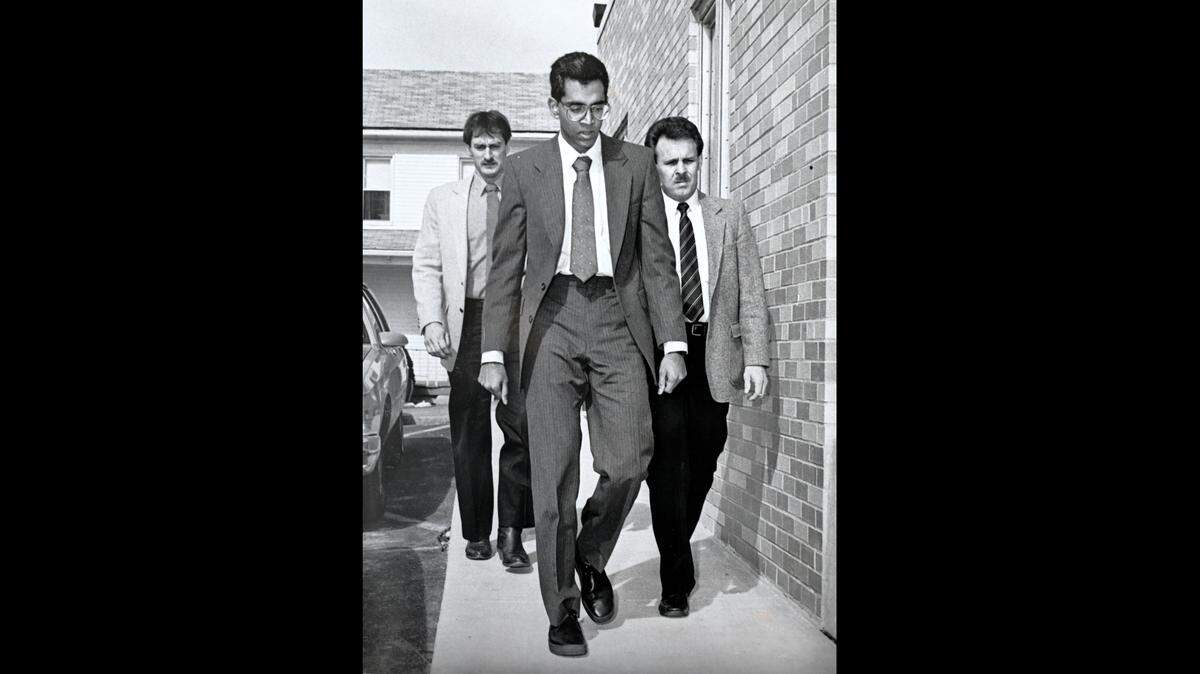
Subramanyam “Subu” Vedam became Pennsylvania’s longest-serving exoneree Friday afternoon when he was released from a maximum security prison in Huntingdon County.
The newly exonerated State College man was immediately placed in the custody of federal immigration authorities, however.
Vedam, a legal permanent resident of the U.S. who was born in India, according to his defense attorney, is being held at the Moshannon Processing Center in Philipsburg. The 64-year-old was discharged from state prison after Centre County prosecutors abandoned their murder case against him Thursday.
Who is Subu Vedam?
Vedam was born in 1961 to a Penn State physics professor and librarian. His parents immigrated to State College from India in 1956. Vedam was born in India after his family briefly returned to take care of his dying great-grandfather. He came to the United States at nine months old.
He grew up in State College, and according to one profile of him, took to juggling, table tennis and riding motorcycles in his youth. He would discuss Hindu texts with his father and sister. He graduated near the top of his high school class and enrolled at Penn State, where he worked as a lab assistant.
Vedam was a small-time drug dealer in his teen years, according to an essay written by his attorney, Gopal Balachandran. It was drugs that brought together Vedam and his friend, Thomas Kinser, the night the latter disappeared in 1980.
After he was convicted of Kinser’s murder, Vedam was a model inmate at the Huntingdon maximum security prison. He designed and led a prison literacy training program, raised money for Big Brothers Big Sisters, tutored and mentored hundreds of inmates and earned three degrees. He became the first person in the prison’s history to earn a master’s degree.
Why was he imprisoned?
Vedam was twice convicted in the fatal December 1980 shooting of Kinser, a 19-year-old from Boalsburg and fellow drug dealer. Kinser had driven Vedam to a drug deal in his parents’ van the night he went missing, according to court documents, and he wasn’t seen again until nine months later, when his remains were found in a sinkhole. Vedam is the last known person to see Kinser alive.
Vedam was initially convicted of the killing in 1983 by an all-white jury based on circumstantial evidence, but a judge threw out the conviction after ruling testimony about Vedam’s prior misconduct was improperly allowed at trial.
He was again convicted of first-degree murder in February 1988 and was sentenced to life in prison without parole. He maintained his innocence for decades, unsuccessfully appealing the decision.
Why was he released this week?
The state’s case against Vedam hinged on the type of bullet used in the shooting. Prosecutors alleged a .25-caliber round had killed Kinser, but Vedam’s attorneys maintained the wound in Kinser’s head was too small to have been caused by such a weapon. The defense insisted a .22-caliber rifle was used in the killing. To date, no murder weapon has been found.
The FBI created a ballistics report in the 1980s detailing the measurement of the wound, but Vedam’s defense didn’t have access to it until nearly 40 years after he was convicted. The report was contained in a trove of documents that prosecutors released to Vedam’s legal team in 2021.
A judge ruled in August there was a “reasonable probability” the jury’s judgment would have been affected if the evidence had been provided in the 1980s. Centre County prosecutors abandoned the case Thursday, and Vedam was subsequently released to U.S. Immigration and Customs Enforcement authorities based on an order from 1988.
This story was originally published October 3, 2025 at 3:30 PM.