Penn State begins removing historic Kepler Barn in Centre County
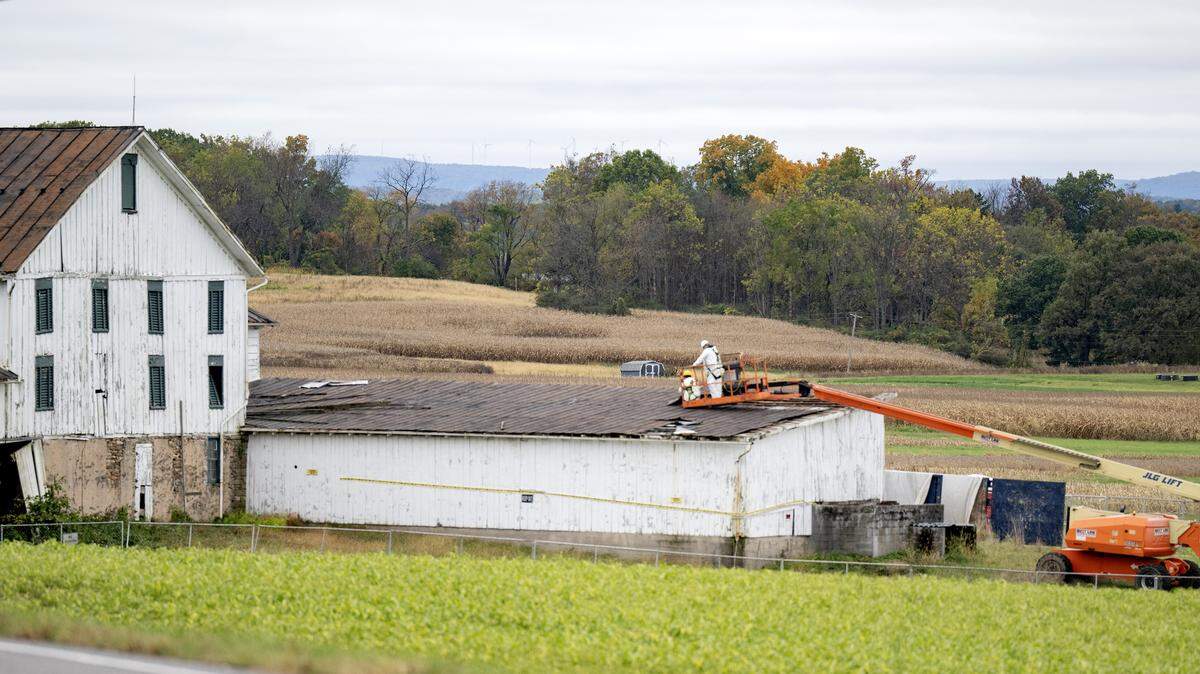
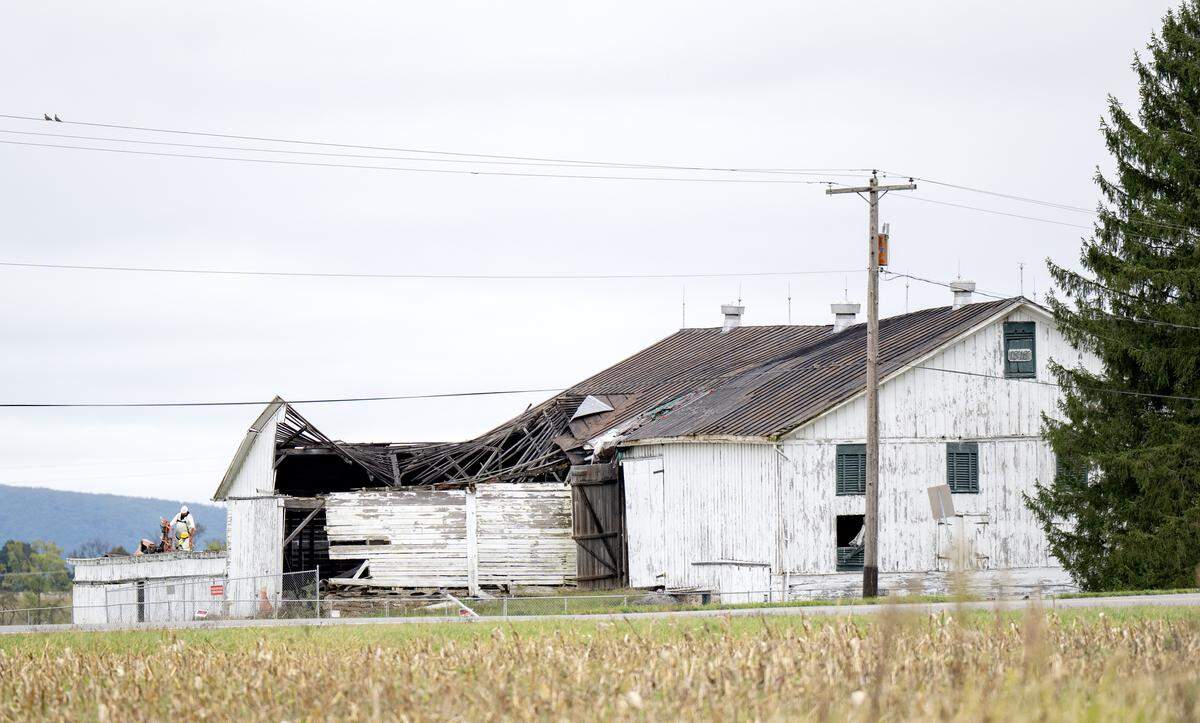
After delaying the removal several times, Penn State hired contractors to carry out the demolition of the historic Kepler Barn in Ferguson Township.
A university spokesperson confirmed the removal began Monday and said it will be a several week process.
“The University has hired two local contractors who are working together to ensure the Kepler Barn is safely dismantled and all usable materials (timbers, foundation stone, etc.) are salvaged in a way that can ensure potential future uses,” the spokesperson said. They did not say how much it was estimated to cost.
Efforts to save Kepler Barn have been ongoing and the university previously paused its plan for demolition to give relatives of the farm’s early owners, local community members and other organizations time to raise $500,000 to stabilize and preserve the barn. In June the university said it would move forward with removal plans after fundraising efforts didn’t raise the amount needed.
Kepler Barn has stood along state Route 45 in Ferguson Township for about 200 years and has a rich history, between the “remarkable” woman farmer who owned and operated the farm in the late 1920s and being one of the largest 19th-century bank barns in the area.
Penn State purchased the farm in 2006 and it is part of more than 2,000 acres of land that makes up the agricultural research facility, near where Ag Progress Days are held. But in the years since, the barn has become “structurally unsound and unsafe for occupancy,” Penn State previously said in a statement. It pointed to the barn’s age, additions and hazardous materials, as well as the university’s budget.
Vicky Kepler Didato, the great niece Millie Kepler — who ran the farm from 1929 through the 1970s — has been a champion in raising awareness about the barn and researching its history. She advocated for the barn to be saved and helped launch fundraising efforts to do so. The removal, and the timing of it, is unfortunate for her family.
“Sadly my oldest brother George passed away this week so we as a family are grieving the loss of the Kepler family patriarch so the timing of the demolition is incredibly painful. Many relatives were flying in for the funeral next week and we had hoped to be able to see (the Kepler Barn) one last time as a family. Sadly that will not happen,” she wrote in an email.
The university previously said it would consider ways to save and reuse materials from the barn, and a spokesperson Monday shared some insight on what that would look like.
“Some of the usable materials from the Kepler Barn will be incorporated into the rehabilitation of two nearby barns located at the University’s Russell E. Larson Agricultural Research Center. The two barns scheduled for rehabilitation have suffered various degrees of storm damage and structural rot but through careful assessment, planned investment, and strategic use of new and reclaimed materials, they will continue to stand and support the teaching and research mission of the College of Agricultural Sciences,” the spokesperson said.
Other university projects are being considered with the remaining materials, they said.
Priscilla deLeon, president of Historic Barn and Farm Foundation of Pennsylvania, in June said barns are more than just buildings; they’re “living pieces of history.”
“If we allow them to vanish, we lose more than timber and stone. We lose the stories, ingenuity, and culture they embody,” she said.