What should happen to Rockview? Legislators discuss that and more at CBICC event
Housing affordability and the recently-shuttered Rockview prison were top of mind for lawmakers who gathered at Penn Stater Hotel and Conference Center Tuesday for an annual legislative breakfast.
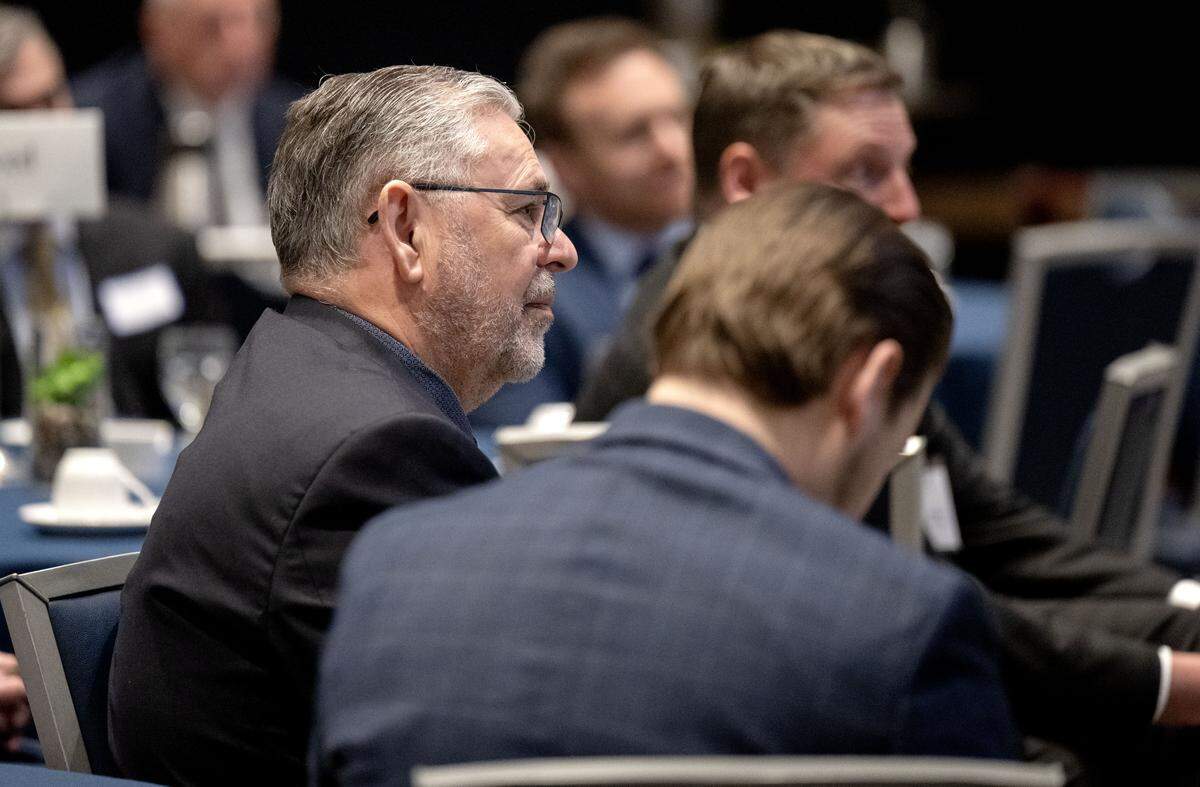
The breakfast, hosted by the Chamber of Business & Industry of Centre County, featured appearances from U.S. Rep. Glenn Thompson, state Sens. Wayne Langerholc and Cris Dush and state Rep. Paul Takac. Chamber CEO Greg Scott pitched easy questions to the legislators as suited members of the county’s business community listened on quietly.
Dush, a Republican who has significant influence over Rockview’s fate as the Senate’s state government committee chairman, said conversations about the prison land are just getting underway and there is high interest from developers.
“We are going to have discussions about what’s best for the community and what’s best for the county,” Dush said. He suggested giving some of Rockview’s agricultural land to farmers who have lost land due to the State College Area Connector project.
A popular proposal among the lawmakers was setting the land aside for housing, as areas around State College continue to grow in population and price. State Rep. Scott Conklin, a Democrat who was not in attendance, introduced a bill to that effect in the Legislature last year.
“We talk about attainable housing and economic development — on an incredible corridor, right?” Takac, a Democrat, said. “There are some challenges and opportunities because it’s near environmentally sensitive areas.”
Deciding what to do with the Rockview land is “going to be a long process,” Takac said, but noted drawn out processes sometimes end in good results. Dush told the Centre Daily Times after the breakfast that real movement is at least two or three years down the road.
Thompson was not asked to comment on the Rockview closure.
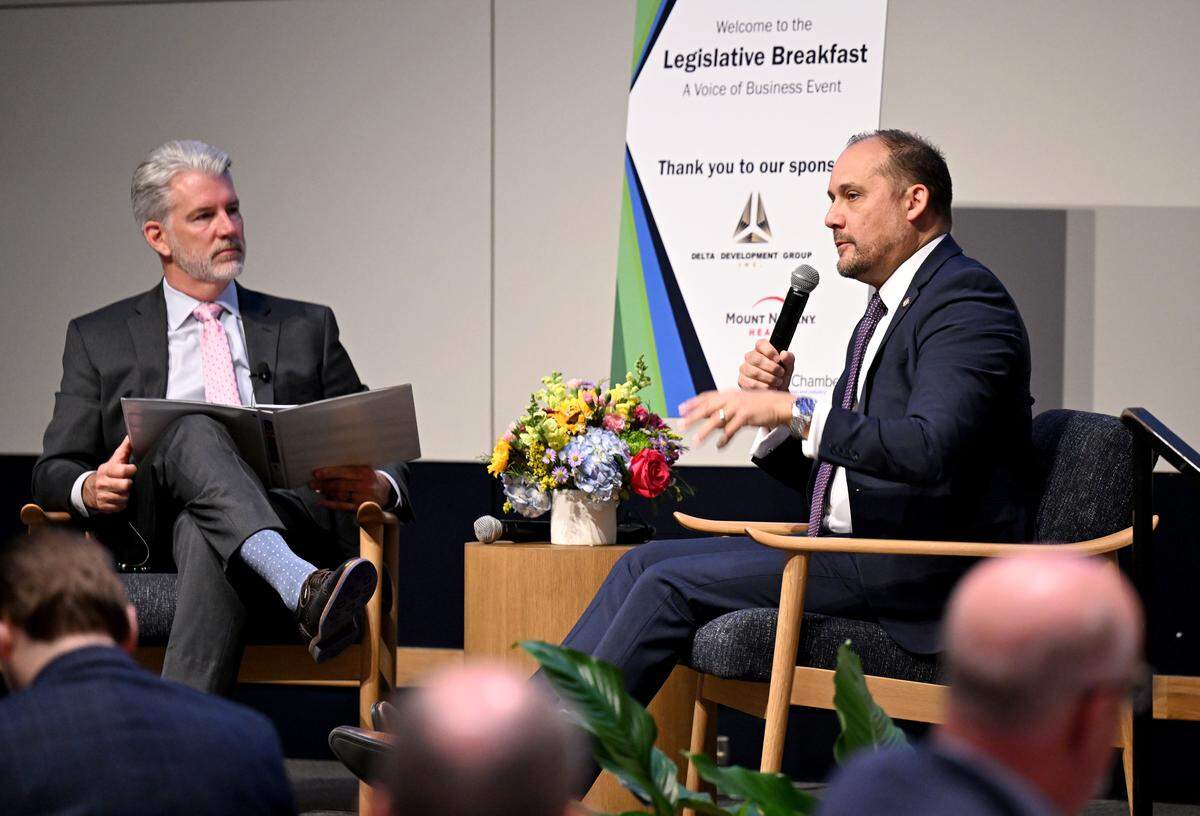
In addition to Rockview, the lawmakers each discussed their priorities in their respective legislatures, the role of Penn State in the local economy and the cost of living. Langerholc, a Republican whose district covers the western portion of Centre County, opened with cost of living.
“Affordability is at the top of the list” of priorities, he said, using an increasingly common buzzword. “I mean, that’s what I’m hearing from constituents across the board.”
Langerholc tied cost of living to energy prices, inflation and interest rates. Noting how young people are having trouble finding jobs despite college degrees, he suggested the government could incentivize careers in more promising areas like medicine and the trades.
Takac also pointed to sky-high energy costs, and separately noted stagnant wages and what Pennsylvania could do to retain talent.
“The doors that were open to me when I was young, through grants and, frankly, a minimum wage job that actually meant something are not necessarily there now for young people,” Takac said.
Thompson didn’t dwell on the hardships, though Scott didn’t ask either. Instead, the Republican marketed the so-called One Big Beautiful Bill Act as a way to cover expenses incurred by families.
“Soon there’s going to be tax returns that are coming back, they’re going to be significantly higher,” Thompson said. Critics have pointed to the law’s cuts to the social safety net.
Besides commenting on his support for sustained federal funding for Penn State in the wake of federal cuts to science and education — “I hold the line when it comes to research,” he said — not much new information came from Thompson. The nine-term congressman discussed the progress of the farm bill, reforming temporary work visas to ease labor shortages in agriculture and the ongoing partial government shutdown.