
Connector project, schools & abortion: Local candidates for state office discuss the issues
READ MORE
2024 PA election guide
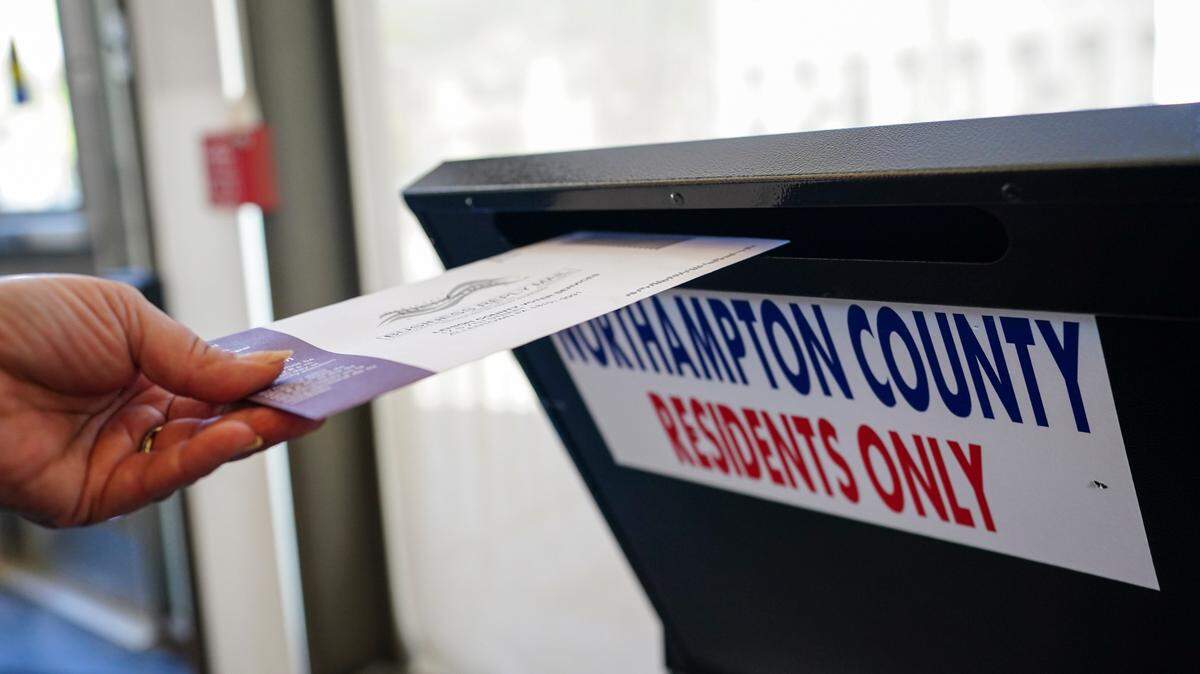
Election Day is Nov. 5. Voters must apply for an absentee or mail-in ballot by by 5 p.m. on Tuesday, Oct. 29. Find candidate and election information below, including material from the League of Women Voters of Centre County’s Voters Guide, along with partner content from Spotlight PA and CDT stories.
Expand All
Election Day on Nov. 5 is less than 40 days away — and, besides the presidential race, a number of local races for state office are primed to have a significant impact on Centre County and beyond.
In an effort to better educate voters about local candidates’ positions on some of the most important issues facing central Pennsylvania, we sent the same three questions to every candidate running to represent Centre County in the state House or Senate. We asked them to return written responses, of no more than 250 words, and every candidate in a contested race did so.
The two incumbents who are running unopposed did not. Neither state Sen. Wayne Langerholc, R-Cambria, nor state Rep. Kerry Benninghoff, R-Bellefonte, returned several messages seeking comment. And neither participated in April’s primary election Voters Guide compiled by the League of Women Voters of Centre County.
But, for the three contested state races, all candidates returned answers. Below, you’ll find those full answers — which were edited for AP style and clarity. The issues included the State College Area Connector Project, charter school reform and abortion.
Pennsylvania State Senate (District 25)
The ballot: Incumbent Cris Dush (Republican), William McGill (Democrat)
Centre Daily Times: As the State College Area Connector Project proceeds, what is your stance on the long-planned project? And what should the state do for property owners who will be displaced?
Dush: They need to minimize the amount of personal property they’re taking — especially when it comes to our farmland. We’re losing farmland, and we’re losing the ability to feed ourselves. We can’t continue to go down that road. The Darlingtons, for example; eminent domain has taken their family (farm) twice before.
As it relates to how do we take care of them, I’ve had people approaching me about trying to get the farmland at SCI Rockview turned over for development of other purposes. But I don’t want to see farmland disappear. If we have families that are going to be displaced by government taking, they need to be given the opportunity to go someplace where the farmland is already something that family can (use). So, I’m looking at that as a possibility to make them whole.
I’m also working on some legislation that will copy, to a large extent, a law out in California that would force the state to reimburse them for goodwill. The Farm Bureau and I are very much interested in that because our farmers are contributing members of the community and their business can’t simply be plopped down on another piece of ground. And I am also aware, because seven of Pennsylvania’s 67 counties are in my district, that eminent domain has hit business owners as well as homeowners. I want to get that whole thing straightened out for not just the farmers but the other property owners, the homeowners, that are along 322 — as well as the township and others who have an interest or are potentially going to lose their property.
McGill: In my review of the State College Area Connector Project, and with my limited knowledge of the plans, allow me to say we don’t ever want to restrict growth. With that stated, we must always be mindful of the impacts to our residents and our commercial partners in the impacted area. We must always know the historical value and the environmental concerns, as well as our agricultural impact as we develop new projects.
As far as the state’s obligation toward residents and our commercial partners, the Pennsylvania Department of Transportation and its partner in the Federal Highway Administration will certainly be engaged in how they will work with them in limiting the impact on them personally.
CDT: Charter tuition costs are a significant expense for Centre County’s school districts. Do you support reform and, if so, what kind of charter reform would you like to see?
Dush: Well, I do support it. One of the things for which I get the best response, from teachers, school boards and administrators, is if a student is going to go to a charter school, it should be mandatory that they go to a school that’s performing at or above the level of the school they’re leaving. Most of the time, unfortunately right now, that’s not the case, and I’m working on that fix.
And there are some other things, regarding children that go to a charter school and when they end up with an IEP — individualized education program — when the sending school district knows they are not special-needs students. I want to work on clarifying things to prevent that from happening.
And, if the charter school is not enforcing truancy issues, they need to be held responsible for it and not the school district.
McGill: Charter tuition expenses continue to be a very large challenge in Pennsylvania. For 20 years, funding has been the greatest obstacle. Our state legislators continue to discuss this, without a clear solution. There’s many challenges in this. Obviously, students with special needs require more care in order to offer them equal educational opportunities. That means extra expenses to both the charter schools and the local districts.
Rural school districts have a much greater resource challenge than urban areas. This is an extremely delicate process. With every dollar extracted from your local school district to send to charter schools, it impacts district students; and every dollar received by charter schools from districts certainly doesn’t meet the charter school students’ needs. The discussion will require much more consideration, but a separate line item approach in the budget has possibilities, but still needs more nonpartisan consideration.
CDT: What changes, if any, should be made to abortion access in Pennsylvania?
Dush: There are going to be changes. There need to be changes. The People of Pennsylvania have declared in our state constitution that we all “… have certain inherent and indefeasible rights, among which are those of enjoying and defending life …” and I have a responsibility to defend it.
I also understand the change in mind-set when two generations of people have been told the law of the land said it’s OK to kill these children. It wasn’t the law, but the U.S. Supreme Court gave politicians and those who profit from that killing cover for their subsequent actions.
If we are to make meaningful changes, we are going to have to educate people on what happens at the moment of conception, what happens when you invade that safe space the child is in to destroy them. We are already beginning to see a turn, especially among the young and that is encouraging.
I’m also seeing individuals and churches starting to step up and help women and men who have a crisis going on from the pregnancy. Government does a poor job on any social issue and seeks the easy way, i.e. killing the baby vs. getting into people’s hearts and lives to help them. The Church, as a whole, has been failing at that for a few decades and needs to step up.
McGill: Abortion access in Pennsylvania has not changed with the Dobbs Act. Pennsylvania has maintained its access ever since the ruling of Roe v. Wade. Pennsylvania maintains a safe, accessible and legal reproductive health option. With that stated, Pennsylvania has no certain guarantee to this. It’s why going forward to protect this very important right to Women’s Reproductive Rights, we must enshrine or codify the right through a state constitutional amendment.
Pennsylvania House of Representatives (District 77)
The ballot: Incumbent Scott Conklin (Democrat), Marie Librizzi (Republican)
CDT: As the State College Area Connector Project proceeds, what is your stance on the long-planned project? And what should the state do for property owners who will be displaced?
Conklin: The connector project is not within the boundaries of my district, but I do believe that the representatives who are charged with hearing the concerns of their constituents directly will do the best job possible to limit the impacts while at the same time providing a much-needed safety upgrade for the traveling public. I encourage continued dialogue between the people and their representatives to reach the best blueprint possible. I also believe that when the final plan is decided, property owners should be compensated justly for the loss of their land.
Librizzi: The connector project has been in the works for many, many years. Eventually the State College Area Connector will be built. The current two-lane highway is simply not safe nor sustainable for the long run. Regardless of which route is finally decided upon, it will require the loss of many acres of prime farmland that, in some cases, have been in families for generations. While this is sad to see, how many lives will be saved by having a safer route? Having a safer route is one side of the equation; however, it is necessary to look a the other side of the equation.
It is necessary to care for those who will be displaced by the new road. Current eminent domain laws do NOT sufficiently compensate landowners for the loss of their land and in many cases their livelihood. This project should not go through until landowners are fully compensated for their properties, loss of their livelihood and future earnings from their land.
CDT: Charter tuition costs are a significant expense for Centre County’s school districts. Do you support reform and, if so, what kind of charter reform would you like to see?
Conklin: Recently, the Pennsylvania School Boards Association passed a resolution asking for reform. The association points out that the funding formulas have not been updated since 1997. This has created a situation where public schools are overpaying and reimbursing charter schools for expenses they do not incur.
For instance, in one year alone, public school districts overpaid charter schools by $185 million for special education due to this antiquated system. We need to take a hard look at the formula and come up with a bipartisan solution so that reform has a chance to make it to the Governor’s desk. I look forward to working with my colleagues on this challenge if I have the honor of being reelected.
Librizzi: Many school districts are including charter school reform in their new budgets. Certainly, I am in favor of the reform being proposed. The areas that need to be addressed are:
- Advertising and sponsorships
- Ethics and transparency
- Facilities
- Funding
- Enrollment
Charter schools MUST be required to operate under the same set of rules as our public schools, since these schools receive tax dollars to operate. As of now, the rules they operate under are not equal to any of the guidelines our public schools must follow. My immediate attention would be with funding. For example, charter schools do not have to have any facilities for sports or school clubs. Their students can and do use the facilities of the public schools in their area. This one issue allows charter school to benefit greatly financially and this needs to change. There should be a cost incurred by the charter schools to cover the cost to the public schools.
Another example is students with special needs. There are many different levels of special needs, and there must be a tier system that incurs the cost of the charter school student to the charter school and not be absorbed by the school district.
CDT: What changes, if any, should be made to abortion access in Pennsylvania?
Conklin: Our personal freedoms should not be infringed upon by big government telling us what we can and cannot do with our bodies. I believe the right to bodily autonomy should be enshrined in the Pennsylvania Constitution.
Librizzi: The abortion laws in Pennsylvania have not changed in many years. I believe any changes should be a ballot issue for the citizens to vote on and address. There are many facets to the abortion issue, and all citizens should be able to express their opinions and personal views to their legislators. Hopefully, it would then become a ballot issue.
Pennsylvania House of Representatives (District 82)
The ballot: Incumbent Paul Takac (Democrat), Therese Hollen (Republican)
CDT: As the State College Area Connector Project proceeds, what is your stance on the long-planned project? And what should the state do for property owners who will be displaced?
Takac: As the former chair of the Centre Region COG’s Public Safety Committee, I appreciate the importance and urgency of addressing the 322 corridor between Boalsburg and Potters Mills. Much-needed safety and capacity upgrades have been planned (and delayed) for many years and I am grateful that they are finally moving ahead.
However, such upgrades will inevitably impact landowners and communities along the final corridor and should be minimized to the greatest extent possible. That is why I appreciate the very deliberate and comprehensive Planning and Environmental Linkage (PEL) process currently being undertaken by PennDOT. By bringing all stakeholders together to consider the benefits and drawbacks of multiple alternatives early in the process, the range of options has now been narrowed prior to investing the time and resources needed to gather additional feedback and study the impacts to private property, farmland, the environment, historical resources and more.
I am greatly encouraged by the recent open house held at Mount Nittany Middle School. I heard from many attendees that each of the three options currently under consideration are greatly improved from their original formulations. I am confident that, as the PEL process progresses, they will continue to improve.
Throughout this process, I will continue my close communications with all stakeholders, including residents, local government officials, PennDOT and others to help ensure that we arrive at the best possible outcome and that any landowner who is negatively impacted will be fully and fairly compensated for any losses.
Hollen: I think the connector is long overdue not only for economic reasons, but more importantly for safety reasons. There have been many accidents on the existing road. Many of the people being displaced are longtime property owners and taxpayers. That being said, these folks need to be compensated fairly, and the state has the ability to do that. They should be paid the appraised values for their properties.
CDT: Charter tuition costs are a significant expense for Centre County’s school districts. Do you support reform and, if so, what kind of charter reform would you like to see?
Takac: Because of Pennsylvania’s inadequate and unconstitutional system of funding public education, local school districts must rely on property taxes to make up the deficit. They are also required by law to reimburse approved public charter schools — both “brick-and-mortar” as well as online or “cyber” — for students that choose them.
In fiscal year 2022-23, districts serving Centre County students transferred nearly $22.8 million to charter schools, including $7.7 million to cyber charter schools.
And every one of those dollars had to be either replaced by property tax increases or offset by cuts to personnel or programs in our local schools.
That is why I believe that any school supported by public dollars should be held to the same standards of transparency, accountability and performance.
Yet while some charters do provide a high quality alternative, many others do not.
The need to reform cyber charter funding is especially urgent. These schools receive more money than is needed to educate students online, provide fewer services and support, and are consistently among the worst performing in the entire state. And how those extra dollars are spent is often unclear.
Therefore, I fully support recently enacted reforms including greater transparency, reporting and advertising requirements as well as a statewide “standard” cyber reimbursement rate and the reform of student misclassification, which often results in greater reimbursements but little or no change in services provided.
All children deserve access to a high-quality public education and that means keeping more of our local school tax dollars local.
Hollen: I think there needs to be clarity around this issue that has yet to be provided. Charter schools, and cyber schools for that matter, are public schools. Each school district has a specific amount of money per student being educated. If a particular student attends a charter or cyber school, that money should follow the student.
A good analogy is this: If you have an account in a specific bank, does that give you the right to dip into another account? The answer is no. The state has decided to funnel the funds for these students attending charter and cyber schools through public school districts. These funds never belonged to those school districts; they are just supposed to distribute them. I believe to clear the confusion, the state should distribute these funds directly to the charter and cyber schools. I also believe having charter and cyber schools enables healthy competition.
Competition will make each of these schools better. Taking competition out of the picture allows for complacency. It should be parents’ decision which school would be the better option for their child. Our kids deserve the best education without wondering if they can afford their bills each month. The issue of rising costs and the threat of higher taxes impacts everyone in our region. It’s time for leadership that prioritizes policies that put people first.
CDT: What changes, if any, should be made to abortion access in Pennsylvania?
Takac: Like the vast majority of Pennsylvanians, I believe we must protect the freedom of everyone to control their own bodies and make their own reproductive health care decisions, including abortion. Such decisions are deeply personal and should only be made by that person and their doctor. Governments and politicians should have no role in making that decision.
Not only do I oppose any new restrictions on reproductive health care, including abortion and IVF, I support enshrining such constitutional protections at both the federal and state level.
But the question of access not only requires ensuring legality, but also making sure that health care access is equitable and not based on geography, financial means or a lack of medical providers or facilities.
Many areas of Pennsylvania today are maternal and reproductive health care “deserts,” especially in rural counties and underserved communities. I have supported legislation and funding to help ensure that health care facilities and providers are available where they are most needed.
We have also witnessed the tragedy of women in other states dying because emergency and OB/GYN providers fear prosecution or loss of their medical licenses if they provide life-saving medical care. Now, many health care providers are deciding to move away, further exacerbating the health care access crisis. That is one of the reasons I support legislation shielding Pennsylvania health care providers and patients from out-of-state investigations, prosecutions or sanctions.
Finally, I oppose public funding of any organization that fails to provide counseling on the full range of reproductive health care options.
Hollen: Pennsylvania law has remained consistent for the last 40 years, prohibiting abortion after 24 weeks, excepting for cases where life and health of the mother are in jeopardy. It is unlikely that we will see changes in that standard. This being said, I believe any proposed change to existing abortion law should be put to a ballot measure.
This is a highly personal subject, and I believe Pennsylvanians should be heard from directly. Almost every conversation I have, people are frustrated with how expensive everything has gotten. Inflation is crushing us, and we need leadership to turn things around. That is the priority I will bring to Harrisburg.
This story was originally published September 30, 2024 at 12:16 PM.
.jpeg)
.jpeg)