
US House candidates Thompson, Womer talk affordability, abortion and election security
READ MORE
2024 PA election guide
Election Day is Nov. 5. Voters must apply for an absentee or mail-in ballot by by 5 p.m. on Tuesday, Oct. 29. Find candidate and election information below, including material from the League of Women Voters of Centre County’s Voters Guide, along with partner content from Spotlight PA and CDT stories.
Expand All
Election season is upon us, which means voters have a limited period of time left to educate themselves before casting a ballot.
As a result, the Centre Daily Times reached out to candidates seeking to represent Centre County — both incumbents and challengers — to answer question on some of the biggest issues facing local residents. Earlier this week, we published Q&As from candidates involved in three contested Pennsylvania legislative races.
Now, we turn our eyes toward a federal race — a seat representing Pennsylvania’s 15th Congressional District in the U.S. House of Representatives. The district includes parts of western and central Pennsylvania, including all of Centre County.
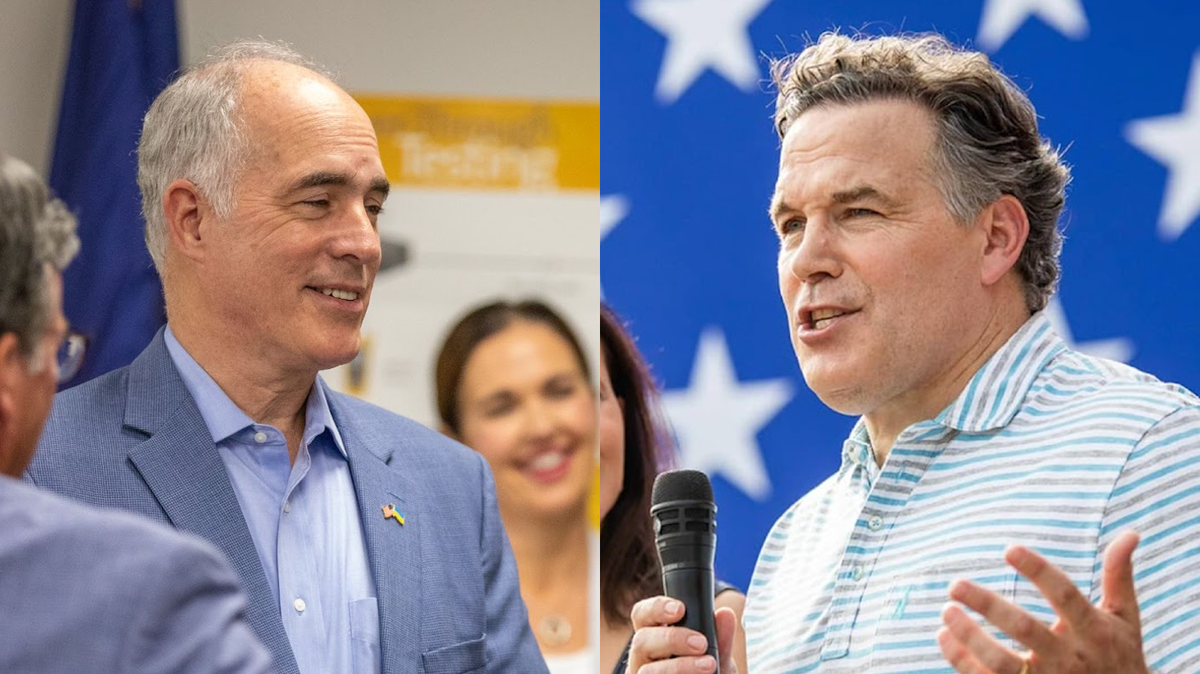
Both Republican incumbent Glenn “GT” Thompson and Democratic challenger Zach Womer were immediately responsive to the CDT’s questions. The issues included inflation/affordability, election security and abortion.
Here’s what they said:
U.S. House of Representatives (Pa.’s 15th District)
The ballot: Incumbent Glenn Thompson (Republican), Zach Womer (Democrat)
CDT: From daycare to groceries, affordability is a major concern for residents of the 15th Congressional District. What can be done to provide relief to working families?
Thompson: Over the past four years, Pennsylvanians witnessed beef prices rise by 25%, bread by 29% and eggs by 74%. In Pittsburgh, Kamala Harris blamed this on corporate greed and promoted national price controls. These feel-good sound bites ignore history and reality. The cost of materials, labor, transportation, regulatory compliance and taxes all impact prices.
Staggering inflation has been, in part, caused by massive deficit spending during the Biden-Harris Administration. This is on top of supply chain disruptions and decreased labor participation, coinciding with increased consumer demand. It’s been a perfect storm, but I remain optimistic there is a light ahead. We must enact policies that reduce overall spending while paying down the national debt.
Although America has a robust safety net to help our neighbors in need, we can remove barriers to employment, putting people in line to fill the 7.67 million job vacancies. Whether it’s production agriculture putting food on the table or energy development powering industry, our homes and cars — lower taxes, fewer unnecessary regulations and more freedom for workers will provide relief. I’m truly blessed to represent really smart constituents. Many recognize this election is a choice between higher prices and handouts or unlocking America’s economic potential.
Womer: This answer is multifaceted. Generally, corporate consolidation is causing prices to rise in many industries. As it relates to groceries, 20% of farms control almost 70% of U.S. farmland, four companies process 85% of our nation’s beef, and the same is largely true of other inputs into the economics of food. The consolidation of both production and procurement in agriculture leads to a less competitive market and higher prices for consumers.
When you compare the hyper-consolidation of agriculture and its increase in consumer costs and compare it to television manufacturing where the sector is highly competitive, you see that televisions have deflated in price in the same time period where agricultural products saw price increases. So it is my view that we need stronger antitrust enforcement to ensure that the competition of a free market ensures that corporations cannot raise prices without adequate market forces tying the price to true costs.
As it pertains to child care, in the 15th District, the child care cost burden for an average family is 30-40% of their income. I believe the best way to address this cost is to create a child tax credit and subsidized child care programs so that working-class families have the same opportunity to receive child care as wealthy families.
CDT: What changes, if any, would you like to see involving abortion access on a national level?
Thompson: My position on life has always been clear: You can’t be a champion for the future of this great country if you are going to limit its potential. It is my belief that every child, every human life, is sacred and has a purpose in this world. With that said, the Dobbs decision from the U.S. Supreme Court more than two years ago returned this power to the states. We have seen very little change in Pennsylvania, within exception of a lawsuit taking on the validity of the Pennsylvania Abortion Control Act as it pertains to prohibitions on Medicaid-funded abortions.
I have long held the position that taxpayer funds should not be used to subsidize abortions and for 42 years prior the Commonwealth had supported abortion alternatives for expectant mothers that included comprehensive health services, parental support and adoption services. It seems to me that in a state where we are losing population at an alarming rate, these services would now be welcomed more than ever.
Womer: I would support a codification of Roe v. Wade establishing a minimum protection for reproductive health care as it pertains to fetal viability. This was the law in our country for nearly 50 years and the removal of Roe v. Wade has created legal ambiguities that vary from state to state and have created unclear standards for reproductive health care, where those needing immediate intervention are waiting for judges to adjudicate the lawfulness of their desired health care remedy.
My view is that we need to have a prevailing rule that allows access to reproductive health care, which ensures that it is safe, legal and rare. As a country, it is my hope that we can move forward with a common-sense consensus on the issue that does not leave legal ambiguities.
CDT: What concerns do you have about election security and accessibility? Under what circumstances would you vote against certifying Pennsylvania’s electoral votes?
Thompson: Voters deserve free and fair elections, where every vote counts, and the law is evenly applied. The Electoral Count Act allows Congress to object to election certification if found unlawful or “not regularly given.” In 2004 and 2016, Nancy Pelosi referred to objections from her caucus as “democracy at work” and being “fundamental to our democracy.” In 2020, I shared concerns over uneven guidance issued from Harrisburg the night before the election, disclosing to party operatives individual information from rejected mail-in ballots in an attempt to correct them. Pennsylvania’s Supreme Court also extended the mail-in ballot deadline beyond election day and said ballots missing postmarks should be accepted, contrary to the law.
While many suggest there is virtually no voter fraud, in 2022 former Congressman Ozzie Myers was convicted of stuffing ballot boxes in multiple elections for candidates during Democrat primaries. This goes both ways; following 2020 several registered republicans were convicted of voting more than once or absentee for deceased relatives. While I am not going to comment on the purely hypothetical portion of this question, I remain hopeful that our elections will have robust turnout and transparency, in an effort for voters to be confident in the process.
Womer: Pennsylvania, as a key state in Presidential elections, has been the focus of an immense amount of litigation regarding our election process. Thus far, there has been no significant evidence to show that we should not have confidence in our election system in Pennsylvania. If there were evidence of fraud, the litany of litigation that has transpired in our commonwealth since 2020 would have uncovered it.
The only circumstance in which I would vote against certifying an election is if I had verified evidence of significant voter fraud impacting said election. As a public official, one has significant responsibility in the maintenance of our republic, and haphazardly labeling an election as fraudulent without evidence, in my view, is in contravention of one’s responsibility as a public officer.
This story was originally published October 2, 2024 at 1:24 PM.

.jpeg)
.jpeg)