
Centre County residents strike, push and plant to make a difference with global issue
READ MORE
Centered on action
Climate change is a global issue with local consequences. The Centre Daily Times looks at the impacts on our communities, and what local leaders and residents are doing to address the issue and focus on sustainability.
Expand All
Centre County residents strike, push and plant to make a difference with global issue
Global carbon emissions dropped with the pandemic, but is it enough to make a difference?
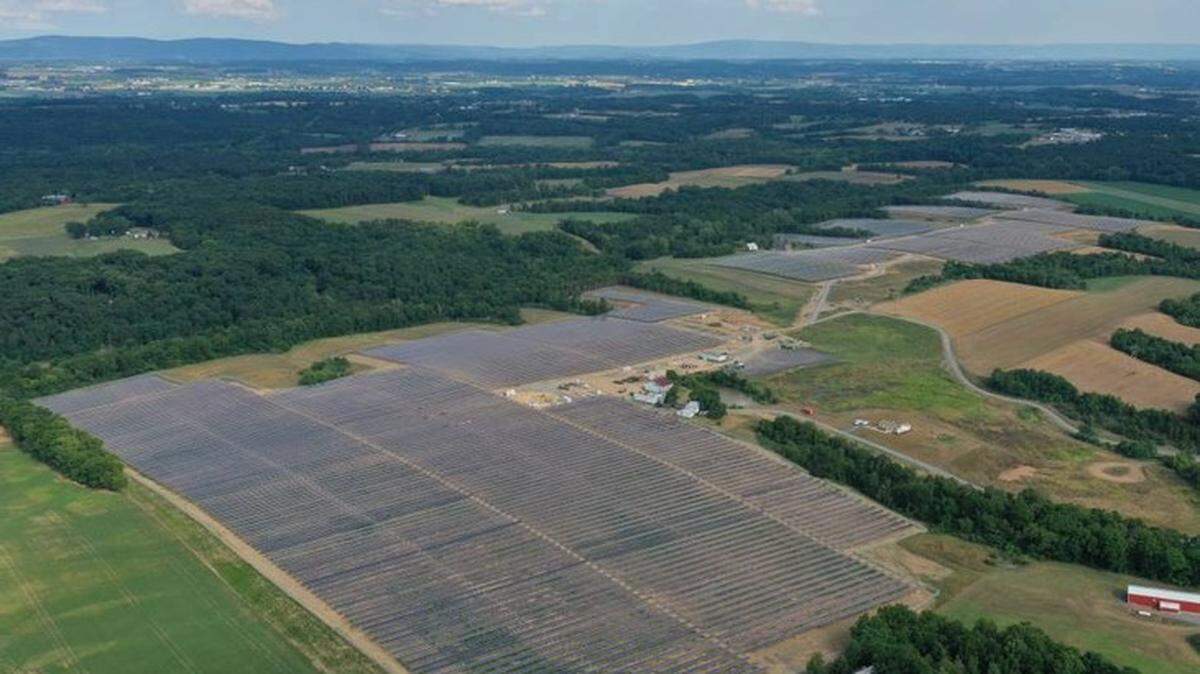
Penn State aims to drastically reduce its greenhouse gas emissions. Here’s how
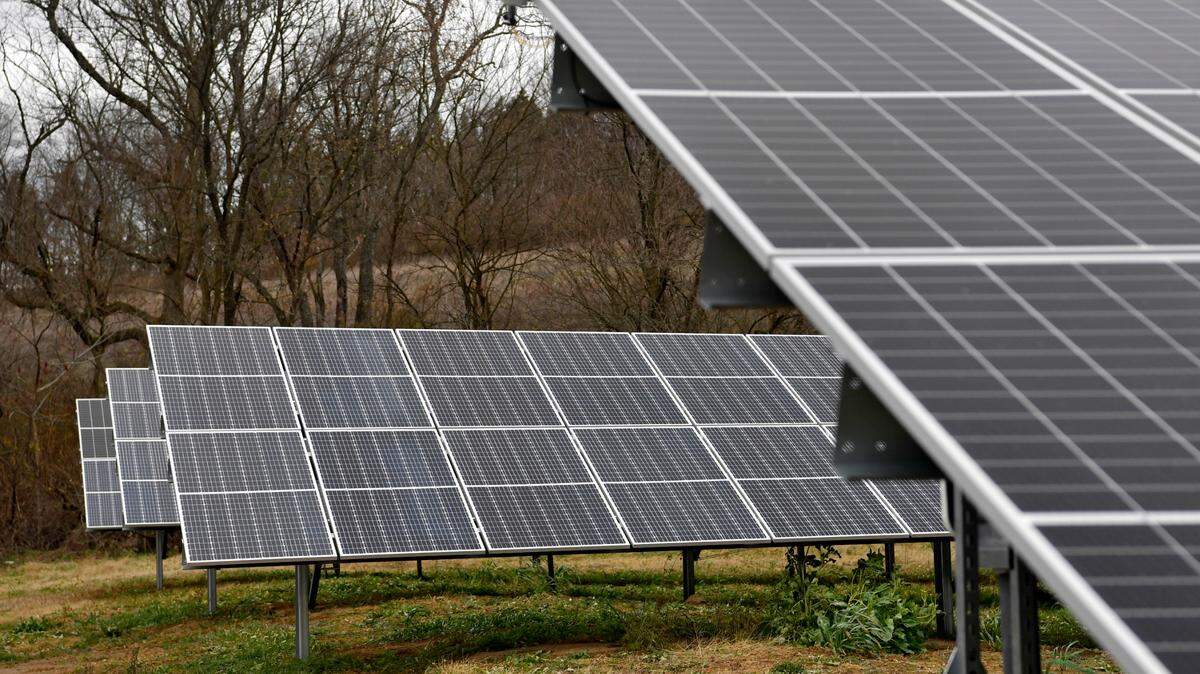
How Centre County feels effects of climate change, and what local leaders are doing about it
As federal, state and local leaders weigh the costs and benefits of climate change policy — and as a new administration prepares to enter the White House — the question of what can be done to address global warming looms large in the public consciousness.
But while governmental climate action waxes and wanes, Centre County residents have worked to make a difference through lifestyle changes, developing climate initiatives and encouraging sustainable practices.
Crusading against plastics
Upon entering Micaela Amateau’s brightly-lit studio in her Boalsburg home, her artistic background is immediately apparent — lobed, wooden sculptures reminiscent of giant puzzle pieces line the room, and books sit in multicolored stacks beneath a slanted ceiling.
What’s not visible, though, are the many ways Amateau — a professor emerita of art and women’s studies employed at Penn State from 1987 to 2012 — altered her home to reduce its environmental impact.
The walls are fortified to retain heat in the winter and cool air in the summer, and starting this spring, it will rely solely on electricity provided by solar panels. And that’s not including Amateau’s daily rituals — whether it’s reusing dishwater or shopping locally, she has been at the forefront of turning Centre County into a greener place for the greater part of three decades.
It started in 1993, teaching on the third floor of Penn State’s School of Visual Arts, when she suddenly “started getting really sick.”
“I would get nosebleeds,” Amateau said. “From getting off the elevator to the time I walked down the hall to my office, my nose would start gushing blood.”
She had developed environmentally-caused leukemia from breathing in benzene, a chemical and known carcinogen found in paints, fixatives and turpentine — a distilled resin used to clean paint brushes.
She has been painting — and breathing in benzene — since she was 8 years old, but said products containing the chemical were used by the art department at the time.
Following the diagnosis, she made changes. She had her students use soap water and baby oil to clean their tools and worked to prevent further use of benzene and other dangerous art materials within the department.
Amateau’s symptoms are now under control, but her focus on stemming harmful environmental practices hasn’t wavered — since the ‘90s, she has collaborated with local legislators, community organizers, environmental advocacy groups and the Sustainability Institute at Penn State to reduce the use of toxic chemicals at the university and improve the environmental footprint of various places around town.
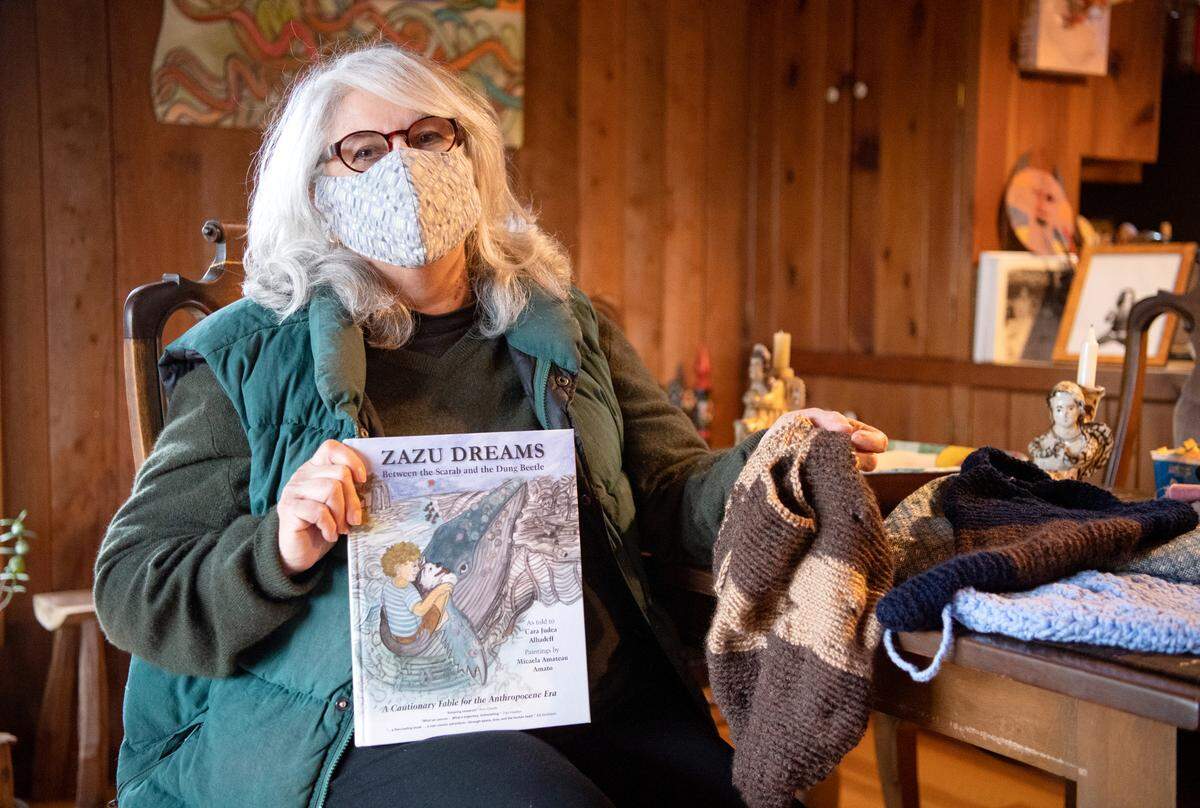
One effort involved putting up signs at the State College YMCA reminding people not to waste shower water. Another involved trying to ban plastic water bottles from Penn State faculty meetings, conferences and receptions, replacing them with student-made ceramic cups. But these well-intentioned endeavors, Amateau added, may have led to some grumbling from colleagues.
“I have no shame,” Amateau said with a laugh. “People say thank you for being so persistent. Other people probably don’t like me because I’m persistent, and I bug people about things.”
Last year, Amateau helped write a proposal to put a fee on single-use plastic bags in Ferguson Township, which was halted when Gov. Tom Wolf placed a year-long moratorium on municipal plastic bag bans and taxes.
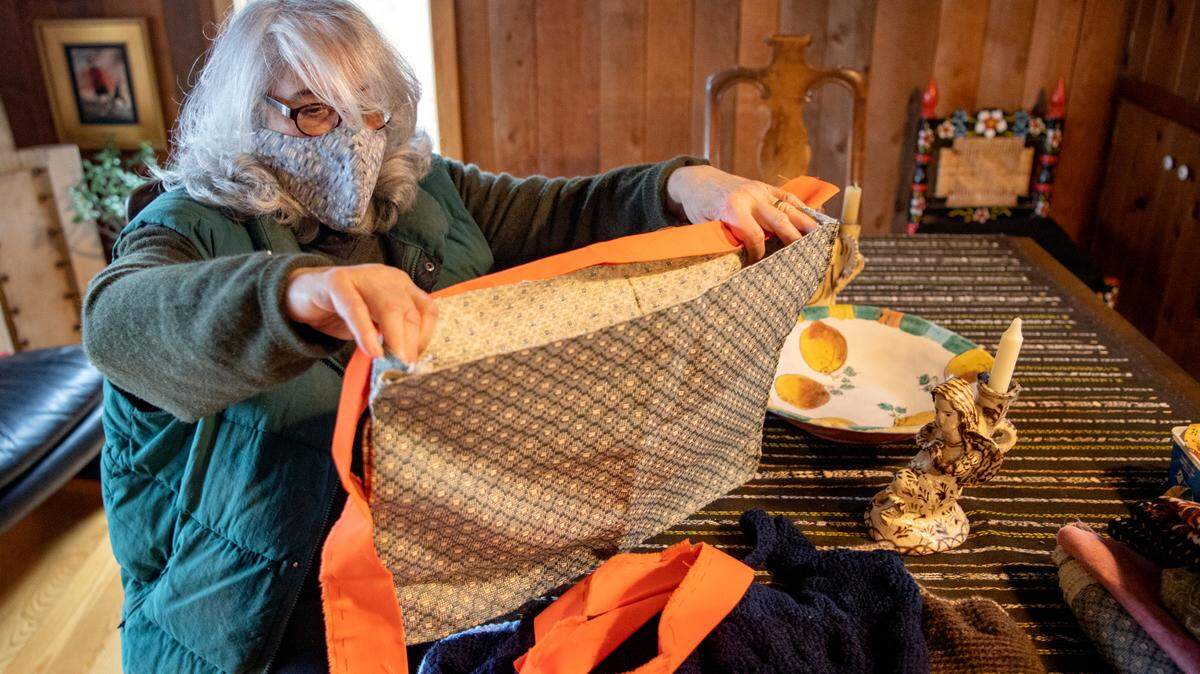
But she wasn’t going to give up that easily. Last spring, she organized a series of pop-up tables around town and gave away handmade grocery bags — made from graphic T-shirts, woven cloth or crocheted yarn — for community members to replace the single-use ones given out at grocery stores.
“We weren’t going to be turned down, with our push to try to make change,” she said. “So I figured OK, let’s make cloth bags and give them to people. I don’t want to sell them, because some people can’t afford them.”
The pop-ups were postponed as a result of the pandemic, but Amateau keeps 10 to 12 bags in her car in case anyone needs them. She hopes to resume the work as soon as conditions for in-person gatherings improve.
From Boalsburg, Amateau said she drives her car only when she needs to, and she carries a reusable water bottle — she’s a big believer in doing what you can to combat climate change, no matter how small.
“The plastic bag, even though it seems like such a tiny amount, in the larger picture it’s not, because it’s one of many, many, many changes that have to be made,” Amateau said. “I mean, here I am, I’m lucky. ... Our environmental crisis is causing cancer. Everybody’s so focused on cancer research, and they don’t realize where it’s coming from. We’ve got to do something about it.”
Taking a national movement local
When Greta Thunberg first called for climate action outside the Swedish parliament in August 2018, she was not yet a household name.
She was met with resistance after trying to reduce her parents’ carbon footprint, and she saw little interest in the climate cause from her teachers and fellow students.
Since then, Thunberg has become ubiquitous with the youth climate action movement. Her organization, Fridays for Future, has ballooned into an international school strike for climate — which eventually made its way to State College through Faith Kingsley, a homeschooled twelfth-grader and passionate climate activist.
After watching multiple documentaries about Thunberg, Faith began talking with her mother, Katrina Kingsley, about starting a local Fridays for Future chapter. With a friend, she planned the first strike outside the State College Municipal Building for Sept. 20, 2019.
“We put together several sign-making get-togethers with our friends, lots of paint and cardboard and things like that, and it was really fun. We made a bunch of signs,” Faith said. “We just couldn’t wait for the September 20 strike, so we decided to strike the week beforehand. ... It just kind of snowballed from there. We’ve been striking ever since.”
Through rain, snow and heat, the Kingsleys haven’t missed a Friday strike, and they saw their numbers increase to around 20 people right up until the coronavirus pandemic prevented them from meeting in person.
“Parents, grandparents started to come. Relatives, children,” Katrina said. “There was a snowball effect, growing and growing and growing. It was a climatic affair until COVID happened.”
Now, in lieu of the hour-long, outdoor get-togethers, Faith collects pictures of protesters’ handmade signs sent to the organization’s Instagram page, @fffstatecollege. Every Friday, she posts the activists’ photos and climate messages to the account.
Faith wants to resume meeting in person, as soon as the pandemic allows for it, so she can continue building a community of State College residents who want to fight for the planet’s future.
“I think one of the biggest, most helpful things anyone can do is to strike,” Faith said. “It doesn’t have to be a huge, life-changing (thing), like, ‘Oh my gosh, I can’t eat meat,’ or ‘I can’t drive a car anymore.’ Yes, those are helpful things to consider… but really, there are other things that could have more impact. So focusing on striking is an important thing to do.”
Faith plans to take part in Sterling College’s KROKA Semester Program this spring. Beginning in January, she’ll travel from New Hampshire to Vermont by foot and canoe, living in a tent and “learning about humans’ connection to the natural world.”
As a result, she won’t be able to strike as usual, but says she’ll continue supporting the local chapter to expand its influence and outreach.
“My personal goal is to make this chapter fun for everyone, to build community and to grow relationships,” Faith said. “The whole idea is that the more fun people have, the more they’ll want to come and the more the group movement will grow.”
‘Tree-Plenishing’ State College
Siddharth Bellad would describe himself as “a person who loves nature a lot.”
Growing up in Nigeria, he developed both an affinity for the outdoors and an interest in sustainability. In high school, he worked to reduce his school’s reliance on electricity and convert waste materials into reusable products.
Now an international student studying chemical engineering at Penn State’s University Park campus, Bellad said engineering allows him to continue solving environmental problems.
“If you look at chemical engineering, it’s somewhat related to environmental engineering, and it focuses on sustainable projects such as solar projects and stuff,” Bellad said. “And that’s what interests me.”
In October 2019, Bellad joined Engineers for a Sustainable World, a student-run organization designing climate-forward projects, promoting sustainability awareness and researching waste management. Now the secretary of the Penn State chapter, he leads a project on solar energy.
Earlier this year, Bellad joined Tree-Plenish — an effort led by students across the country to make schools more sustainable — after finding out about it through LinkedIn.
“I just connected to them and asked if they had any spots open I could be in, and that I could help them a lot,” he said. “(Being a part of Tree-Plenish) seemed really fun because their idea was something really interesting.”
Tree-Plenish hosts annual tree-planting events aimed at planting the same number of trees it would take to produce the paper used by a school for all of its worksheets, homework and notebooks in any given academic year. Any school can host an event by determining the number of trees they wish to plant and finding a place to plant them in the community. Tree-Plenish then covers the cost of the event.
In-person plantings are set to take place this spring, as the fall season is reserved for planning and preparation.
Bellad serves as Tree-Plenish’s community outreach organizer, contacting schools across the country and encouraging them to host their own tree-planting events. He said his role can be difficult sometimes as an international student because he doesn’t know where to reach out, but he hopes the organization’s tree-planting events help sequester carbon in the atmosphere and teach younger students something about climate change along the way.
“A small initiative brings a lot of change when you count it as (part of) a whole,” Bellad said. “Even if a small person does it, if someone else looks upon them and (starts) doing it, it will become a big change later on.”
This story was originally published December 20, 2020 at 7:00 AM.