
Penn State aims to drastically reduce its greenhouse gas emissions. Here’s how
READ MORE
Centered on action
Climate change is a global issue with local consequences. The Centre Daily Times looks at the impacts on our communities, and what local leaders and residents are doing to address the issue and focus on sustainability.
Expand All
Centre County residents strike, push and plant to make a difference with global issue
Global carbon emissions dropped with the pandemic, but is it enough to make a difference?
Penn State aims to drastically reduce its greenhouse gas emissions. Here’s how
How Centre County feels effects of climate change, and what local leaders are doing about it
Penn State needs a lot of energy to stay running — every year, purchased electricity is the single largest contributor to its carbon footprint, emitting hundreds of thousands of metric tons of carbon dioxide across 24 campuses.
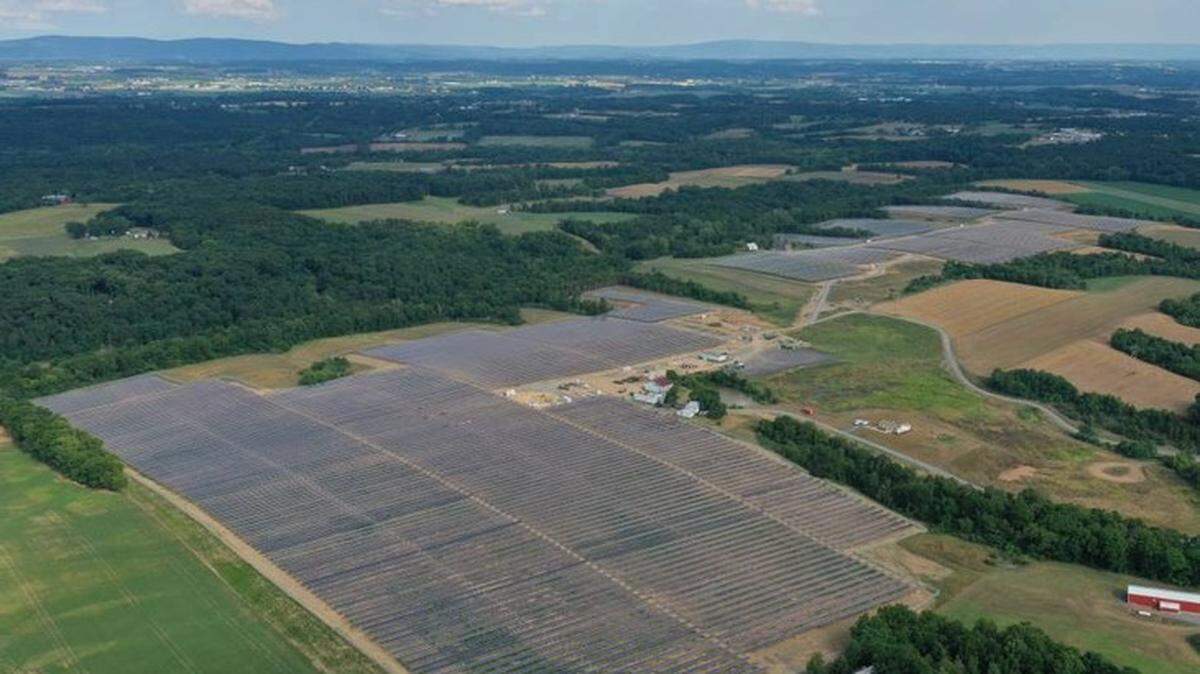
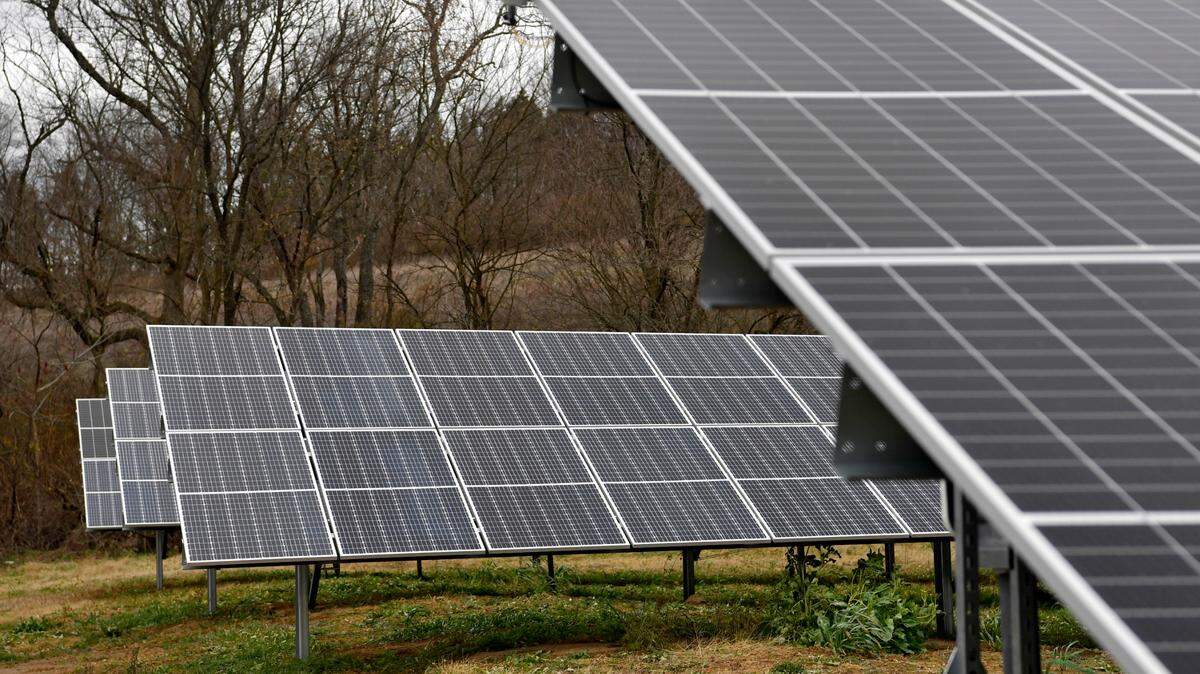
But starting in October, some of that energy started coming from solar panels — 150,000 of them, spread out over 500 acres of land in Franklin County.
The panels were built and installed by Lightsource BP, a global solar energy company, in a partnership with Penn State to provide 25% of the university’s electricity every year over a 25-year period. The contract will reduce Penn State’s greenhouse gas emissions by 57,000 metric tons of carbon dioxide per year — enough to power more than 6,500 homes.
The project is one of many ways Penn State leaders are tackling greenhouse gas emissions, with the goal of reducing them by 85% from 2005 levels by 2050.
Rob Cooper, the senior director of energy and engineering at Penn State’s Office of the Physical Plant, led the team that purchased Lightsource BP’s offsite solar farm. With a large portion of campus buildings’ electricity now coming from the farm, he hopes it will result in a drastic, but cost-efficient, decrease in emissions.
“One of our goals is when we’re doing carbon reduction initiatives, we don’t want to impact tuition,” Cooper said. “We were able to save a little bit of money (and) get 25% of our electric needs displaced off the grid from a renewable source.”
A top-down approach to reducing carbon emissions
Two of Penn State’s main sources of carbon are purchased electricity and its two University Park steam plants, which combined account for nearly three-quarters of total emissions. Cooper said that by reducing the amount of energy campus buildings need, less steam is required from the plants for heat — this can be done in a variety of ways, such as incorporating building envelopes or insulation.
The OPP also saves energy from behind the scenes through its energy program, which utilizes both large-scale efforts — like investing in campus-wide energy conservation — and small-scale measures, like installing low-flow water taps or programming thermostats.
Other strategies Cooper said the OPP may use in the future include implementing solar panels at the various branch campuses, replacing ultra-low temperature research freezers with more energy-efficient models and making OPP vehicles electric.
In 2005, Penn State’s emissions peaked at over 600,000 metric tons of carbon dioxide. Brandi Robinson, now an assistant teaching professor in the department of geography, worked at the OPP in the mid-2000s, managing the greenhouse gas emissions inventories for all of Penn State’s campuses.
Over the past 15 years, Robinson said the OPP and Sustainability Institute have managed to dramatically reduce Penn State’s footprint.
“We hit the peak and we were pulling it down. (2005) was right when we adopted the first emissions reduction strategies,” Robinson said. “It’s neat, now, when I look at the graph, how different it looks.”
Paul Shrivastava, Penn State’s chief sustainability officer and the director of the Sustainability Institute, said the Lightsource BP project — one of the largest solar projects in the state — is just one way the university is reducing its energy-related carbon emissions.
This month, Penn State signed onto a letter written to G20 leaders by the International Universities Climate Alliance, a group of about 40 schools from around the world working on energy research. Additionally, Shrivastava said that over 300 Penn State faculty members are studying how renewable energy can remove carbon from the atmosphere.
“Sustainability can’t be done just by the Sustainability Institute. That’s the wrong way to look at it,” Shrivastava said. “We want sustainability to be embedded in every unit of Penn State. All the 13 colleges, all the 24 campuses, need to own sustainability and do it in a way that makes sense for their communities and for their resource base.”
Faculty use expertise to guide action
Another push to reduce Penn State’s emissions comes from Carbon Negative 2030, an unofficial group of around 30 faculty members and students working to make the university carbon negative — removing more carbon than it emits each year — within the next decade.
Margot Kaye is an associate professor of forest ecology at Penn State whose role in Carbon Negative involves utilizing Penn State’s thousands of acres of forest land — in and around the Stone Valley Recreation Center, Shaver’s Creek Environmental Center, Monroe Furnace and Whipple Dam State Park — for carbon sequestration. This past summer, she had teams of students take detailed measurements of the forests to determine how much carbon was in the air and how much could be taken up by trees.
“We have this huge amount of forest land available to us, and not much is happening on it. It’s there, it’s kind of preserved, it’s managed a little bit, but it’s also a little bit forgotten,” Kaye said. “And so the idea is we’ve got this great opportunity. ... It’s kind of a blank slate. Let’s look to this land to become a model of progressive forest management.”
Charles Anderson, an associate professor of biology who initially organized Carbon Negative in January, said the group rose “organically” out of a group of OPP faculty.
“I was able to tap into the network that exists,” Anderson said. “Just talking to people, that’s kind of how it started. It wasn’t hard in terms of getting people on board.”
Anderson said he feels Penn State President Eric Barron and other administrators are motivated to take responsibility for the climate, but that action needs to be comprehensive, including technical knowledge, behavioral expertise and economic incentives.
Looking ahead, Cooper said he looks forward to seeing the OPP’s energy reduction projects and carbon emissions strategies come to fruition.
“For a while, back in late May and June, we went fully remote, so some of our workers weren’t working on these projects. They were delayed a little bit,” Cooper said. “But, boy, since late June, workers have been back and our projects are proceeding, so we’re still plugging away.”
This story was originally published December 21, 2020 at 7:00 AM.