Here’s 5 stats from Penn State football’s 2020 season that will determine its success in 2021
When one of the most winningest programs in college football finishes with its first losing record in 16 years, it’s apparent that more than a few things went wrong.
The coronavirus pandemic, a star opting out preseason and a slew of injuries to key players all factored into Penn State’s 4-5 2020 season. Still, to their credit, the Nittany Lions rallied back after starting 0-5 to win four consecutive games to close out the year.
Throughout a roller coaster ride of a season, there were certain areas of Penn State’s on-field performance that impacted the final result more than others.
Here are five stats from the Nittany Lions’ 2020 season — both positive and negative — that could dictate how successful their 2021 campaign will be:
SACKS ALLOWED
During Penn State’s 0-5 start — the worst start to a season in program history — its offensive line struggled heavily.
The Nittany Lions gave up 20 sacks through their first five games. For as much criticism as redshirt junior quarterback Sean Clifford received throughout the season, he often didn’t have enough time to make good decisions in the pocket — especially in the first half of the season.
But the unit turned things around. Penn State only surrendered eight sacks total in its final four games of the year. And, sure enough, that translated to better play from Clifford. The second-year starter turned the ball over just twice — on an interception and a fumble — during the Nittany Lions’ four-game winning streak to end the season.
Still, Penn State was one of the worst teams in the Big Ten and in the country in sacks allowed per game. The Nittany Lions allowed 3.11 sacks per contest — ranking just 13th in the Big Ten and 109th in the nation.
Redshirt senior offensive linemen Will Fries (who had started 42 games) and redshirt senior center Michal Menet (a three-year starter) both announced this offseason that they won’t return for an additional year and will instead prepare for the NFL draft. Redshirt junior offensive lineman C.J. Thorpe — who had started a handful of games over the past two seasons — announced last week that he’d enter the transfer portal.
The return of redshirt sophomore offensive lineman Rasheed Walker (who announced Tuesday that he’d be back), plus the Nittany Lions’ younger offensive linemen, should give offensive line coach Phil Trautwein enough to work with next season, though.
It will be on Trautwein and his unit to ensure Clifford — or whoever is behind center — is better protected this fall.
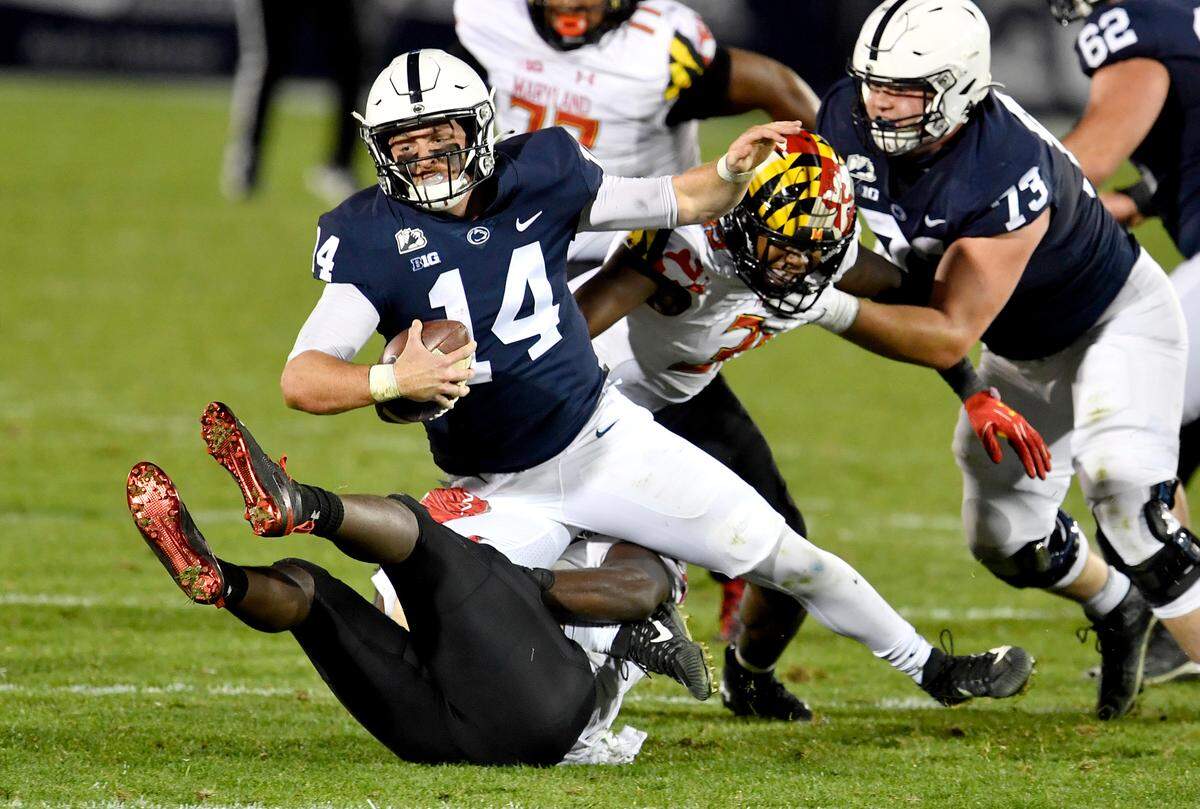
TURNOVER MARGIN
Another area in which Penn State didn’t perform up to par was turnover margin.
The Nittany Lions turned the ball over far too frequently in their 0-5 stretch to open the season. And oftentimes, this led to early deficits that were too deep for the team to overcome. On the other side of the ball, Penn State failed to force their opponents into turnovers.
While the group gave up 17 total turnovers — nine interceptions and eight fumbles — on the season, its defense only created nine takeaways. That’s a turnover margin of -0.89 — ranking 11th in the Big Ten and 112th nationally.
Clifford himself accounted for 12 of the team’s 17 turnovers (nine interceptions and three fumbles), but even inserting redshirt sophomore quarterback Will Levis in his place didn’t help the issue.
Whether it’s improved quarterback play or more consistency from its offensive line, Penn State will have to find a way to take better care of the football next season.
On defense, the Nittany Lions’ defensive line — most notably redshirt senior defensive end Shaka Toney and redshirt sophomore defensive end Jayson Oweh — did a good job of pressuring opposing quarterbacks. That didn’t translate to takeaways, though, as the group finished the year with only four interceptions. The defense also recovered five fumbles.
Even though Toney and Oweh will both depart for the NFL draft, Penn State returns key players in its secondary — like senior cornerback Tariq Castro-Fields and senior safety Jaquan Brisker — who should help the team create more takeaways this fall.
TIME OF POSSESSION
Surprisingly enough, even with Penn State’s turnover problem, it managed to hold onto the ball for much longer than its opponents.
The Nittany Lions finished the 2020 season with an average time of possession per game of 33:41 — good for third in the Big Ten and ninth in the country.
One of the main ways in which Penn State strung together long, methodical drives was by using its running game, which started clicking during the team’s four-game winning streak at the end of the year.
Freshman running back Keyvone Lee flashed plenty of promise in the Nittany Lions’ final four games, rushing for at least 85 yards in three of those contests. There was also sophomore running back Devyn Ford who rushed for 65 or more yards in three games. Even freshman running back Caziah Holmes — who had a pretty quiet season — ended the year by rushing for 77 yards in the team’s win over Illinois.
It was a combination of the play of Penn State’s trio of running backs and the several quarterback draws for Levis (who finished the season with 260 rushing yards) that allowed the Nittany Lions to milk so much clock with their drives.
Penn State’s running back room will be even deeper next season with sophomore Noah Cain returning from injury and the addition of Baylor grad transfer John Lovett. Even though new offensive coordinator Mike Yurcich likes to air it out often, it could be wise for the Nittany Lions to use a run-heavy offense.
No matter how they get it done, it will be important for the Nittany Lions to continue to find ways to win the time of possession battle this fall.
RED ZONE CONVERSIONS
It doesn’t matter how long a team holds onto the ball if it can’t capitalize on opportunities to score. And that’s exactly where Penn State struggled last season.
Out of the Nittany Lions’ 37 trips to the red zone in 2020, they only found the end zone 19 times (11 rushing touchdowns, eight passing touchdowns). They also settled for field goals nine times. That’s a red zone score percentage of just 75.68 percent (scoring on 28 of their 37 attempts), which ranked 11th in the Big Ten and 107th nationally.
Penn State had ranked in the top three in the Big Ten in red zone score percentage for three consecutive seasons before 2020. So last season could just be a one-off occurrence rather than an indication of what’s to come.
Last month, leading up to the Nittany Lions’ Week 7 contest against Rutgers, now-former offensive coordinator Kirk Ciarrocca said he and the staff needed to do a “better job” of trying to play to their players’ strengths when in the red zone.
Ciarrocca also defended his red zone fade route calls — which received plenty of criticism. He said he continued to call fades in the red zone because it’s a “pretty safe” play and because the team had executed it well in practice.
Now, Yurcich will have a chance to bring something new to the table.
It’s hard to imagine the Nittany Lions being worse this fall in the red zone than they were last season. Penn State will need to make the most of its opportunities to score if it wants to have a successful 2021 campaign.
OPPONENT PASSING YARDS ALLOWED
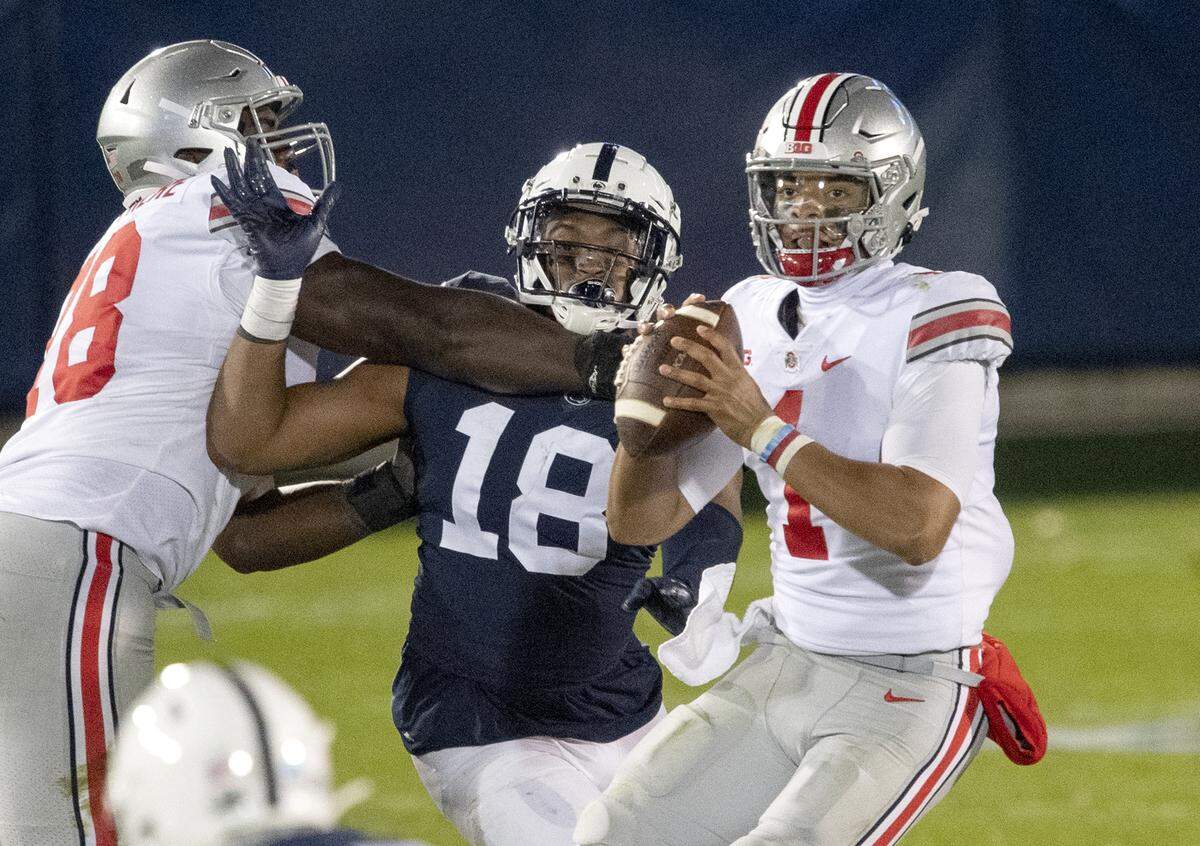
One area that Penn State did well in last season was in opponent passing yards allowed per game. Even though the Nittany Lions seemed to often get gutted on huge passing plays, surprisingly, they fared well overall when it came to limiting their opponents’ passing offense.
Penn State gave up just 198.6 yards through the air per game in 2020 — good for second in the Big Ten and 24th in the country.
A large reason for this stat may be because the Nittany Lions held onto the ball so long on offense, sure. Still, the play of Penn State’s secondary — especially toward the end of the season — is something the team can build on heading into the 2021 season.
With Castro-Fields and Brisker announcing this month that they’ll return for an additional season, the Nittany Lions should return every contributor from last season’s secondary except for possibly senior safety Lamont Wade, who has yet to announce his plans.
The Nittany Lions’ pass defense has had its ups-and-downs in recent years. Penn State gave up 251.5 passing yards per game in 2019 (ranked 13th in the Big Ten) after surrendering only 181.5 yards through the air per contest in 2018 (ranked second in the Big Ten).
With a lot of talent returning in the secondary, it will be up to defensive coordinator Brent Pry to maximize the unit’s potential in the 2021 season.
One thing is for sure, though: Penn State will have to build on its pass defense — along with other areas of success it had in 2020 — for a more successful go-around this fall.
This story was originally published January 13, 2021 at 4:28 PM.