
Anyone can witness a vehicle crash. Here's how you can help save lives
When a person sustains major trauma in a vehicle crash, every second is critical when it comes to saving a life. And it typically starts with a witness whose actions impact the chances of survival.
A recent example of when dispatchers were able to utilize detailed witness information from the scene of a serious crash to quickly get the emergency response in motion was the three-vehicle crash at the intersection of Shingletown Road and South Atherton Street on May 18.
The quick thinking of witnesses and their ability to relay reliable information to 911 dispatchers was critical in helping to speed up the response by emergency crews.
Dr. Kassandra Botti was one of several witnesses who stopped to check on the crash victims. She has been involved in emergency medical services for about 30 years and responds to incidents with patients in critical condition as part of her EMS Medical Director responsibilities for Mount Nittany Medical Center. She has also flown with Geisinger Life Flight for 18 years.
Botti was a perfect bystander to help coordinate a response for two helicopters for those who suffered traumatic injuries, State College police Sgt. Kelly Aston told the Centre Daily Times.
"She was able to stop and assist with the scene, so she was extremely helpful," Aston said. "She was able to give us some information pretty quickly about injuries, which was able to be relayed back and forth to the ER and, moving forward, with the helicopters."
However, according to Centre County dispatch administrators Dale Neff and Norm Spackman, you don't have to be an emergency professional or doctor to give useful information to 911 dispatchers at the scene of a crash and potentially help save someone's life.
"You've got to understand that the information we get from a caller is sometimes really good and sometimes weak and general," Spackman, assistant director of Centre County 911, said. "Sometimes people stop, and sometimes people just drive by and report it."
But if the first witness on the scene of a crash is able to give good, accurate information to dispatchers, it can help make sure dispatch sends the correct units, that the first responders get there as soon as possible, and they can start planning their response before arriving on scene.
According to Centre County emergency officials, the most important pieces of information a witness should gather from a crash and give to dispatch are location, description of crash and types of vehicles involved, number of patients and severity of injuries and hazardous conditions.
Location
Accurate location, Neff and Spackman agreed, is the most important piece of information dispatchers need from a 911 caller.
Although the county's data management system uses cellphone data to locate where a call is coming from, it can be misleading if the caller keeps driving and doesn't stop at the scene. The lack of precise location data, according to Centre Region Council of Governments Fire Director Steve Bair, is most troublesome when responding to a highway crash.
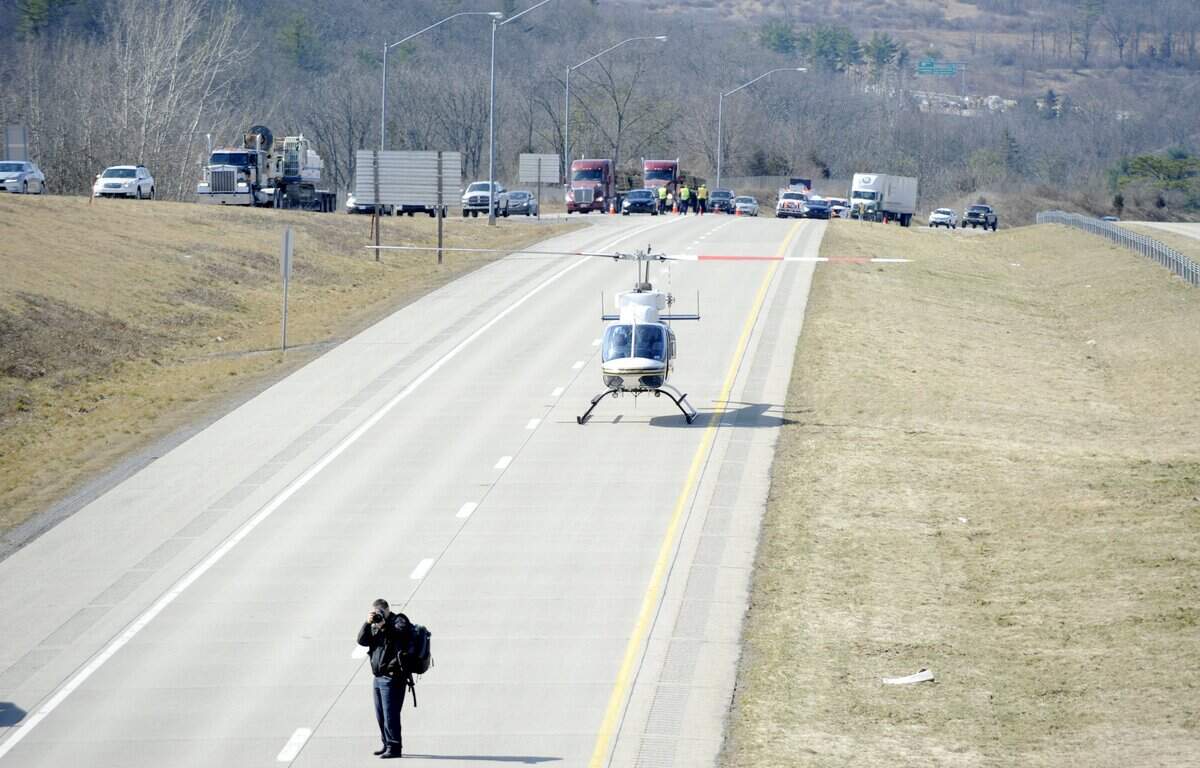
"If you think about it, getting there is the No. 1 thing, so getting in a position where you can verify the location is important because it gets people to you much quicker, they can use the most effective route of travel," he said. "It's also important on the expressway because you have limited access points, and if you get on something south of southbound, then you have to get off and turn back or hope that somebody else doesn't make your mistake."
Determining exact location of a crash on highways such as Interstate 99 and 80 can be especially difficult, Spackman said, since callers often don't stop, and as they're driving at a high rate of speed, they could be miles away from the scene by the time they place the call.
"There might be a scenario where someone on I-99 doesn’t stop, they call and their cellphone’s pinging in the Port Matilda area, but the actual crash is in the Waddle Road area. We then have a response from an inappropriate fire company or ambulance service, trying to locate the accident," said Neff, Centre County 911 director. "A motorist going 70 mph could get from Waddle Road into the Port Matilda area in a couple of minutes."
But in the case of a highway crash, Bair acknowledged that stopping isn't always safe or easy to do with some vehicles traveling at 70 or 80 mph, often meaning there isn't a "comfortable place to stand." For those who are unable to stop, he said it's still possible to convey accurate location information to dispatchers. Botti also said a witness' first responsibility is their own safety.
"If you can't stop and you call, please recognize that you're moving at 60 mph and within a minute you're a mile or more away," he said. "If you're giving people locations, tell them that and the dispatcher can count in their heads and figure out where the crash is. At least they'll know you're not on the scene."
The best location indicator on the highway is the milemarkers, which are two-tenths of a mile away from each other, not the exit signs, as one exit ramp can span four milemarkers.
If the caller is able to provide accurate information, it helps dispatchers to call the appropriate fire and EMS units, get them to the location in the shortest amount of time possible and to know which on-ramp to use to enter the highway.
Description of crash and types of vehicles involved
As dispatchers are taking the calls and trying to decide which types of emergency units to send to the scene, they rely on the information provided from the caller. And when it comes to the severity, a general description is good enough.
"How bad is it? Is it a fender bender? If it looks like people are visibly hurt, say people are hurt. If you're looking at a car that's totally demolished, on its roof, over the embankment, just tell them what you see — it's a bad accident," Bair said. "Trust your instinct, because you're probably right."
Having information about the severity, what types of vehicles are involved, whether there are injuries and how bad those injuries look help dispatchers put the crash in a specific category with a specialized plan, which gives first responders a better idea of what they'll need to do.
"We have specific call types, too, so the dispatcher takes the information and matches it to that call type," Spackman said. "If it's an accident, they assign a particular accident title, and that would dictate the response. If there's an accident with injuries, it would dictate what EMS go, what fire units go."
Knowing what they're dealing with before arriving on scene helps cut down on the response time by giving first responders the opportunity to prepare and put a plan in place on the drive over to the crash.
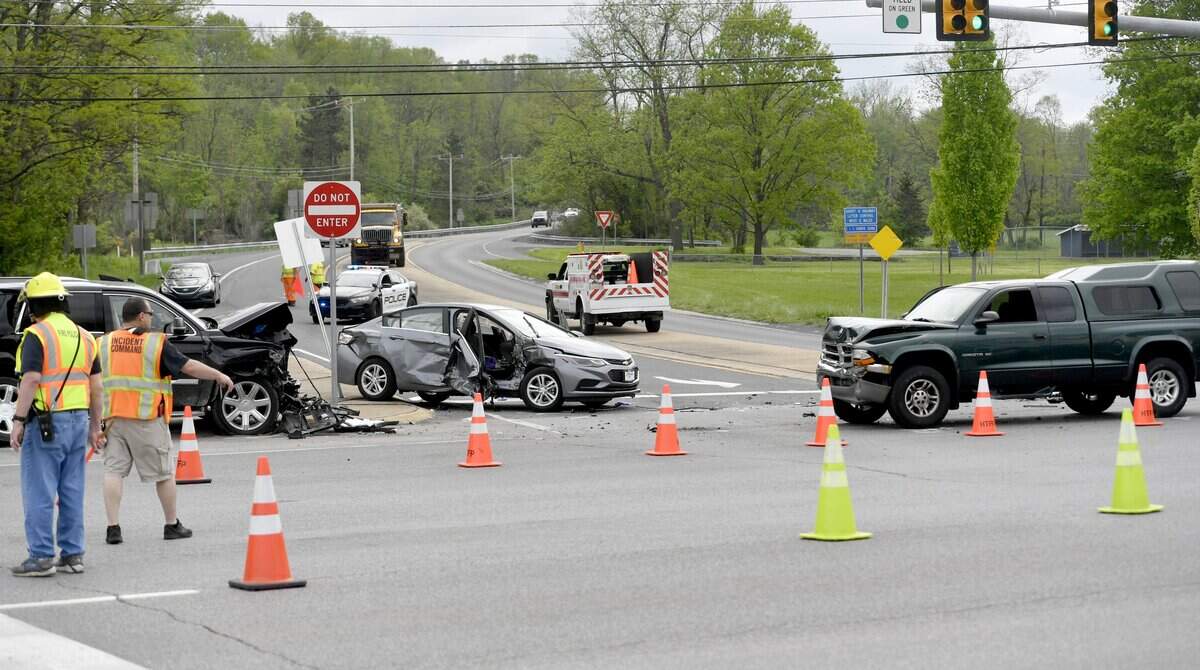
In the case of the May 18 crash, having detailed and accurate information allowed the Alpha Fire Company crews responding to have a clear picture of the scene and a plan before arriving.
"As part of the response time is getting there and setting up, it's kind of like being a minute or two ahead," Bair said. "When you're getting details based off of good information, you don't have to spend a lot of time wen you arrive looking around, figuring out what hazards there are and getting traffic controlled. A good description is really helpful."
Number of patients and severity of injuries
Knowing the number of patients and their condition can help dispatch determine what or how many EMS units to send, and whether to put a helicopter on standby, Botti said.
"Are the patients trapped in the car, out walking around the car or have they been thrown (or) ejected from the car?" Botti said. "Finally, are the patients conscious or unconscious? Once first responders begin to arrive on scene, the bystanders should make contact with them to see if they can offer any other assistance."
The first person on the scene also has an opportunity to help patients out until the professionals arrive. And in some cases, that can save a life.
"Our 911 dispatchers are trained on how to walk people through CPR," Spackman said.
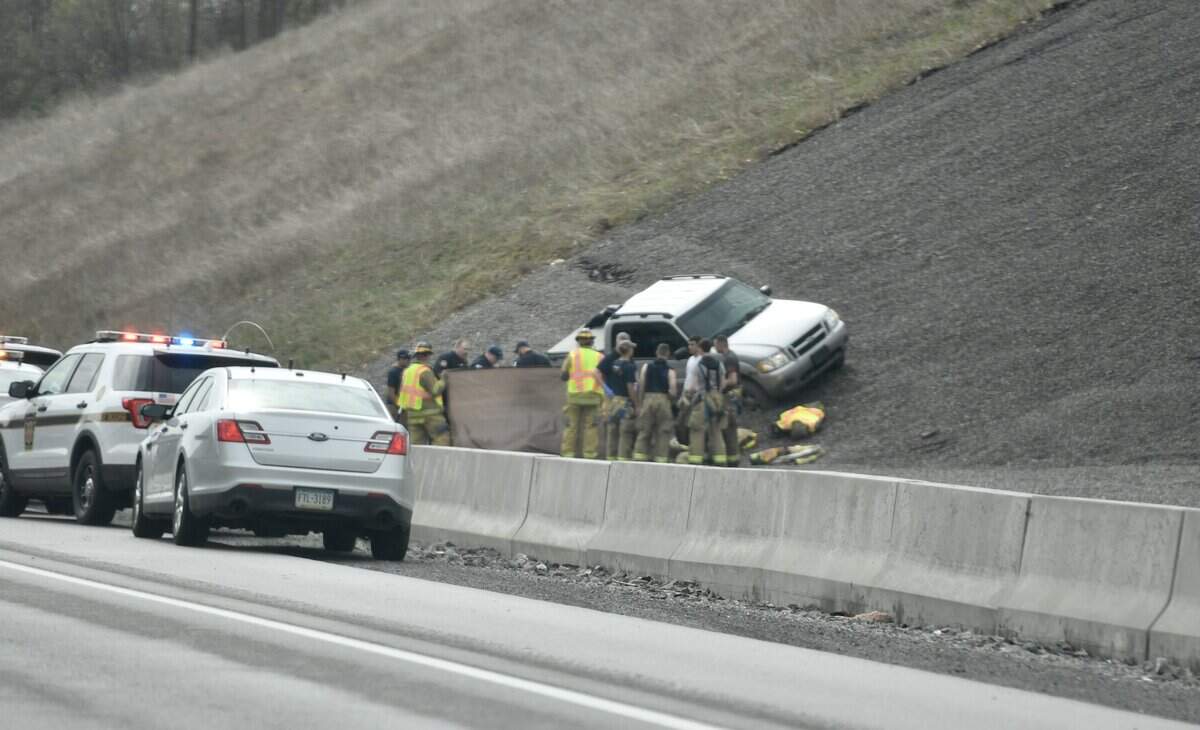
In the case of the I-99 crash on May 4 where the driver suffered a major cardiac issue, which caused his vehicle to travel over multiple lanes of traffic and crash into an embankment, several motorists on the road at the time stopped and tried to administer CPR until EMS and fire crews could arrive. Unfortunately, after 40 minutes of CPR, the man was unable to be revived.
"If you can help people out safely, then take the steps to do so," Bair said. "It could be as simple as giving someone a blanket, or telling them to stay put."
Hazardous conditions
When on the scene of a crash or fire, safety is key for the witness and for first responders. It helps first responders if they are aware ahead of time of wires down or gas leaking on the road, but it's also important for the witness to be aware of his or her surroundings.
"If there's hazardous conditions, the caller has to really exercise some judgment because we don't want them to get burned up or electrocuted in a gas leak or anything like that," Neff said. "But we could really benefit here if we had that information — wires down, types of vehicles involved, number of patients, location — location's the biggest one, location's key."
Neff said the biggest biggest hazards witnesses should look out for are downed utility poles, wires down on the road, gas leaks or hazardous materials on the roadway.
"If you've got wires down on a car, don't touch the car. Even if you look and you're convinced it's a phone line, you don't know what else is hanging up in the dark, especially," Bair said. "Just assume everything's live until proven otherwise, and if there's someone in the car, just tell them to stay put until help arrives."
A good indication of whether there might be hazardous materials spilled on the road in the case of a tractor-trailer crash is to check to see if the vehicle has a placard. Taking a sniff of the air around the crash can also be an indicator of hazardous materials.
"If something doesn't smell right, just get away," Bair said. "Trust your gut."
Whether gas is leaking onto the road is also important information for dispatchers to know, so they can send a crew out for cleanup and get the road reopen quicker. But gas leaking onto the road is also something important for witnesses on the scene to be cautious of while they wait for help to arrive.
"Don't smoke around any crash," Bair said. "There's too many opportunities for fuel leaking, and nowadays you might not even see it leaking, as you could be dealing with a natural gas or propane.
Bair said that it is possible for witnesses to provide all the information dispatchers need — accurate location and a general description of the severity of the crash and injuries, and possible road hazards — without getting right on top of the crash.
"I can't stress enough, pay attention to your own personal safety," he said.
This story was originally published June 8, 2018 at 3:27 PM with the headline "Anyone can witness a vehicle crash. Here's how you can help save lives."